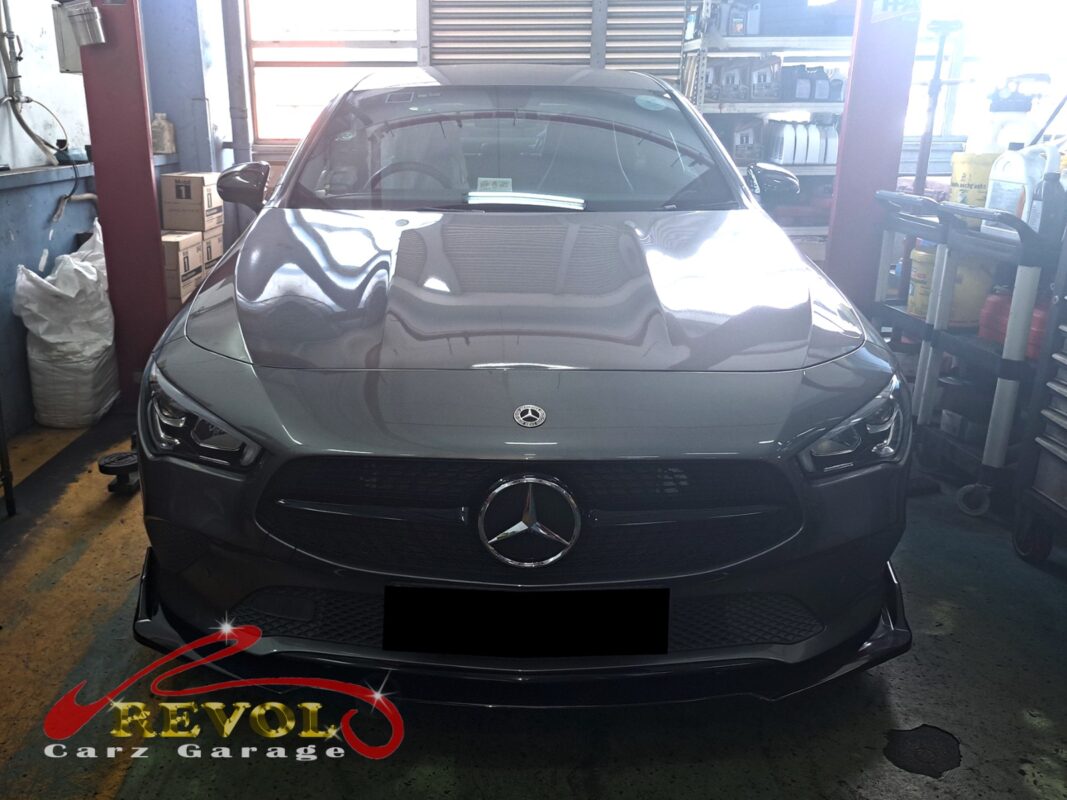
The brief
The CLA180 had been creeping above its usual gauge position on motorway runs, and on cooler mornings the cabin heater was taking longer than normal to come up to temperature. Two complaints that look like opposites, but they're the same part: a thermostat that isn't modulating cleanly, holding the engine cooler than it should at warm-up and then not letting enough heat away once it's working hard.
The thermostat is the valve that controls when coolant flows through the radiator. Closed when the engine's cold so it warms quickly, open when it's hot so it doesn't overheat. When it sticks and stops doing that smoothly, the engine never settles where it should, and you feel it as a slow-warming heater one moment and a climbing gauge the next.
The diagnosis
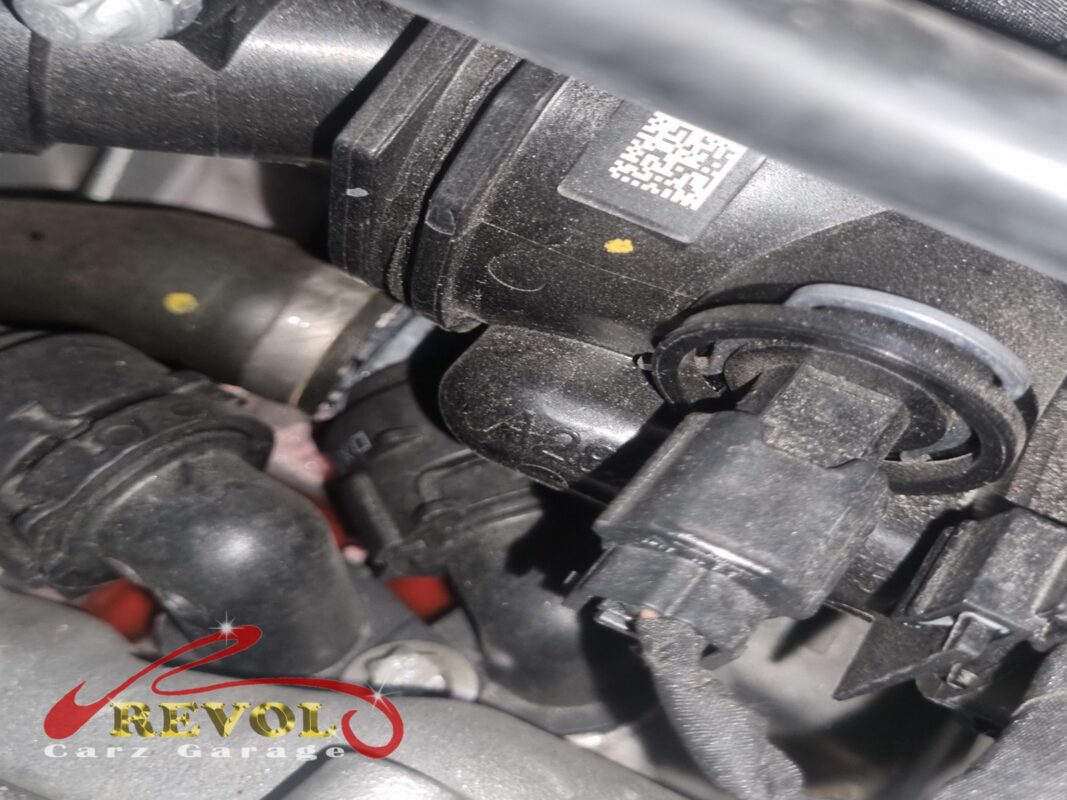
A pressure test on the cooling system held clean, so there was no leak to chase. On the scanner, the live data showed the thermostat not opening at the right temperature on warm-up and not regulating cleanly once the engine was hot, exactly the wandering behaviour the symptoms described.
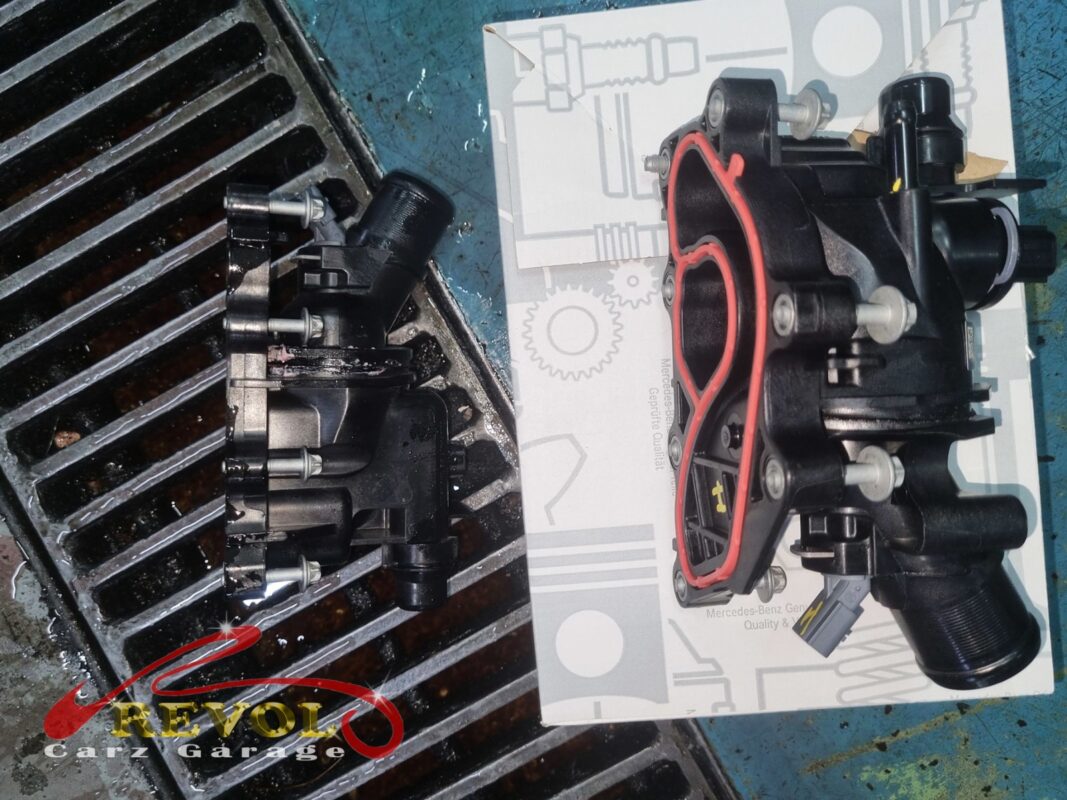
That's a mechanical fault in the thermostat itself, not something a software update fixes. On this engine the thermostat lives inside a plastic housing module, so the right fix is to replace the whole module with a fresh seal rather than fight to split it open.
The work
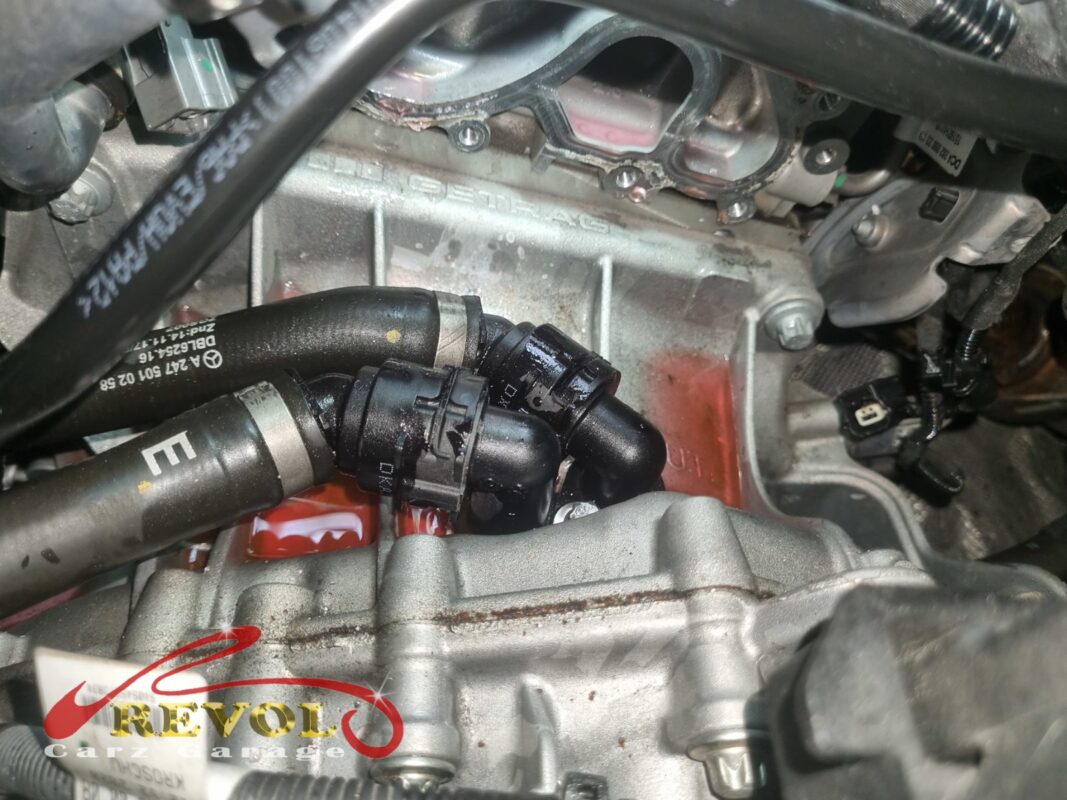
Enough coolant was drained to drop the thermostat housing, the old module came off, and a new Mercedes-spec thermostat housing went on complete with a fresh seal.
The system was refilled with the correct coolant and bled the proper way so no air was left to cause hot spots, then held under pressure to confirm the new housing and its connections were sealed.
A run afterwards confirmed the engine warmed up at the right rate, the gauge held in the middle through traffic and on the motorway, and the heater came on at the right point.
The outcome
Warm-up time is back to normal, the gauge holds dead centre in traffic and at speed, and the cabin heater comes on when it should.
The CLA180 went home with the cooling system regulating properly again. A sticky thermostat is a small part with an outsized effect, it pushes the engine to run cooler or hotter than it's designed for, which costs efficiency and, left long enough, costs more than that. Doing it as a housing module means the seal and the valve are both fresh.