The brief
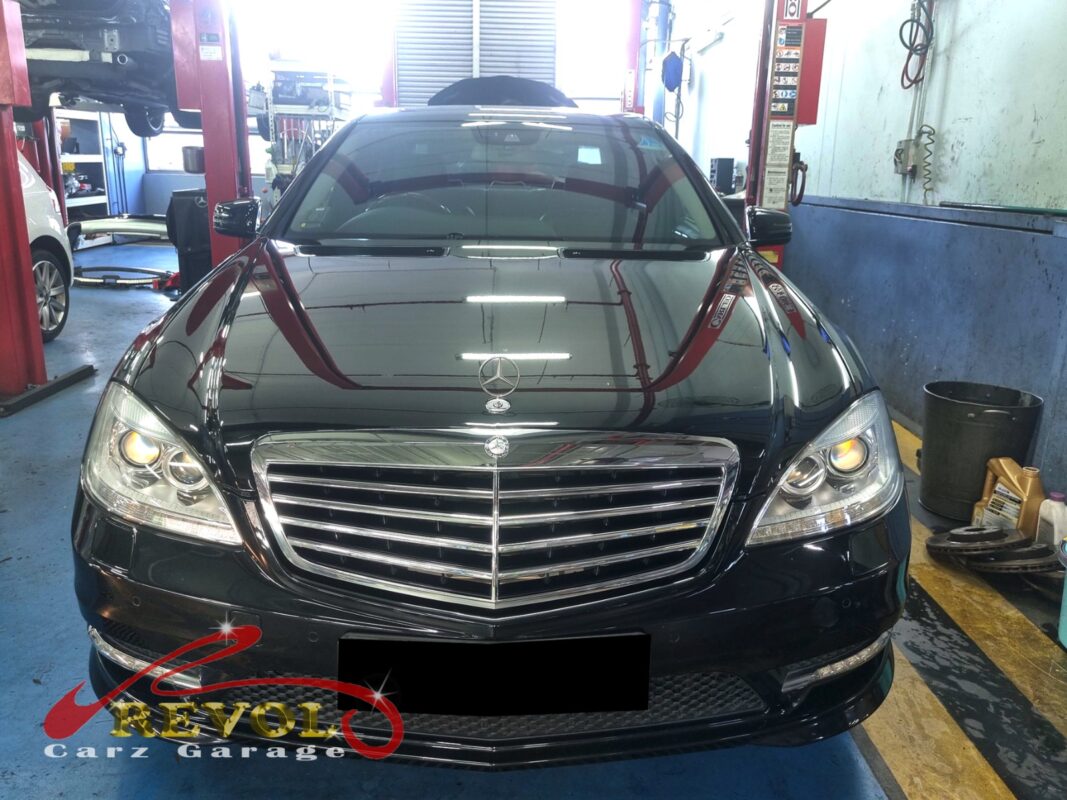
The S350 had been sitting low on one corner each morning, low enough that the owner could see it from the driveway, and once it was driven the ride had grown harsh on the affected side, jolting over expansion joints. On an S-Class, where the rest of the chassis is so refined, that kind of thing stands out fast.
AIRMATIC is the S-Class's air suspension. Instead of steel springs there's an air strut at each corner, kept inflated by an onboard compressor, with the ride height controlled electronically. When an air strut develops a slow leak it deflates overnight, so the car sits low and lopsided in the morning, and a deflating bag rides harshly because the air spring isn't doing its job. That was the picture here.
The diagnosis
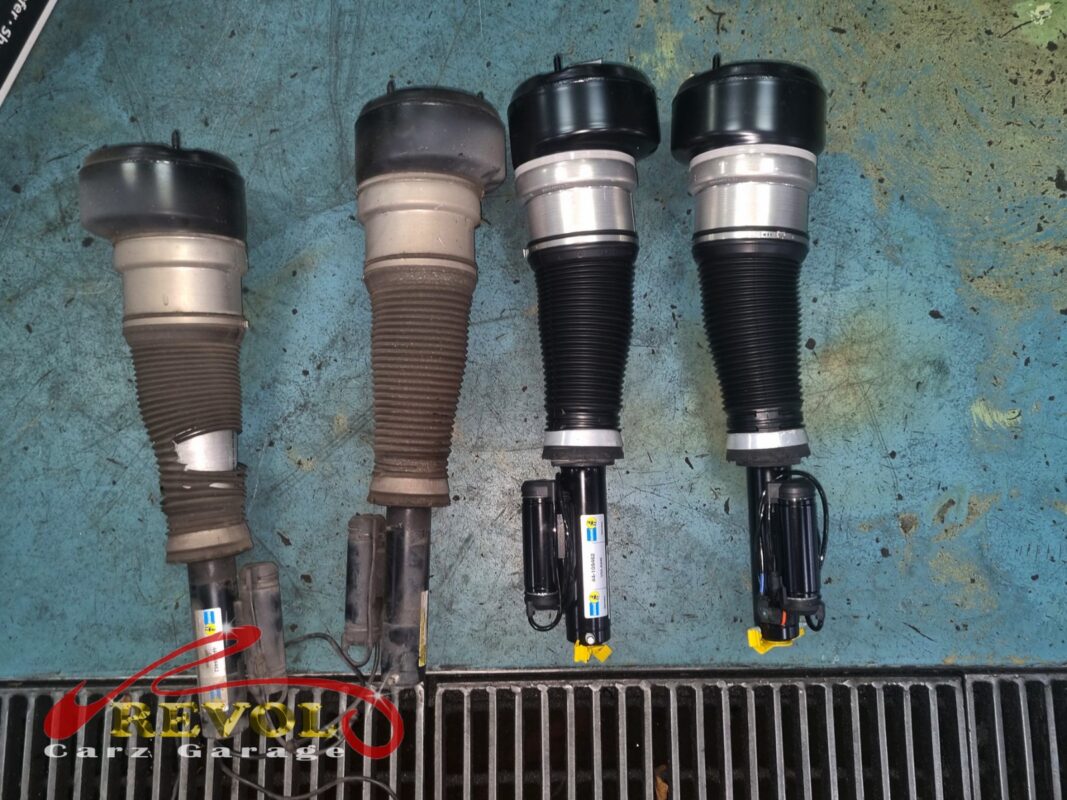
The scanner pulled an AIRMATIC slow-leak code on the affected corner. A soap-water test confirmed it, bubbles forming where the air bag joins the strut can, the classic age failure on these. With the front struts being the same age and the same exposure, doing them as a pair made sense rather than chasing the second one in a few months.
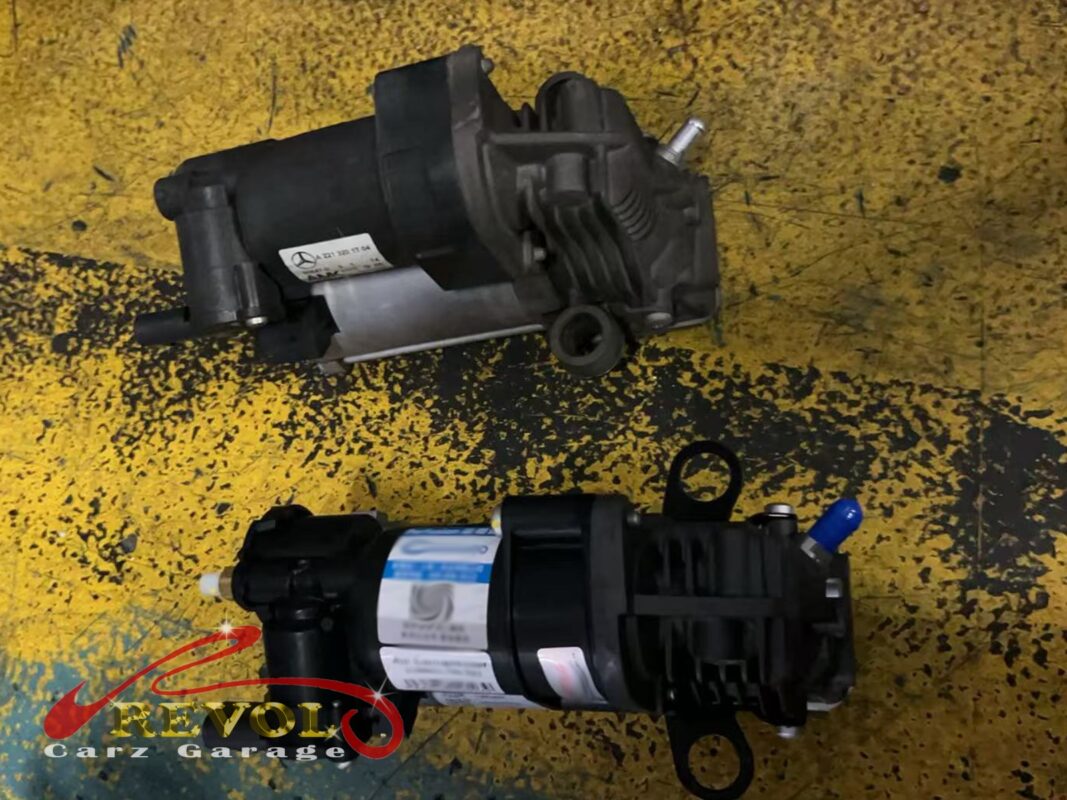
The air compressor was also showing its years, working harder and longer to keep the system up against the leaks, so that went on the list too. There's no re-sealing a worn AIRMATIC bag, it gets a new strut.
The work
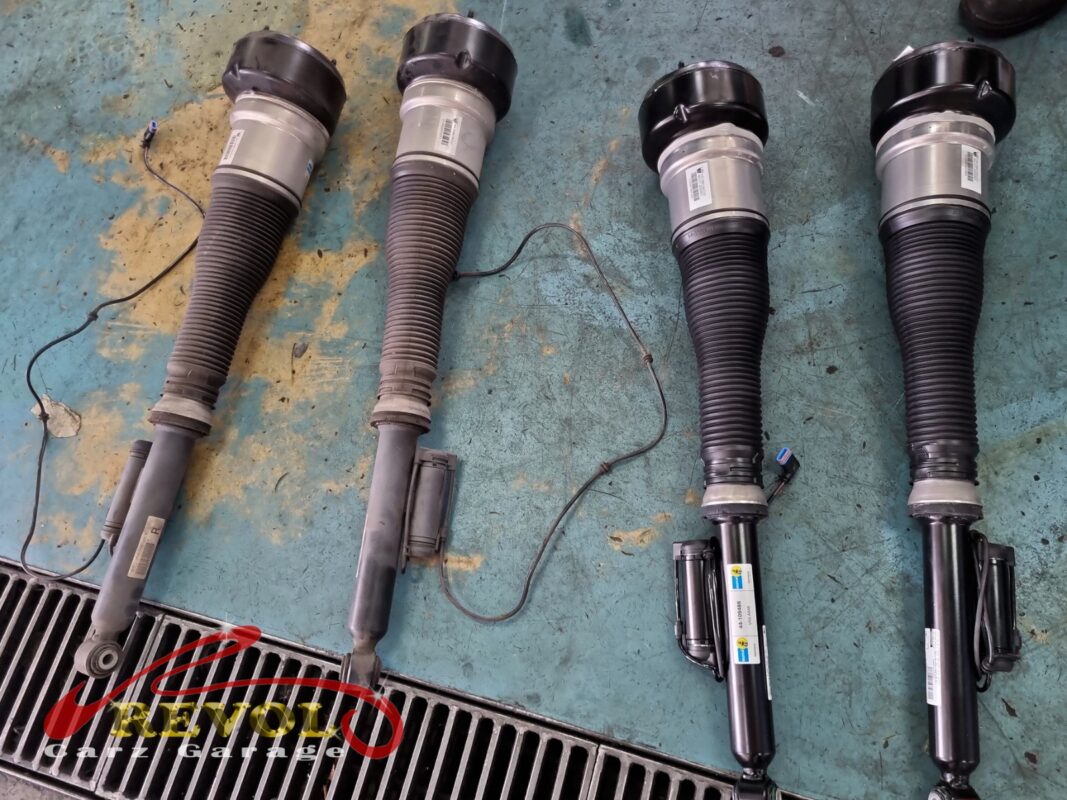
The AIRMATIC pressure was discharged on the front, the old struts came off, and a new Bilstein pair went on, the air lines and harnesses reconnected. The tired air compressor was replaced at the same time with a new unit.
Then the system was re-pressurised and the AIRMATIC calibration routine run on STAR, so the suspension controller re-learned the correct ride height all round on the new parts.
A settle and a road test confirmed the car sat level, rose at the right rate after parking, and rode the way an S-Class should.
The outcome
All four corners sit level overnight and at rest, the ride is back to S-Class smoothness, and the car rises at the normal rate after it's parked.
The S350 went home with the suspension behaving the way the original spec sheet said it should. Doing the front struts as a pair and refreshing the tired compressor at the same time means the AIRMATIC system is sorted properly, not patched one leak at a time as the next bag gives up.