The brief
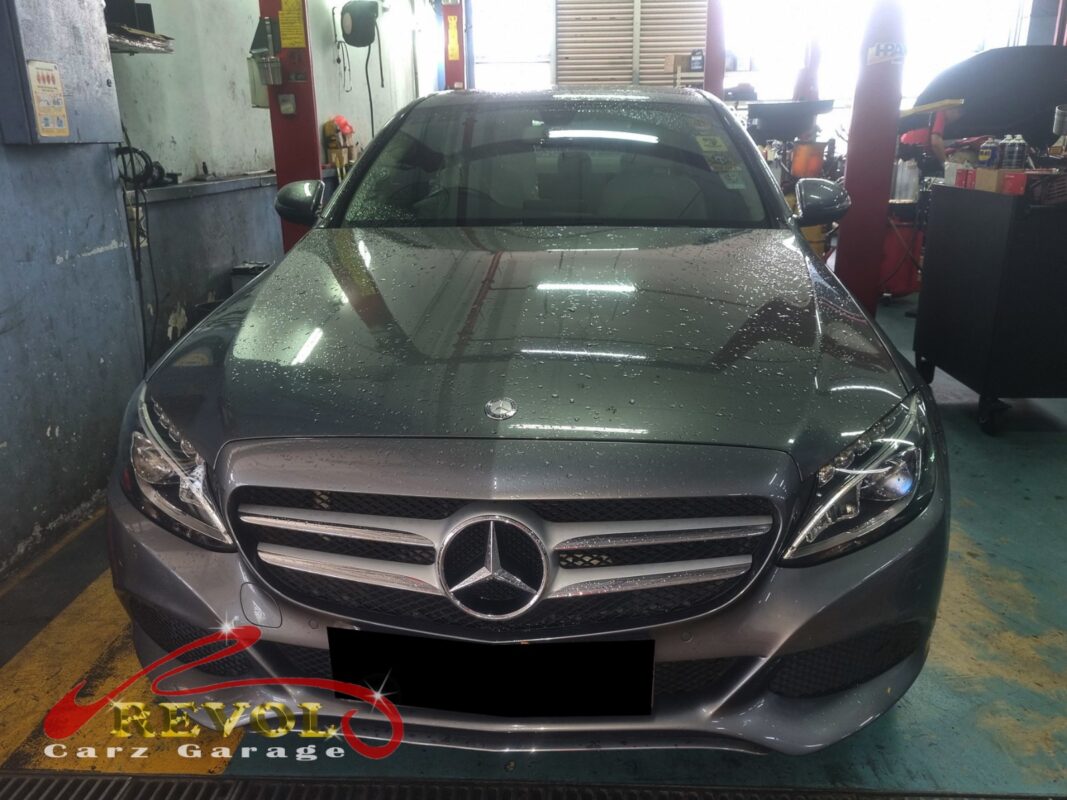
The C180 had developed coolant traces around the thermostat housing, a sweet smell off the engine bay after drives, and the temperature needle was creeping up the gauge in heavy Singapore traffic. Three complaints, all pointing at the same area.
The thermostat is the valve that decides when coolant flows through the radiator. On this engine it lives in a plastic housing that also carries the coolant crossover pipes. The plastic gets brittle with age and heat, so a hairline crack at a clamping point lets coolant weep out, which is the traces and the smell. And if the thermostat inside has lost some travel and is slow to fully open, the engine doesn't shed heat fast enough in traffic, which is the gauge creeping up.
The diagnosis
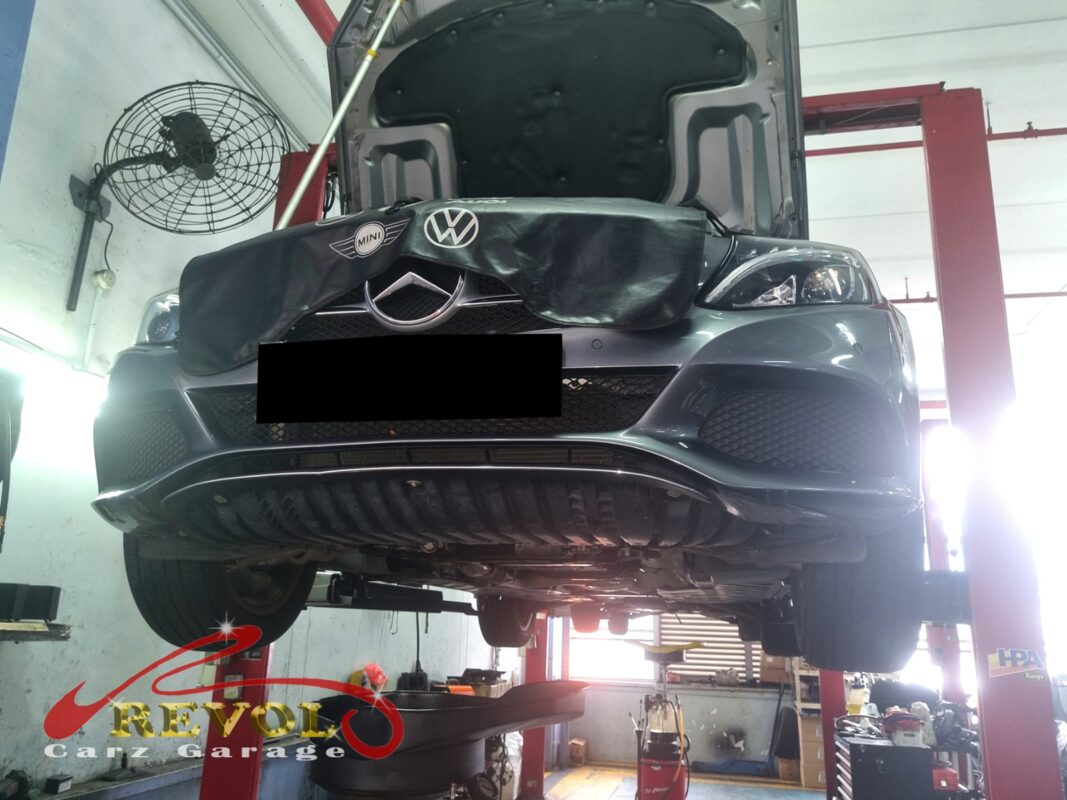
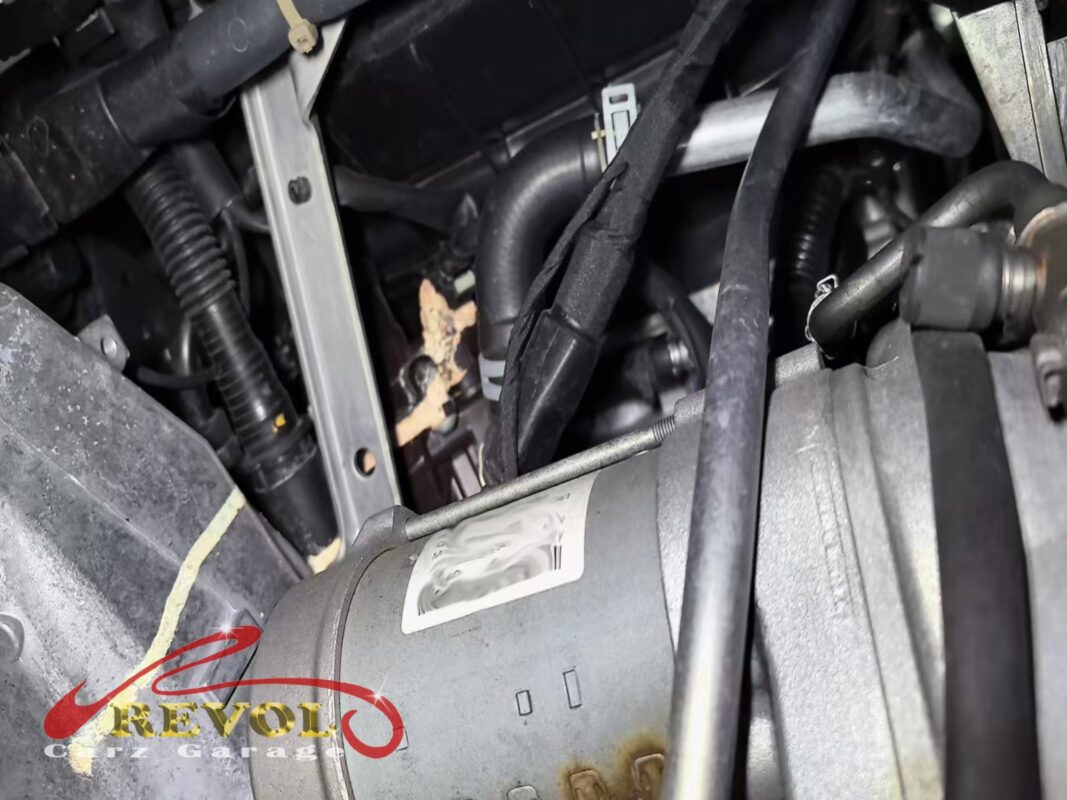
A pressure test confirmed the leak: a hairline crack in the plastic thermostat housing at one of its clamping points, with the crusty residue built up around it. That's a common age failure on this engine.
While we were in there, the thermostat itself was checked and it had lost some of its travel, slow to come fully open, which was the slow-warming, gauge-creeping half of the story. So it wasn't a simple seal job. The right fix is the complete housing, which comes with the thermostat built in, and a fresh seal.
The work
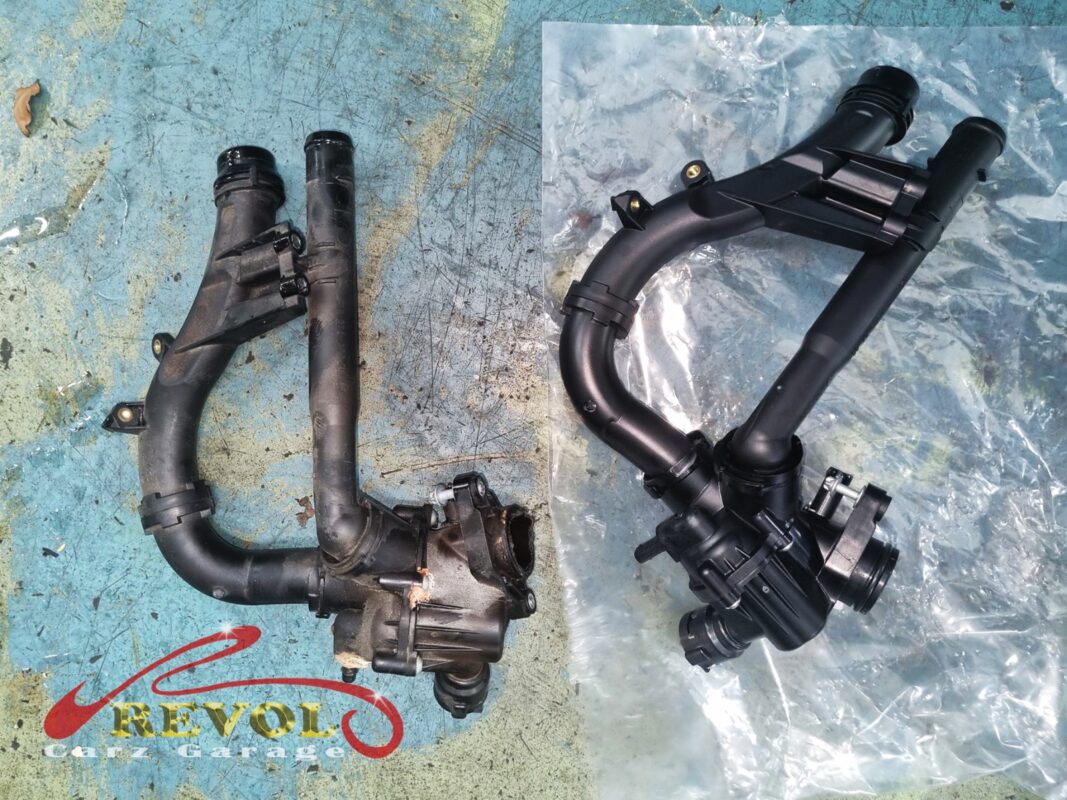
The cooling system was drained, the cracked thermostat housing came off, and a new Mercedes-spec housing went on, the thermostat integrated and a fresh seal fitted, with the crossover pipes that come as part of it.
The system was refilled with the correct coolant and bled the proper way so no air was trapped, then held under pressure to confirm the new housing and all its connections were sealed.
A run afterwards confirmed the engine warmed up at the right rate, the gauge held steady through traffic, and there were no coolant traces around the housing.
The outcome
No more coolant traces around the housing, no sweet smell off the bay, warm-up time back to normal, and the gauge holds steady through traffic.
The C180 went home with the cooling system both sealed and regulating properly. Doing it as the complete housing means the brittle plastic and the tired thermostat are both replaced in one go, rather than fixing the leak now and being back for the thermostat later.