The brief
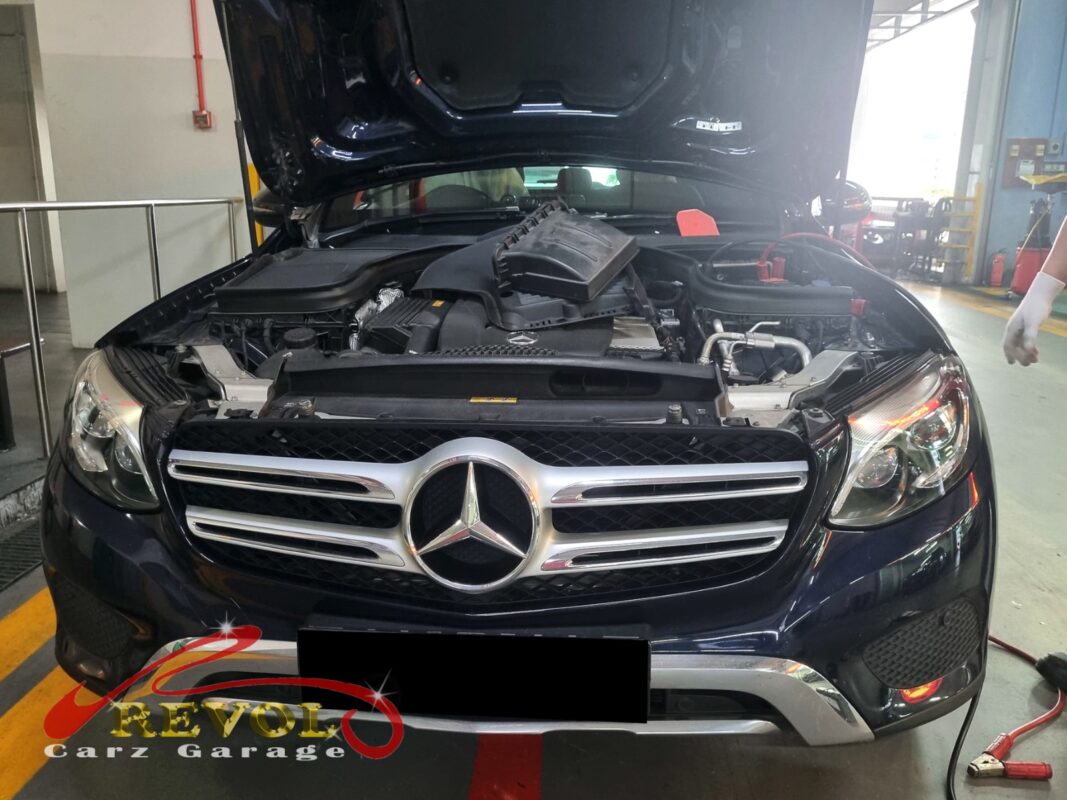
The GLC250's owner had been topping up the battery roughly every week, the battery warning had come on the dash, and he'd noticed the headlights would dim at red lights when the aircon stepped up its load. Three signs, all converging on the same component.
The alternator is what charges the battery and runs the car's electrics while the engine's turning. Inside it a voltage regulator holds the output in a narrow band, around 13.7 to 14.7 volts. When the regulator gives up, the output sags below that, so the battery slowly runs down instead of being topped up, the warning light comes on, and there isn't enough spare power to hold the lights steady when something big switches on. That's exactly what the owner was describing.
The diagnosis
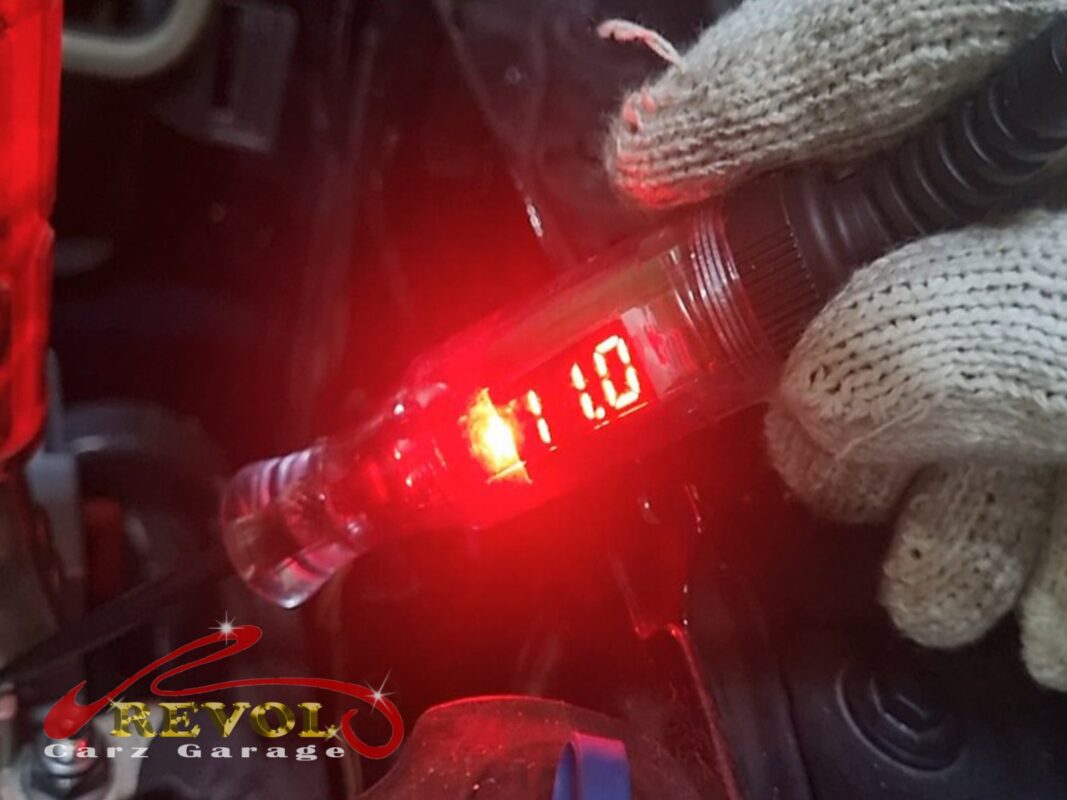
A multimeter on the alternator output put numbers on it: well below charge voltage at idle and barely climbing as the revs came up, when a healthy alternator on this engine should be holding 13.7 to 14.7 volts right across the range. So the alternator's regulator had stopped doing its job.
We checked the rest: the battery itself tested fine on the load tester, the drive belt was tight, the charge harness clean. It was the alternator. And the serpentine belt and tensioner had taken some wear from the slipping, so those went on the list to do with it.
The work
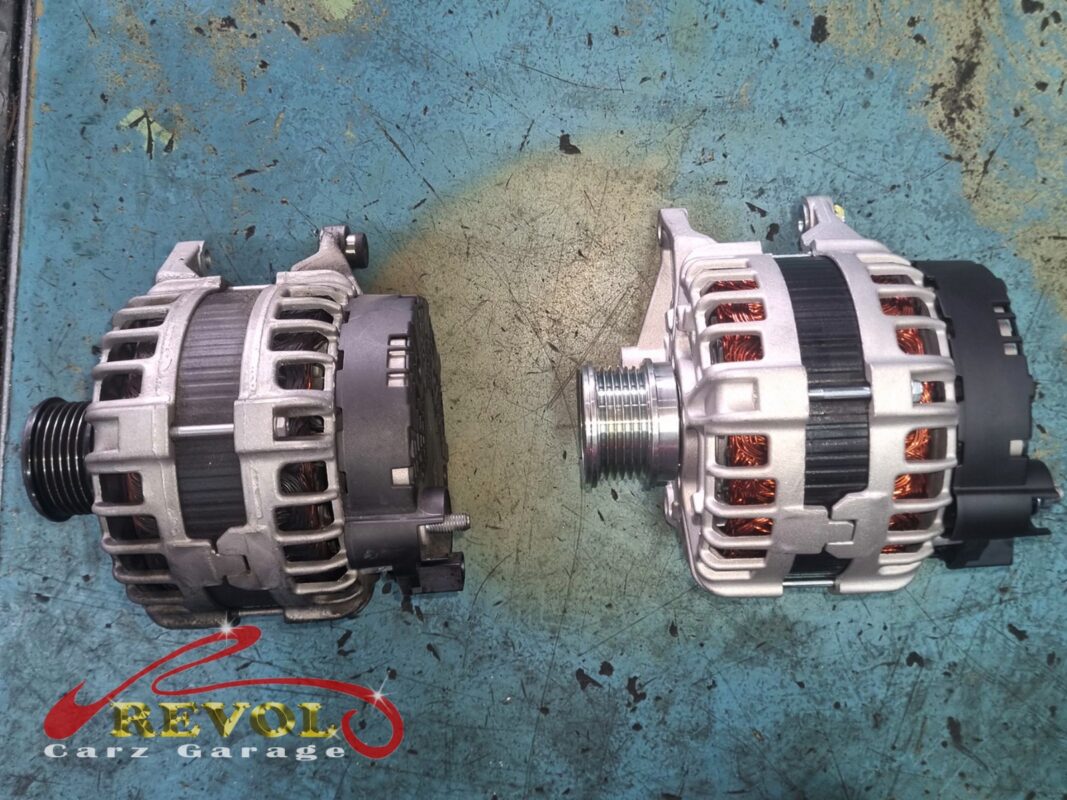
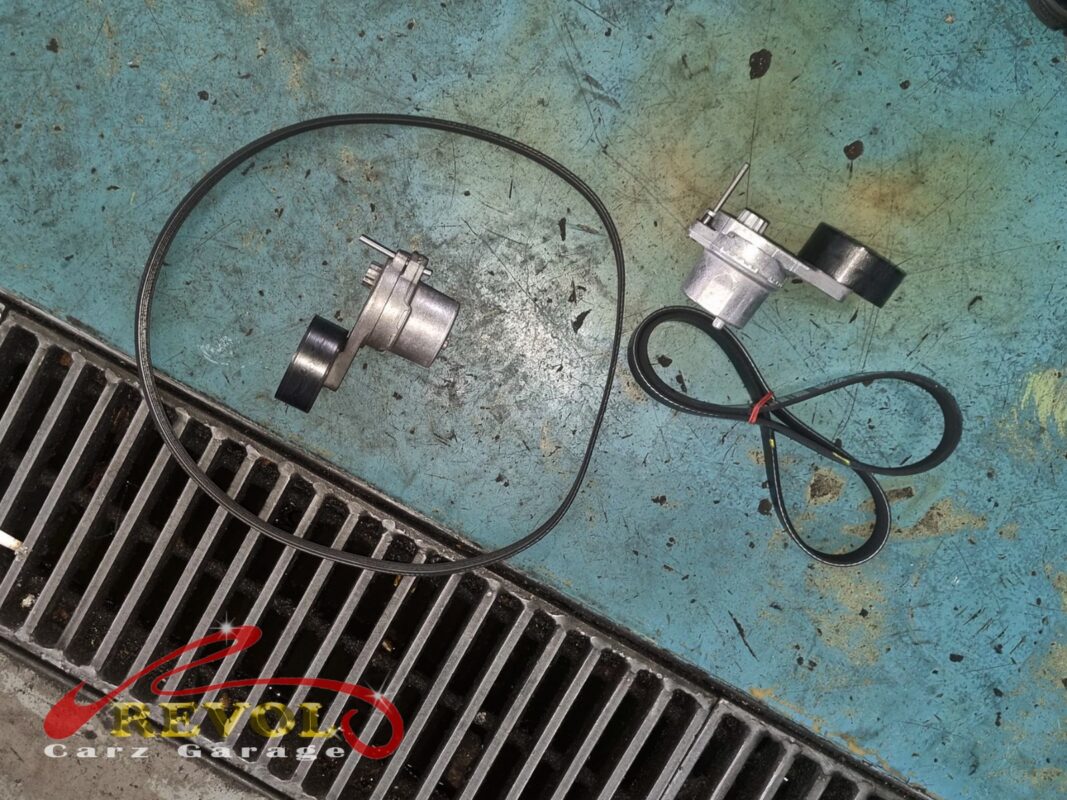
Belt tension was released, the old alternator unbolted and lifted out, and a new Mercedes-spec alternator went in its place. A new Mercedes-spec serpentine belt and tensioner went on at the same time rather than refitting the worn ones, and the belt was re-tensioned to spec.
Then the new alternator was load-tested with the engine running and the big consumers, headlights, aircon, blower, rear demist, all switched on, to confirm the output held in the healthy band.
A cold-start check afterwards confirmed normal cranking.
The outcome
Charging output is back in the healthy band at idle and at speed, the battery warning is gone, the engine cranks normally, and the headlights stay steady at the lights.
The GLC250 went home with the electrical system back to spec. A failing alternator left long enough flattens the battery and strands the car, so acting on the warning light and the weekly top-ups meant a planned fix rather than a tow.