The brief
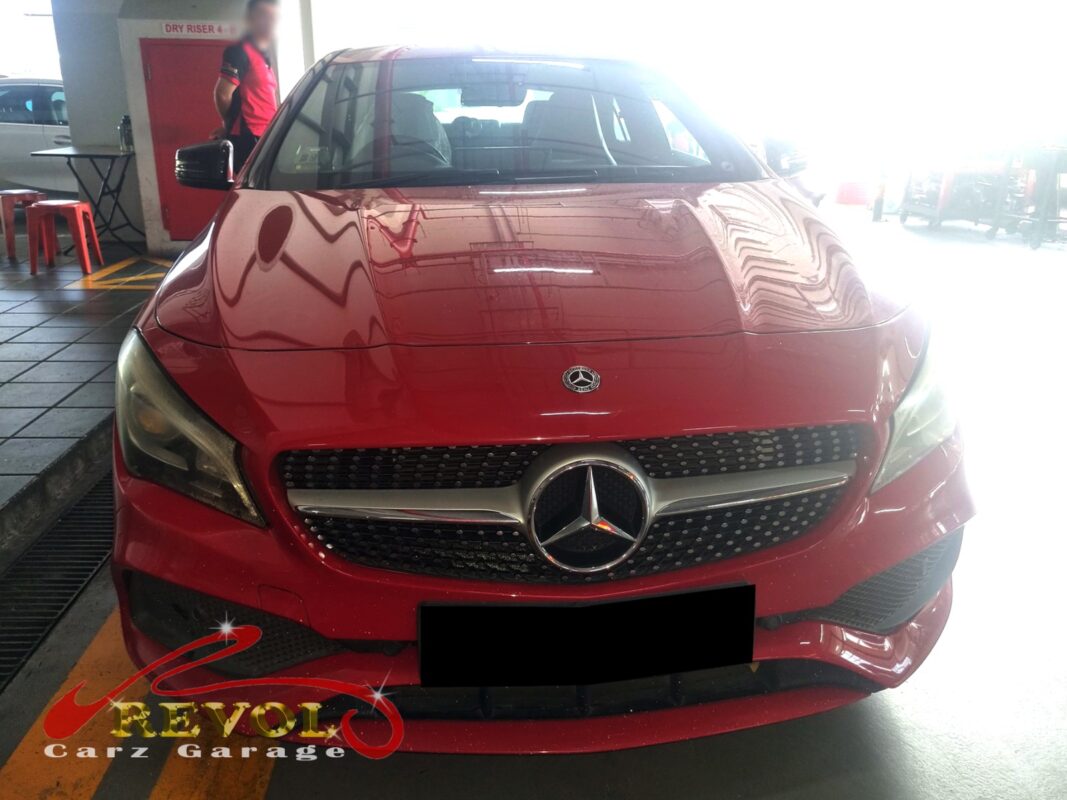
The CLA180's battery warning had been on for a week, the morning crank had grown noticeably slow, and on two occasions the engine had cut out a few seconds after starting. That last one is the giveaway: a car that fires up and then dies once it's running off the battery alone is telling you the alternator isn't charging.
The alternator keeps the battery topped up and runs the electrics while the engine's turning. Inside it a voltage regulator controls the output. When the regulator fails, the alternator stops charging, so everything runs down the battery, the warning light comes on, the starter struggles in the morning, and if the battery's low enough the engine quits soon after a cold start. That's exactly the pattern here.
The diagnosis
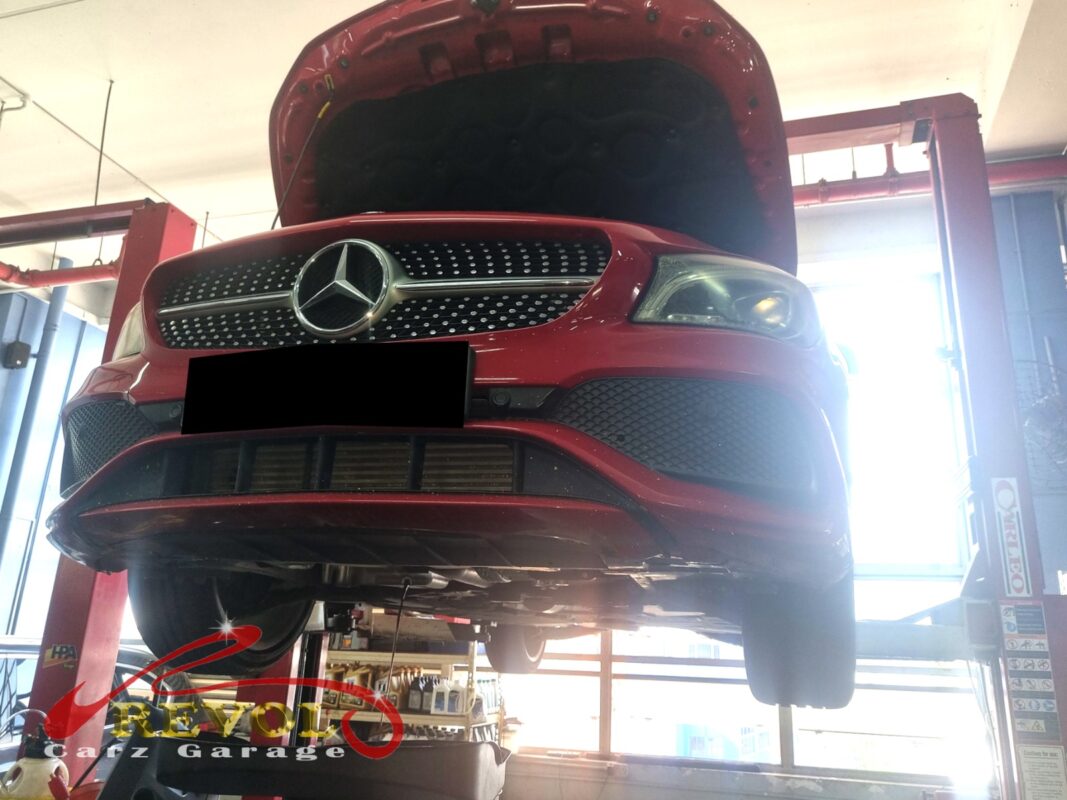
A multimeter on the alternator output confirmed it: well below charge voltage at idle, barely climbing as the revs came up, when it should be holding a steady charge across the range. The alternator's regulator had given up.
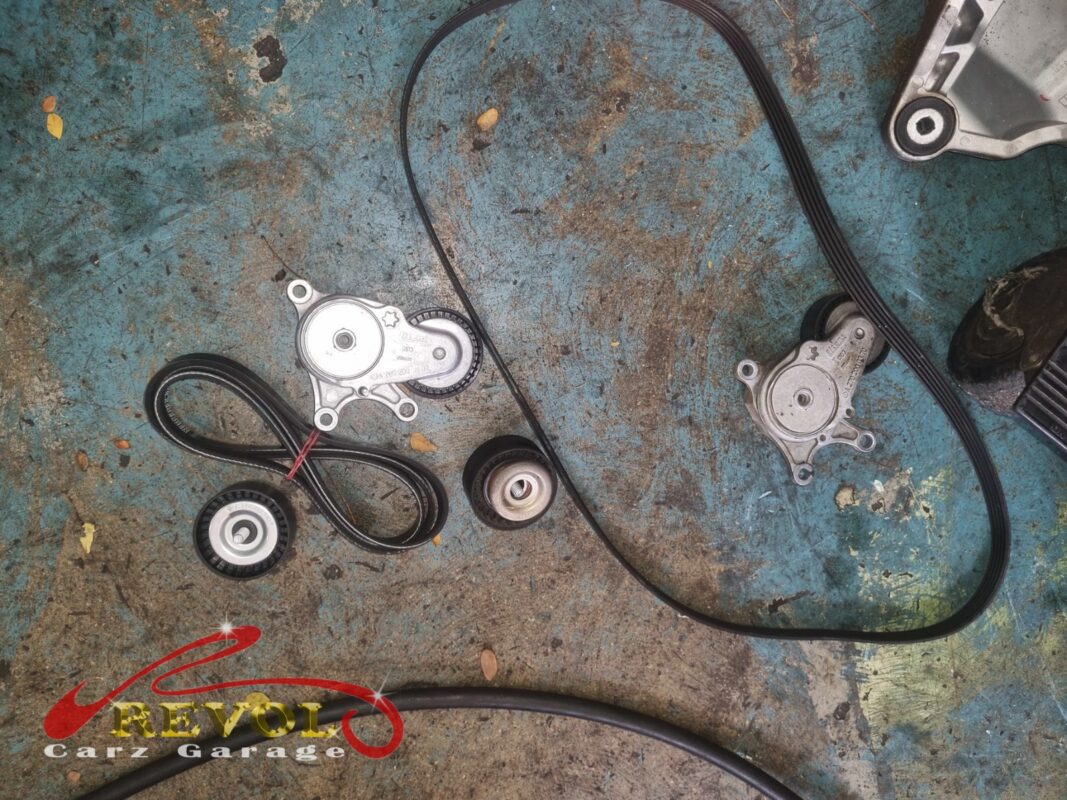
We checked the rest: the battery itself tested fine, the drive belt and the charge harness were clean. So it was the alternator. The serpentine belt and tensioner had taken some wear over the years, so those went on the list to do at the same time rather than refit tired parts behind a new alternator.
The work
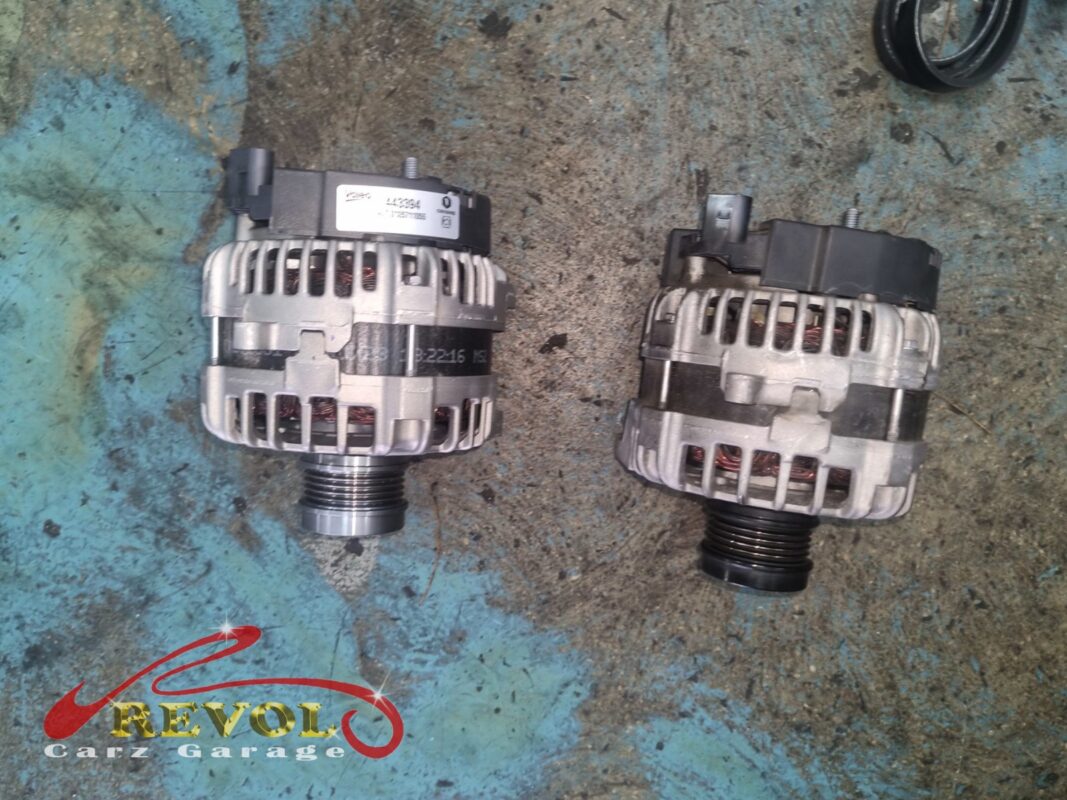
The drive belt was released, the old alternator unbolted and lifted out, and a new Mercedes-spec alternator went in. A new Mercedes-spec belt, tensioner and idler went on with it, and the belt was re-tensioned to spec.
Then the new alternator was load-tested with the engine running and the big consumers, headlights, aircon, blower, all switched on, to confirm the output held in the healthy band.
A cold-start check afterwards confirmed normal cranking and no cut-out.
The outcome
Charging output is back to spec, the dash warning is gone, the engine cranks normally in the morning, and there's no more cutting out after a cold start.
The CLA180 went home with the electrical system stable. An alternator that's stopped charging is on borrowed time, running on whatever's left in the battery, so catching it on the warning light meant a planned fix rather than a no-start on the driveway.