
The brief
The owner had been smelling fuel in the cabin of the E200 even after a short drive, the car would hesitate off the line, and a couple of times the engine had stalled at idle. He brought it in before the smell or the stalling left him stranded.
The fuel pump lives inside the tank and pushes petrol up to the engine at a set pressure, through a filter that keeps grit out of the injectors. When the pump weakens it can't hold that pressure under load, so the engine is starved when you ask for power, which is the hesitation and the idle stalls. And when the seal where the pump module sits in the tank starts to weep, that's where the fuel smell in the cabin comes from.
The diagnosis
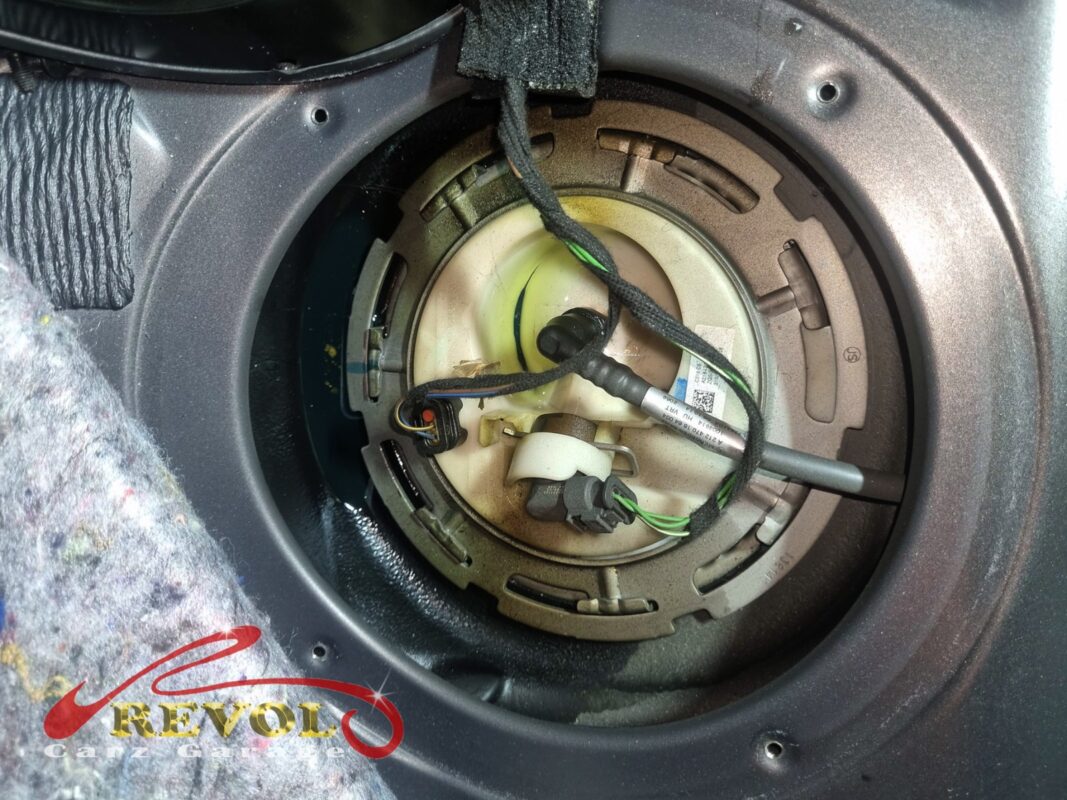
A pressure test on the fuel system was conclusive: the in-tank pump wasn't holding rated pressure under load, which explains the hesitation and the stalling, and the pump assembly had a small seep at the seal, which is the source of the cabin smell. The fuel filter itself checked out clean.
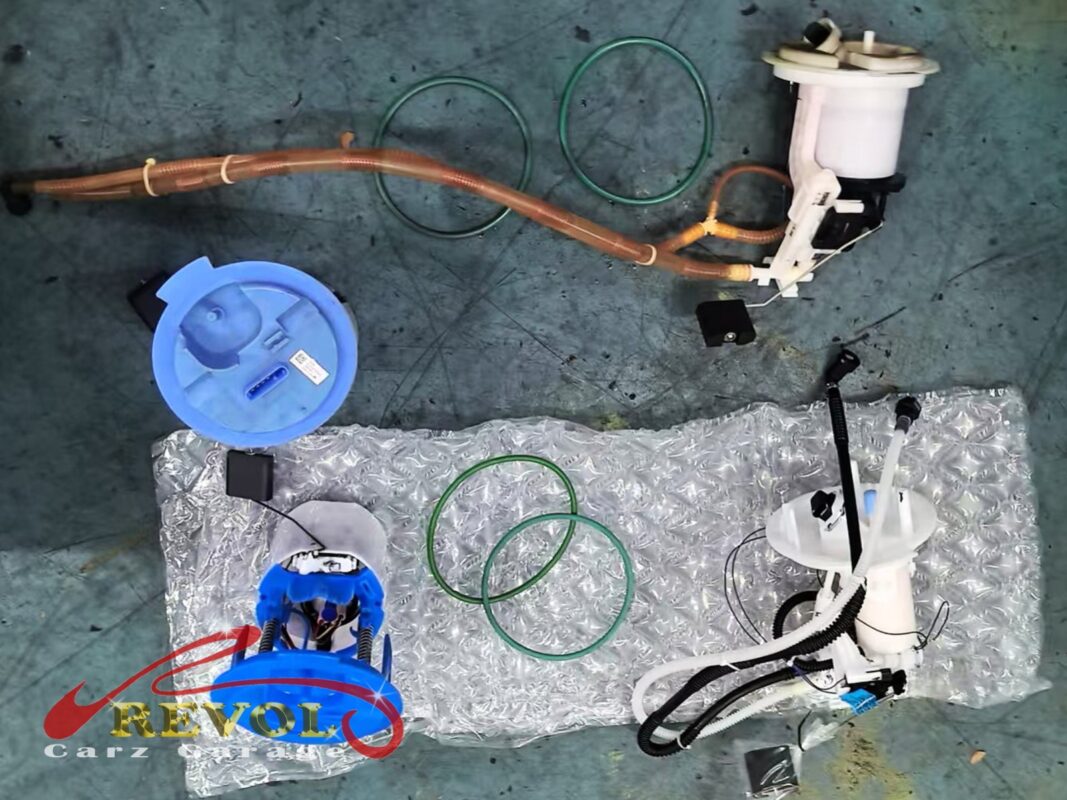
With the pump tired and its seal weeping, the fix was a new pump module with fresh seals, not a clean or a patch. On this E-class the tank is a saddle design with a pump pot one side and a transfer unit the other, so both sides got fresh seals while it was open.
The work
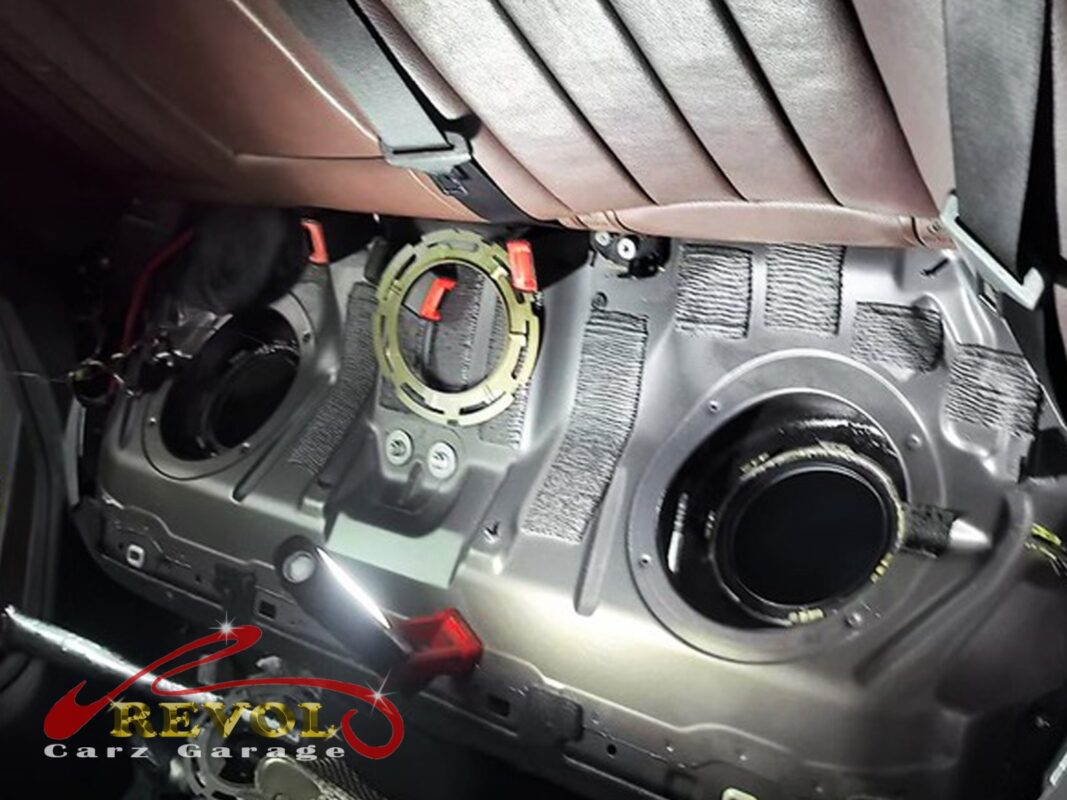
System pressure was released first, then the rear seat came up to reach the access hatches over the tank. The old in-tank pump assembly was lifted out, and a new Mercedes-spec pump went in, sealed back to the tank with new rings, the saddle tank's transfer parts refreshed at the same time.
Then the system was primed, the engine started, and the fuel pressure read on the gauge across idle and load to confirm it was holding spec.
A check around the hatches confirmed there was no weep before the trim went back.
The outcome
No more fuel smell in the cabin, the hesitation off the line is gone, and the engine holds a steady idle with no stalls.
The E200 went home running cleanly. A weeping fuel pump module is the kind of thing you don't sit on, both because the smell is unpleasant and because petrol around a hot engine bay is a hazard, so acting on it early meant fixing it at the source rather than topping up and hoping.