The brief
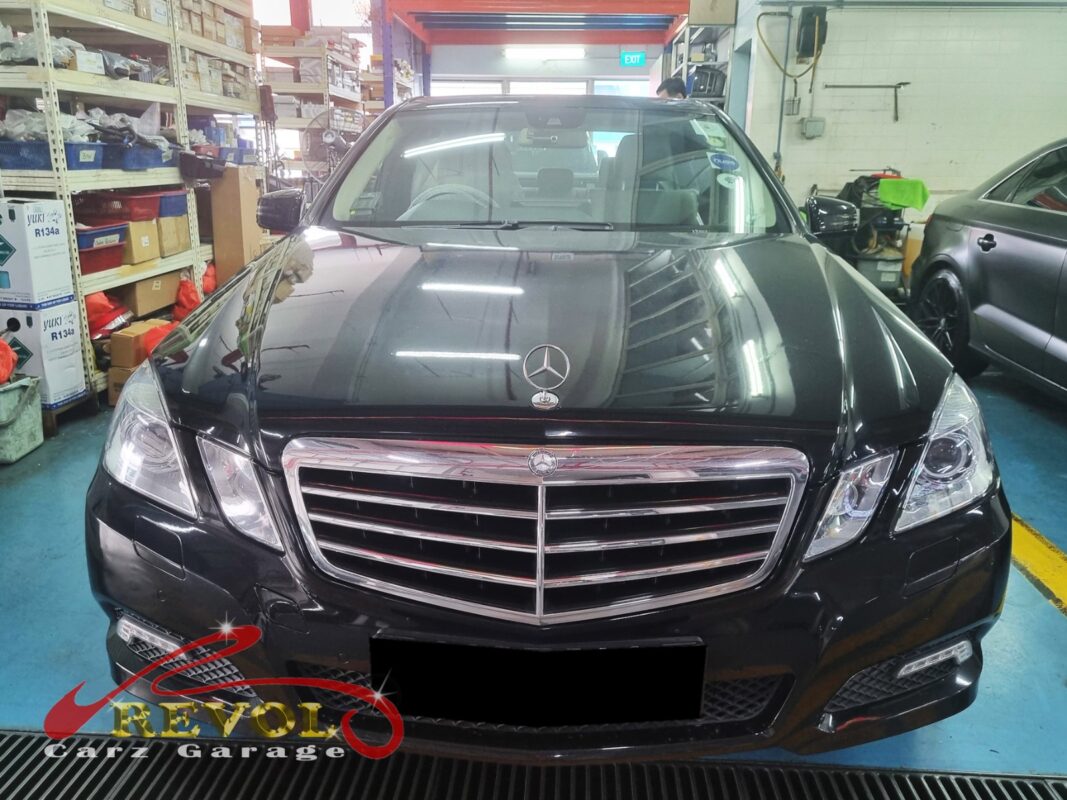
The owner had been catching a faint fuel smell in the cabin of the E250 after parking, the car was hesitating under acceleration, and fuel economy had dropped on his usual routes. Three symptoms, all pointing back at the fuel system.
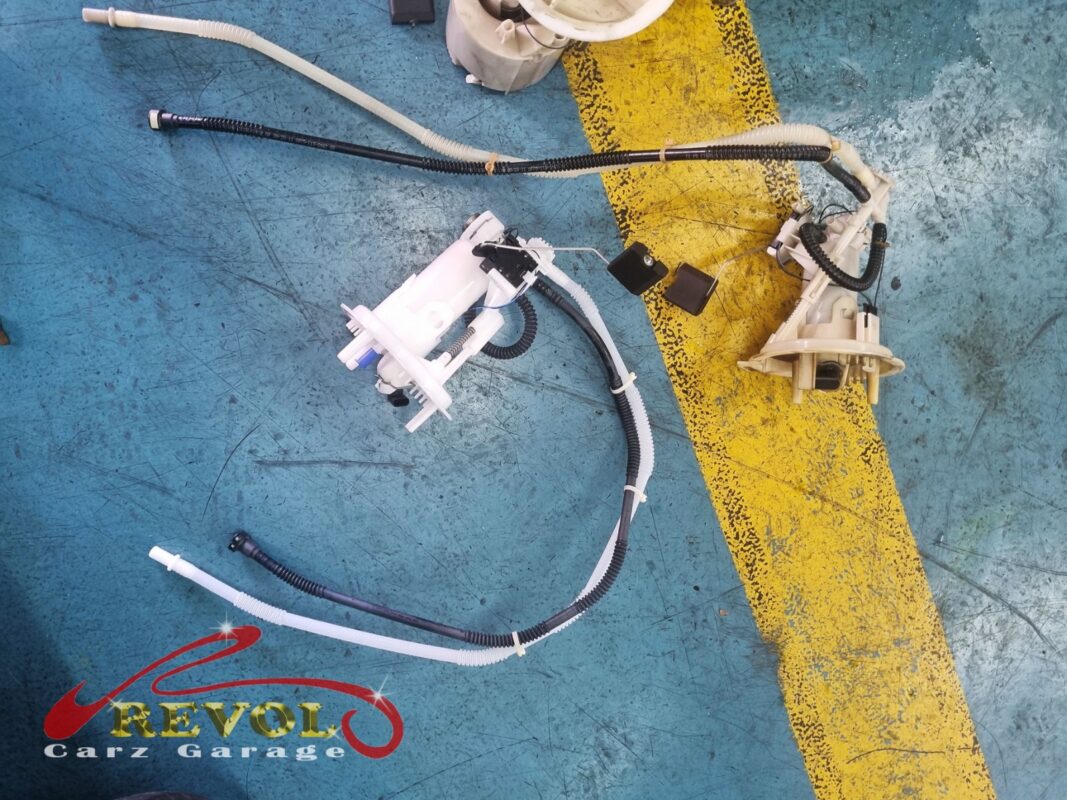
The fuel pump sits inside the tank and pushes petrol up to the engine at a set pressure, through a filter that keeps grit out of the injectors. When the pump weakens it can't hold that pressure under load, so the engine is short of fuel when you ask for power, which is the hesitation and the economy drop. And if the filter housing or the pump module seal is weeping, that's where the smell comes from.
The diagnosis
A pressure test confirmed the leak: the fuel filter housing had a small weep along a seal, and the in-tank pump wasn't holding pressure cleanly under load. Two fault points, not one.
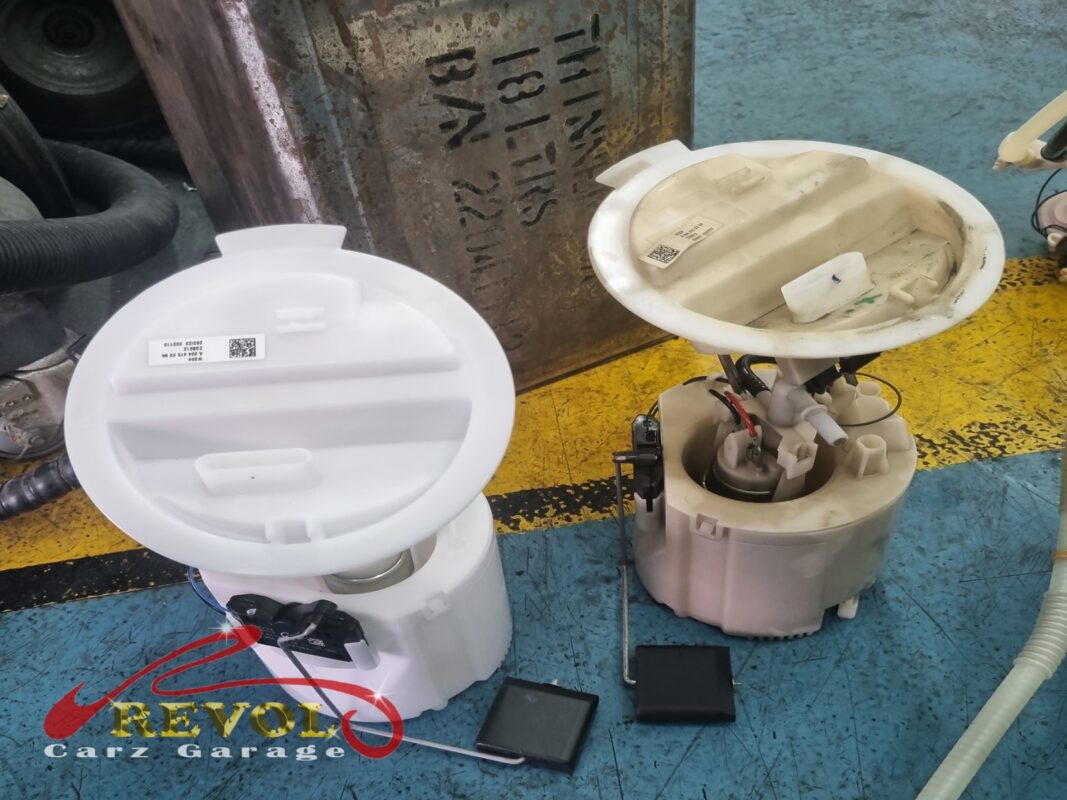
With both at the end of their service life, the right call was to replace the pump and filter together as a set, with fresh seals, rather than do one half now and have the other half bring the car back. On this E-class the pump and filter come as a combined in-tank module, so it goes in as a unit.
The work
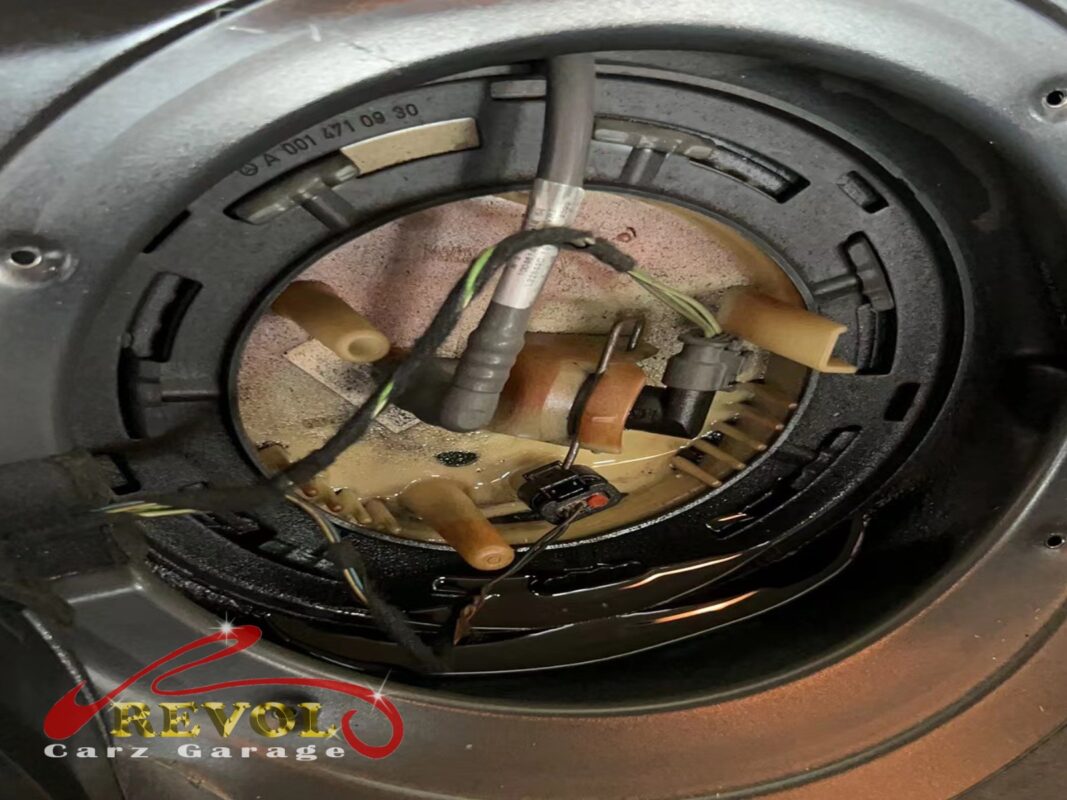
System pressure was released, then the rear seat came up to reach the access hatch over the tank. The old in-tank pump and filter module was lifted out, and a new Mercedes-spec unit went in, sealed back to the tank with new rings, the crossover hoses refreshed with it.
Then the system was primed, the engine started, and the fuel pressure read on the gauge across idle and load to confirm it was holding spec.
A check around the hatch confirmed no weep before the cabin trim went back.
The outcome
No more fuel smell in the cabin, the hesitation under acceleration is gone, and fuel economy has come back to where the owner expects it.
The E250 went home with the fuel system sealed and supplying clean, full pressure. Doing the pump and filter as a set means the supply side is sorted properly in one go, and the smell, which was the part that mattered most, is gone at the source.