The brief
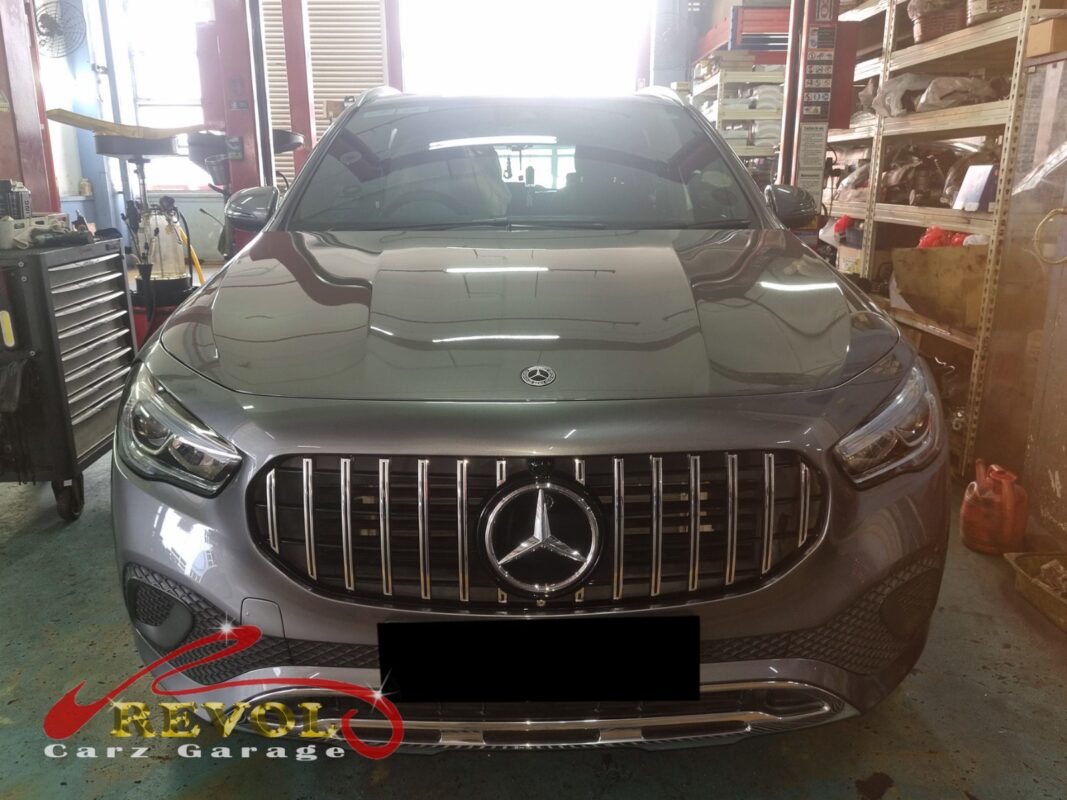
The owner noticed the GLA200's temperature gauge running unusually low on motorway runs, the cabin heater taking far longer than normal to come on, and the coolant level had dropped a little. He brought it in for a look.
The thermostat is the valve that decides when coolant flows through the radiator. Cold, it stays shut so the engine warms quickly; up to temperature, it opens so the engine doesn't overheat. When it sticks open, coolant goes to the radiator too soon, so the engine never gets up to its proper running temperature, which is the low gauge and the slow-warming heater. On this engine the thermostat lives in a plastic housing module, and that housing can weep at its mating faces too, which would explain the slight coolant loss.
The diagnosis
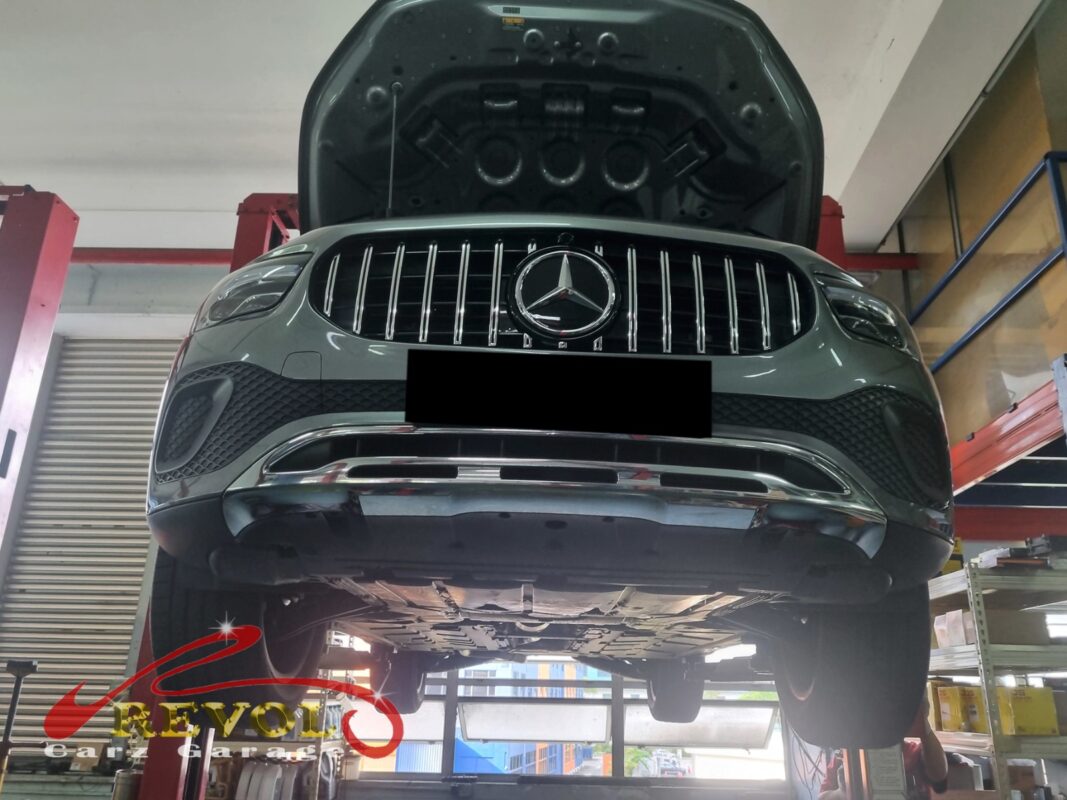
A pressure test on the cooling system held clean, no obvious external leak. On the scanner, the live data showed the coolant temperature sitting below the thermostat's regulating point, the signature of a thermostat stuck open, dumping heat away before the engine could come up to temperature.
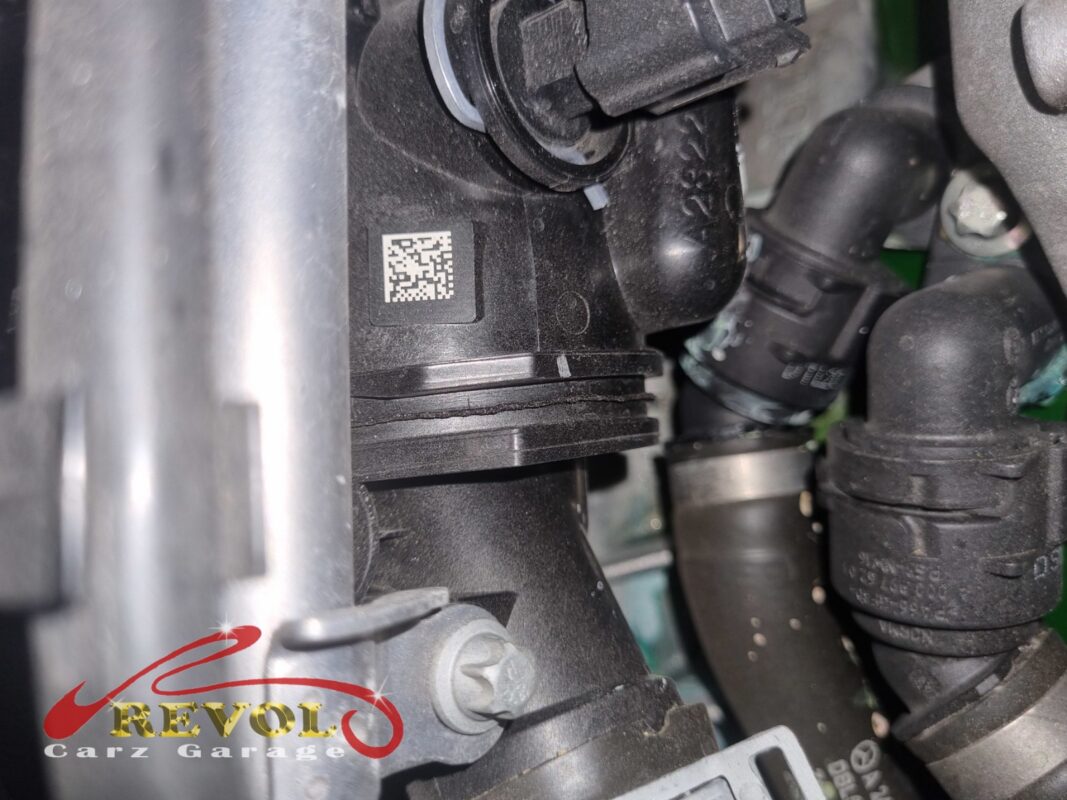
And a close look at the housing turned up a small weep at one of its mating faces, the source of the slight coolant loss. So it wasn't a simple seal job. The right fix is the complete thermostat housing module, with a fresh seal.
The work
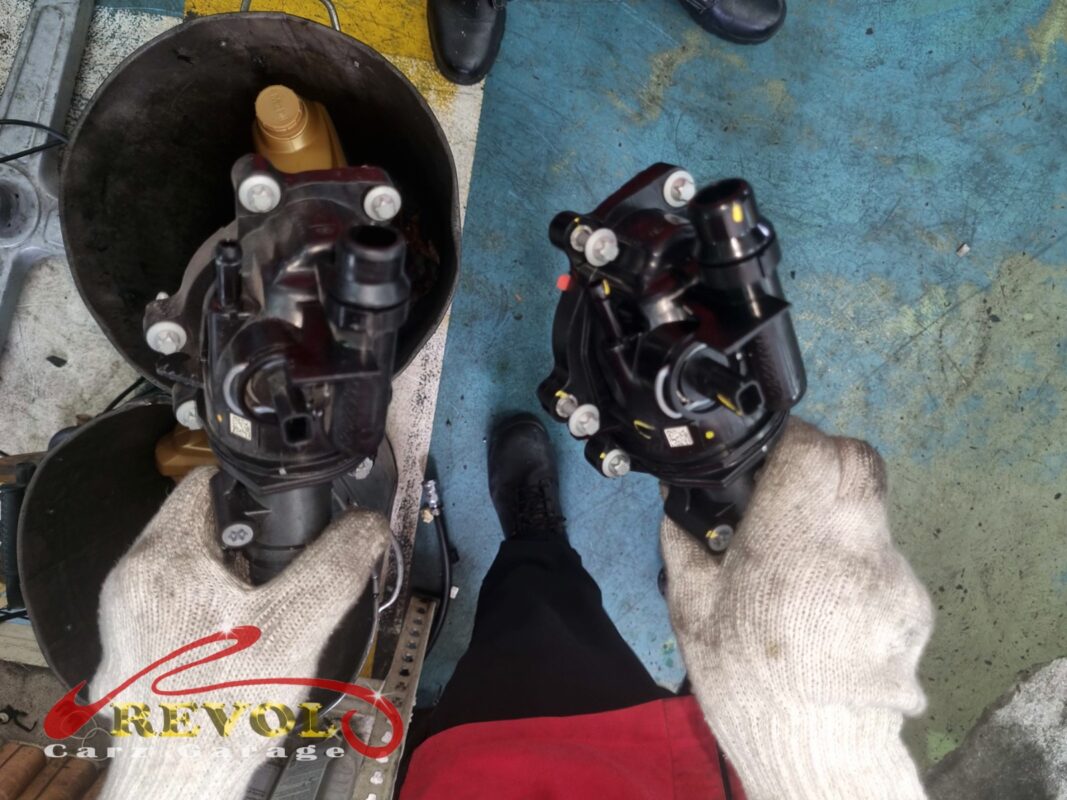
Enough coolant was drained to drop the thermostat housing, the old module came off, and a new Mercedes-spec housing went on complete with a fresh seal.
The system was refilled with the correct coolant and bled the proper way so no air was trapped, then held under pressure to confirm the new housing and its connections were sealed.
A run afterwards confirmed the engine warmed up at the right rate, the gauge held in the middle, and the coolant level held.
The outcome
Warm-up time is back to normal, the gauge holds dead centre, the cabin heater comes on when it should, and there's no more coolant loss.
The GLA200 went home with the cooling system regulating the way it should. A thermostat stuck open is a small fault with a real cost, it pushes the engine to run cooler than it's designed for, which hurts efficiency, and doing it as the complete housing means the weep is sealed at the same time.