The brief
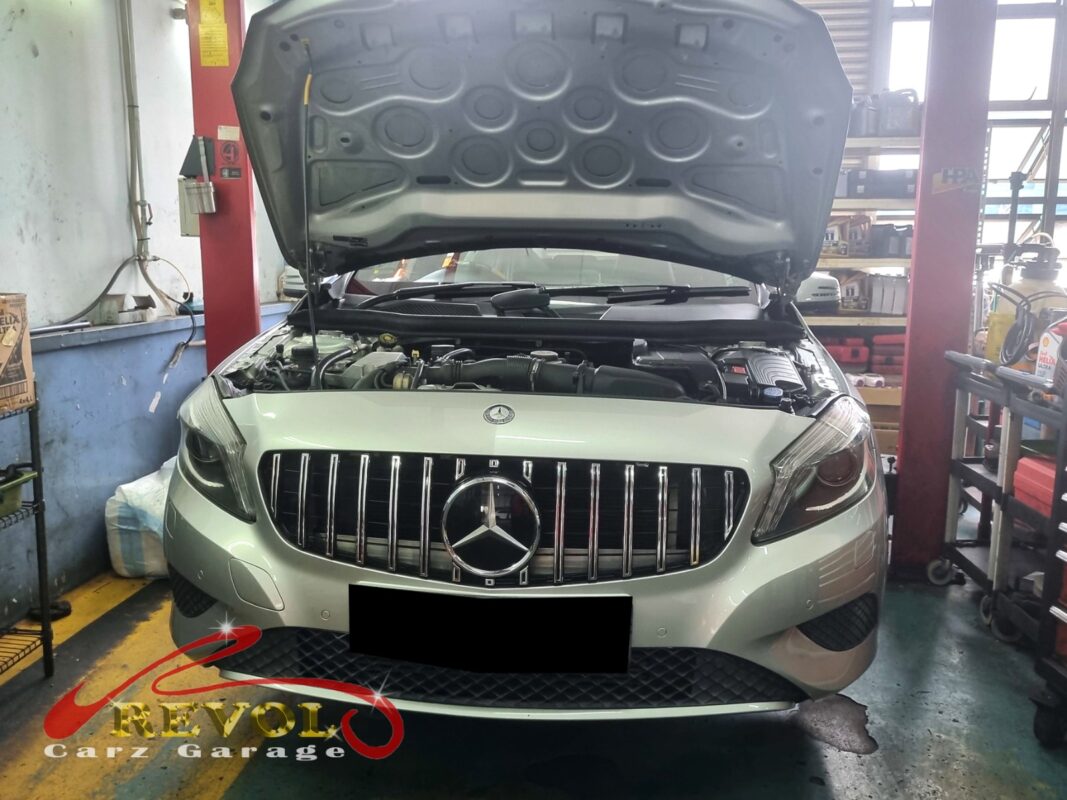
The owner described the A180 as feeling flat under acceleration, especially merging onto faster roads, the punch just not there. The check-engine light had come on and stayed on, and his fuel log showed kilometres per litre had dropped noticeably. He brought it in for a proper diagnosis rather than guessing.
This is a turbocharged engine, so the turbo squeezes air into the engine to make power, and that pressurised air, the boost, has to travel through hoses from the turbo to the intercooler and on to the intake. If one of those hoses cracks, the boost leaks out before it reaches the engine, so the engine can't make the power the controller's asking for. That's the flat feel, and the engine running rich on the codes because the air it expected isn't all getting there.
The diagnosis
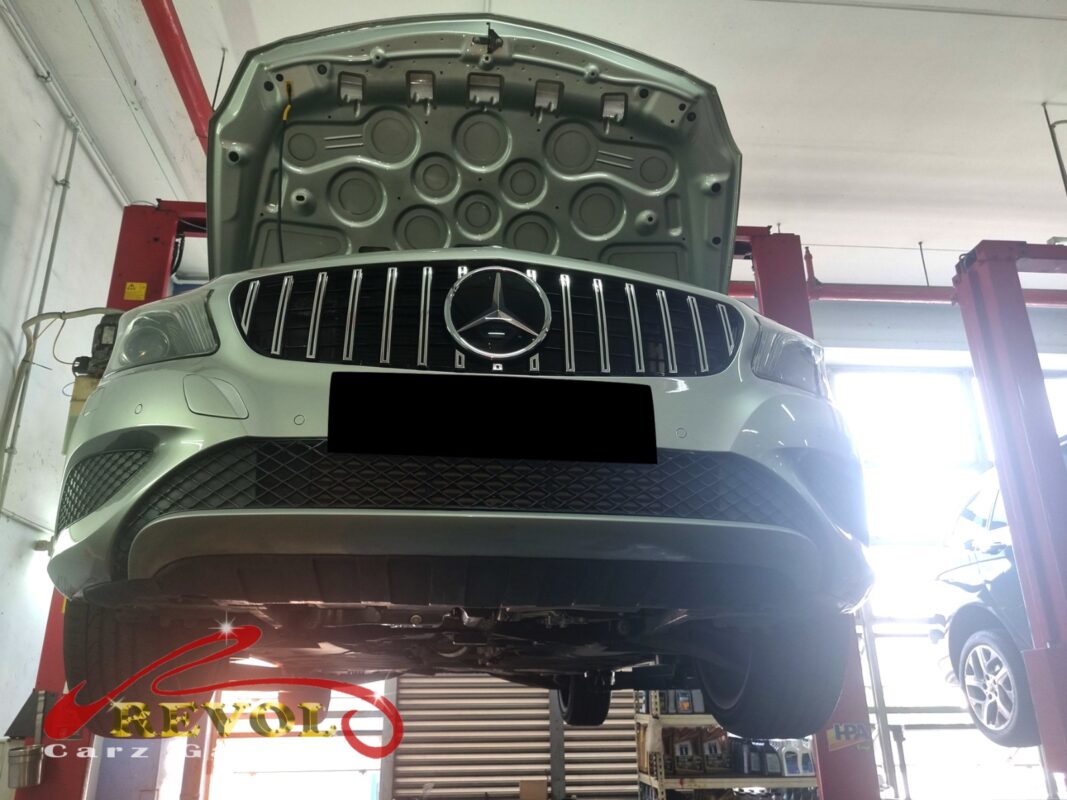
A smoke test on the intake found it straight away: the turbo air hose between the turbocharger and the intercooler had a fine crack along a fold where it flexes, leaking boost under load. With the leak there, the engine couldn't build the pressure the controller wanted, which is exactly the flat acceleration and the rich-running codes the car was showing.
A cracked turbo hose isn't a patch-up job, the rubber's perished along a stress line. It gets replaced.
The work
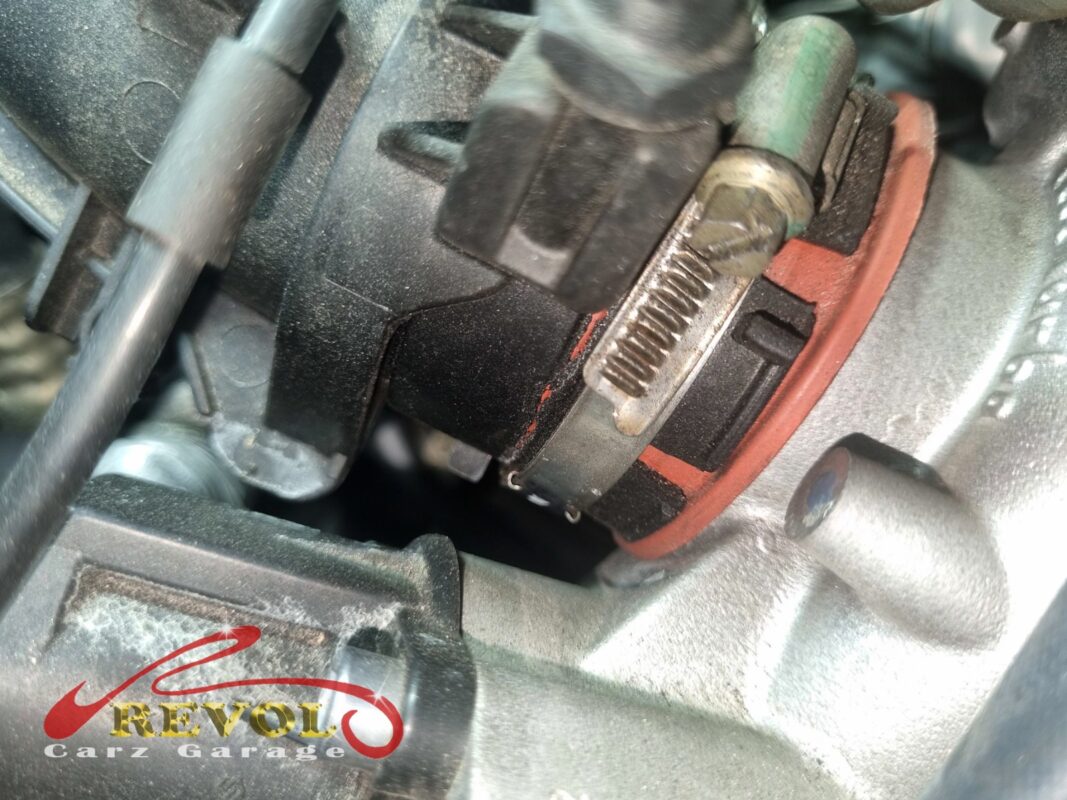
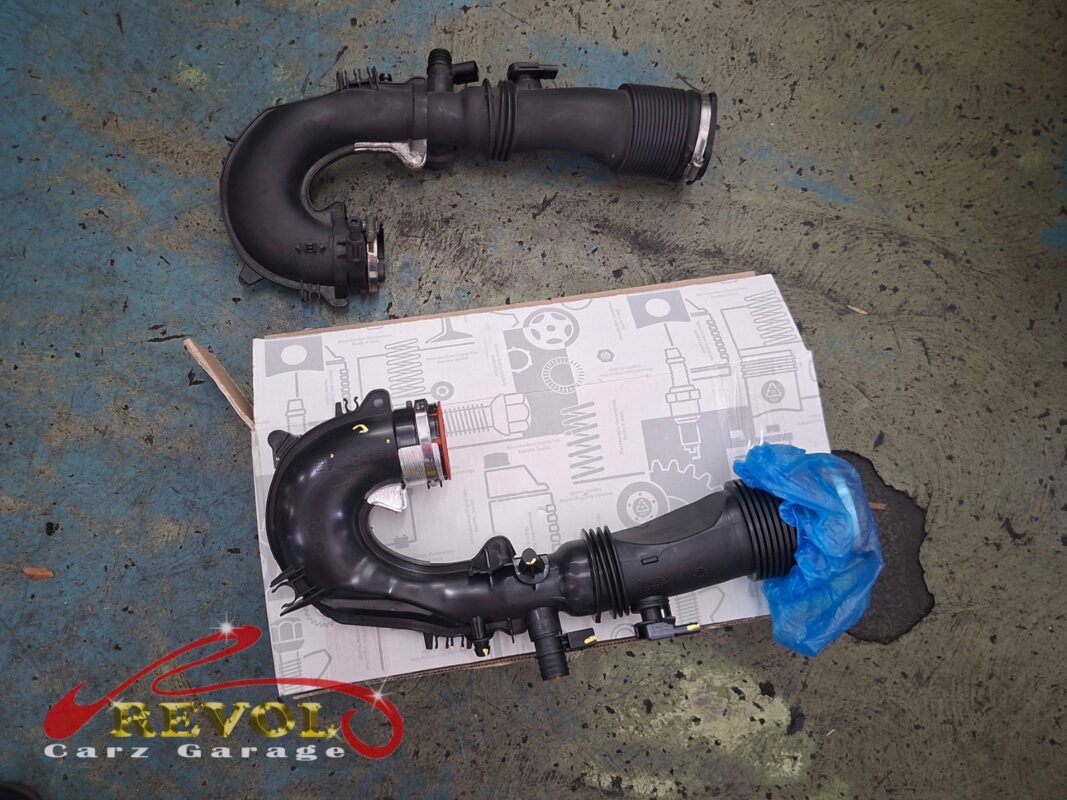
The cracked turbo air hose came off, and a new Mercedes-spec hose went on, both ends clamped to the correct torque with fresh clamps.
Then a fresh smoke test confirmed the intake was sealed all the way through with no leak, and the stored codes were cleared.
A road test confirmed the engine pulled cleanly through the rev range with the boost contained where it should be.
The outcome
The acceleration is back, the engine pulls properly when you ask it to, the check-engine light is off and stayed off through a drive cycle, and fuel economy should come back with it.
The A180 went home pulling cleanly through the rev range. A boost leak is a cheap fault with an annoying effect, it makes a turbo car feel gutless, and finding it on the smoke test rather than throwing parts at it meant fixing the actual problem the first time.