The brief
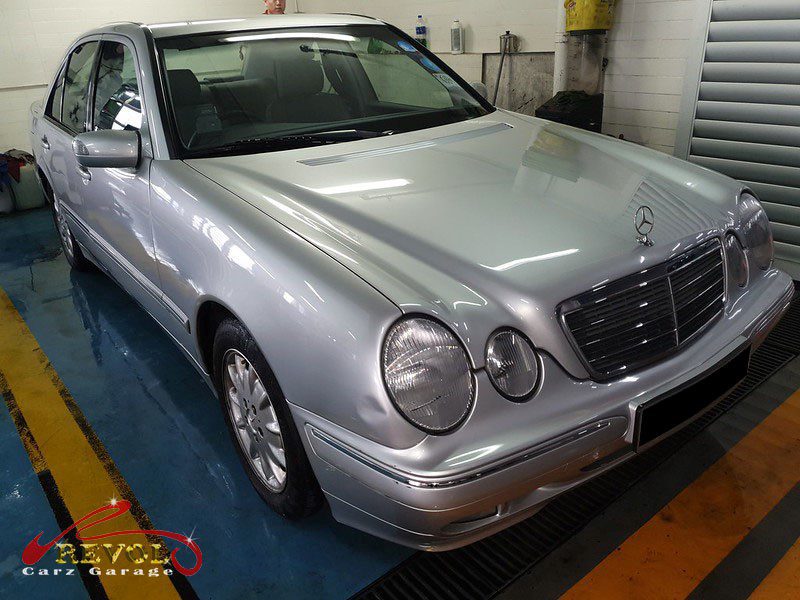
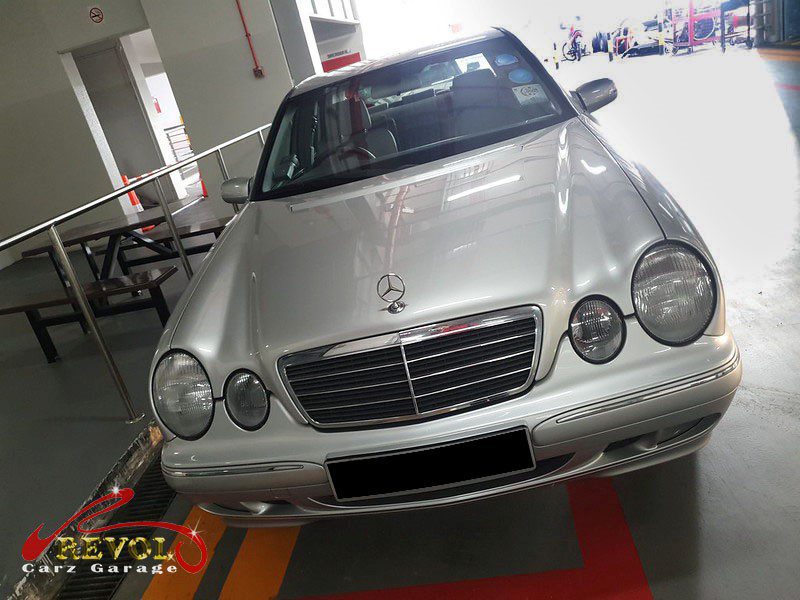
Mr Jimmy's E200 had a check engine light pop up, with a rough idle and hesitation. He'd renewed the COE and the car was into its 12th year, kept and looked after, and a COE car can be kept in good running order with the right repairs. He brought it in. The symptoms pointed at the throttle body. The throttle body controls how much air the engine gets, with an electric motor that opens and closes the throttle plate and a sensor that tells the computer where it is. When the motor or the sensor wears, the throttle doesn't respond cleanly, so the idle goes rough, the engine hesitates, and the management trips the light, sometimes dropping into a reduced-power mode. A failed throttle body doesn't recover, so it needs replacing, then adapted to the engine so it relearns its idle.
The diagnosis
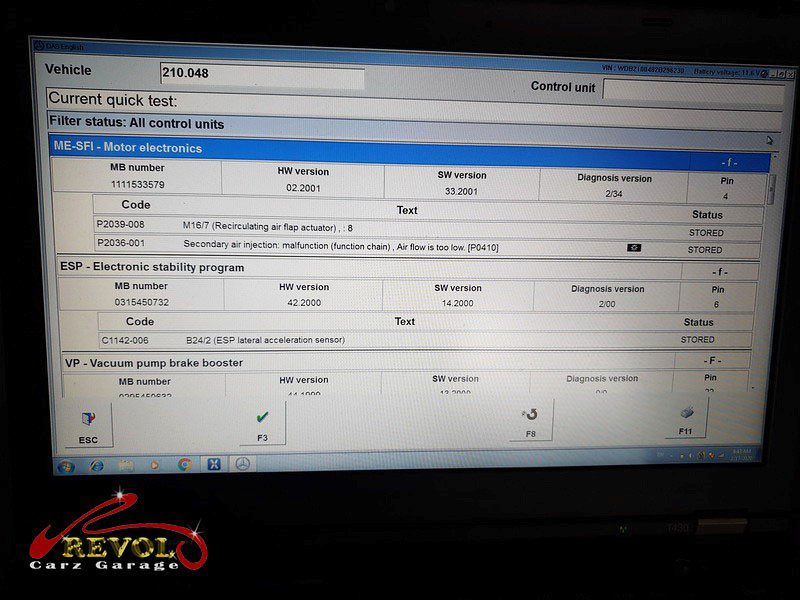
Diagnostics confirmed it, throttle position and electronic throttle control fault codes, and a check showed the throttle body wasn't responding cleanly, the motor and sensor worn. The intake, the injectors and the rest of the engine checked out, it was the throttle body. That's a replacement, you don't rebuild it on the car, so the call was a complete throttle body, fitted, adapted to the engine, and the codes cleared.
The work
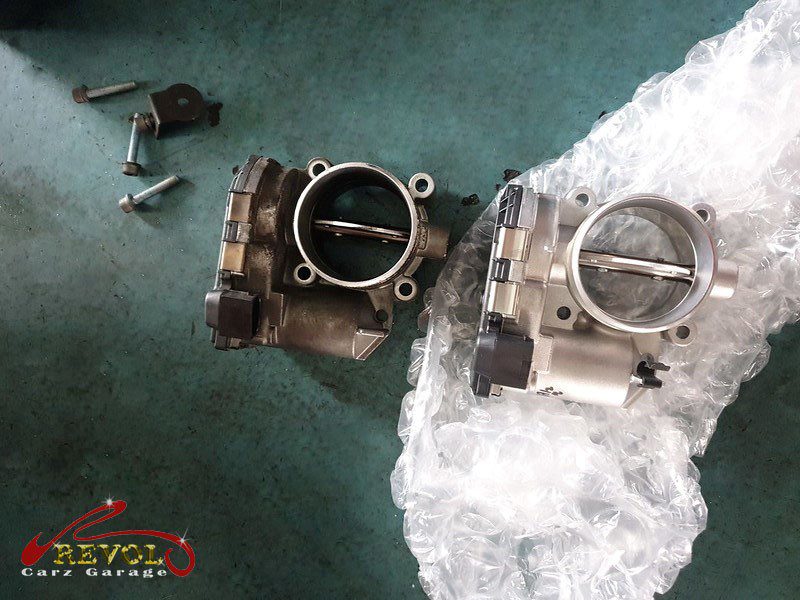
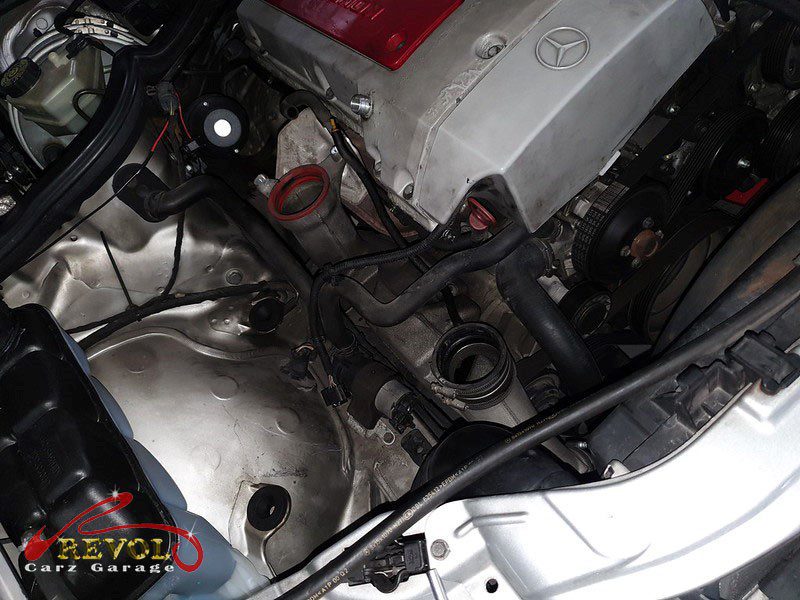
The old throttle body was removed, the intake mating face cleaned up, and a new genuine Mercedes-spec throttle body fitted with a fresh gasket. The new throttle body was adapted to the engine through the proper procedure so it relearned its idle and throttle range, the fault codes cleared, and the engine's adaptations reset. A road test confirmed a steady idle, no hesitation, the light staying off, and clean throttle response.
The outcome
Steady idle, clean throttle response, no hesitation, no warning light, and the running back to smooth. The E200 went home running properly again. A failed throttle body costs you smooth running and can drop the car into limp mode, so changing it and adapting it put the running right, and a 12th-year COE car kept in good shape with a proper repair.