The brief
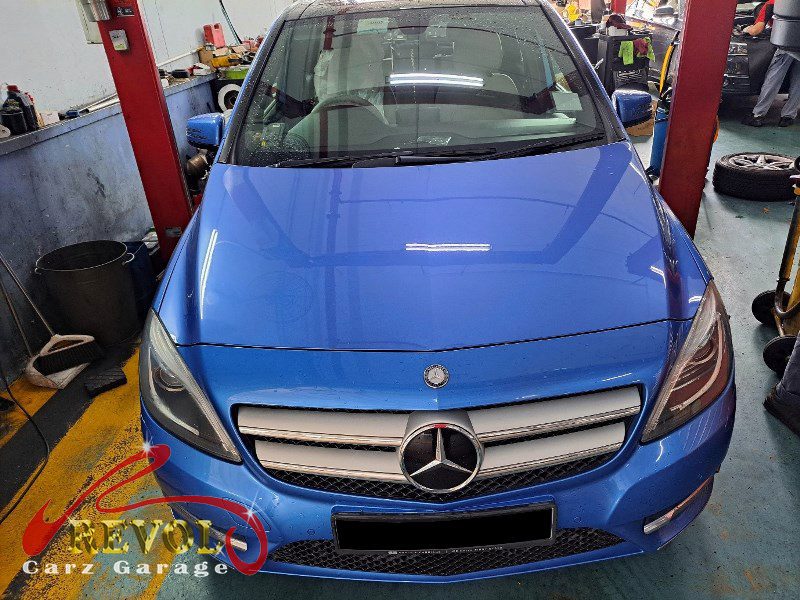
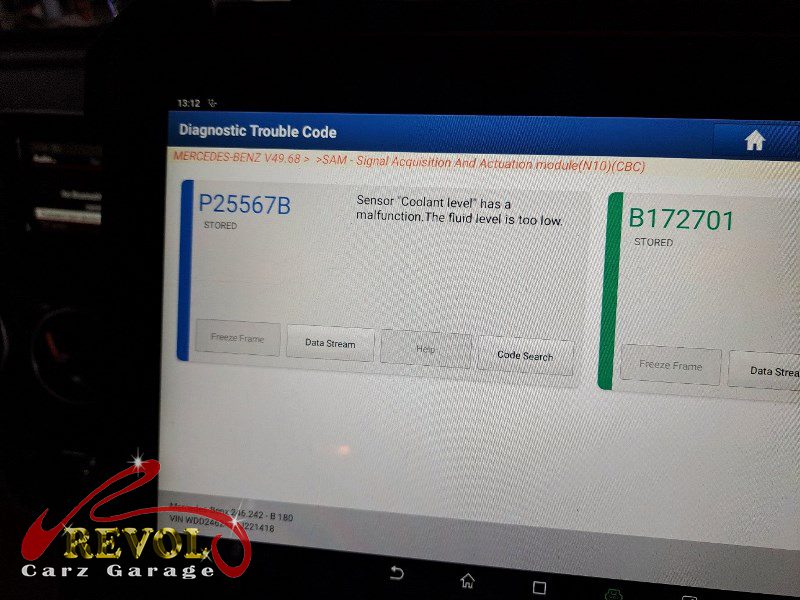
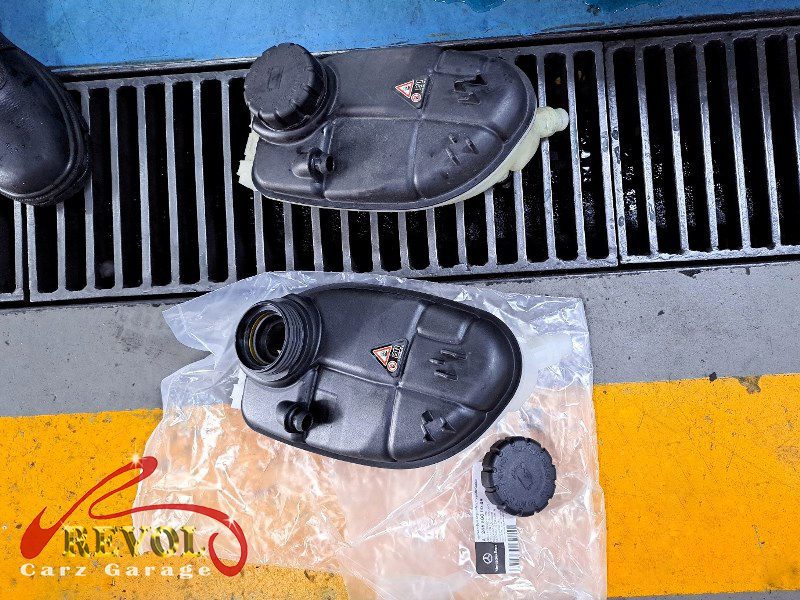
The B180 had flashed a check coolant level warning on the dash, which means the coolant is low, and ignoring it risks an overheat and an expensive repair. The owner brought it in, which is exactly right. The coolant tank, the plastic reservoir that holds the spare coolant and lets the system breathe as it heats and cools, is the usual reason one of these runs low slowly. It sits under pressure and heat cycles its whole life, and the plastic gets brittle with age and cracks, often at a seam or the cap neck, weeping coolant that flashes off on the hot engine so you barely see it, until the level drops enough to trip the warning. A cracked tank only splits worse, so it needs replacing.
The diagnosis
A pressure test on the cooling system pinpointed it, the coolant tank was weeping from a hairline crack and losing pressure slowly, which is the low level and the warning. The radiator, the hoses, the water pump and the rest of the system held fine. That's a tank replacement, with a fresh cap, rather than chasing a crack in brittle plastic that's only going to spread.
The work
The cooling system was drained enough to get at the tank, the old cracked coolant tank removed, and a new genuine Mercedes-spec tank fitted with a fresh cap and the level sensor transferred over properly. The system was refilled with the correct Mercedes coolant, bled the proper way so no air pockets were left, pressure tested again to confirm it held with no weep, and the stored warning cleared. A road test confirmed the gauge sat steady, the level stayed put, and the warning stayed off.
The outcome
No more coolant loss, no warning, the level holding between checks, the gauge steady, and the system holding pressure as it should. The B180 went home with the leak resolved. A cracked coolant tank only splits further, and the failure at the end is a sudden coolant dump and an overheat, so changing the tank kept it to a tidy, planned job.