
The brief
The owner kept seeing a warning light on the B200's dashboard telling him the oil was low, or the oil pressure was off, depending on the message. But every dipstick check showed the engine sitting at the full mark and it sounded perfectly normal, so something didn't add up. He brought it in for a proper diagnosis rather than guess.
Modern engines have an oil level sensor low down in the sump that feeds the dash. It's useful when it works. But when the sensor itself fails, it can send a reading that doesn't match what's actually in the engine, so you get a warning on a healthy engine. The first job is to find out which one is telling the truth, the dipstick or the sensor.
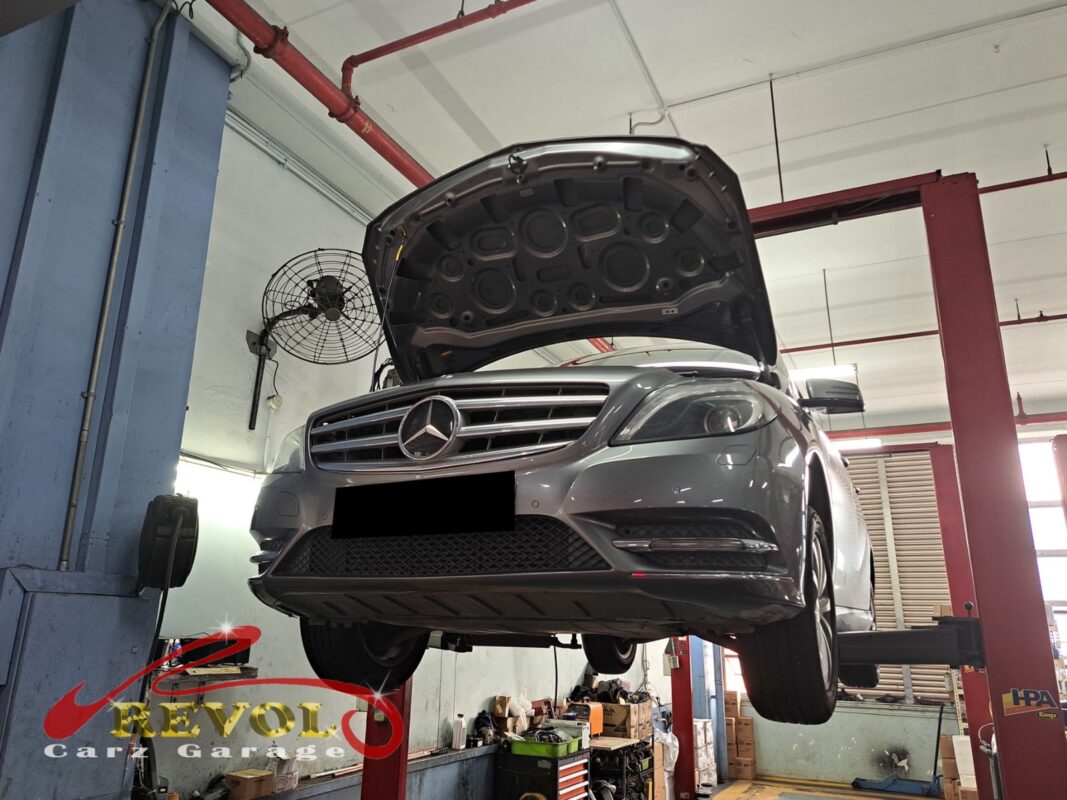
The diagnosis
On the scanner, the codes confirmed it: the oil readings the sensor was sending were inconsistent and didn't line up with the actual quantity in the sump. The dipstick, a visual look at the sump, and a proper drain-and-measure all agreed the oil was right at spec.
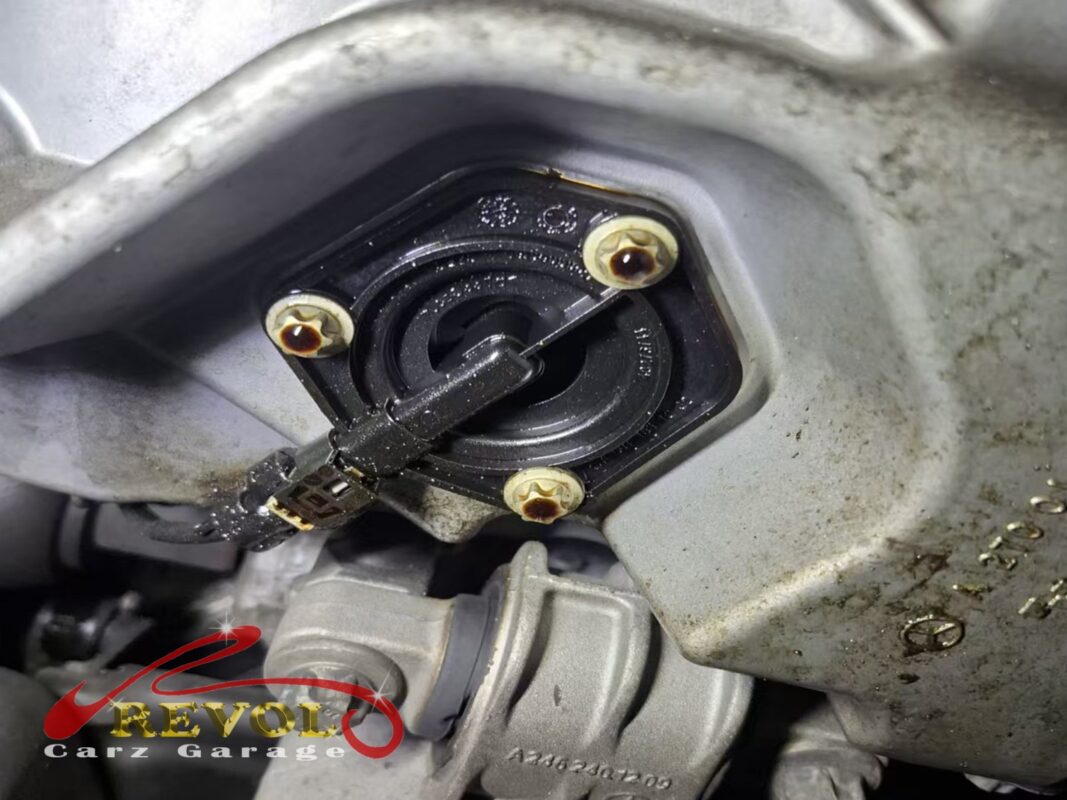
And on the sensor itself there was a small seep around its housing, the sign it was on its way out. So the engine was fine. The sensor was the fault. That's a replacement, not a top-up, and once it's out the dash goes back to telling the truth.
The work
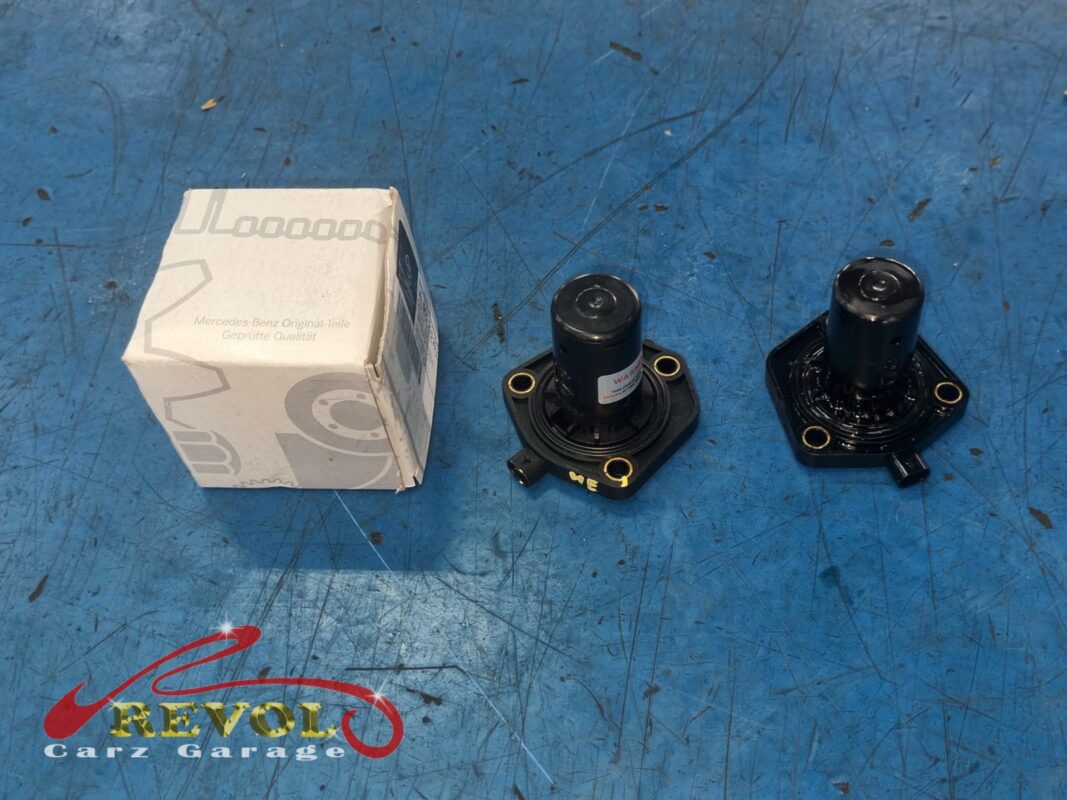
Enough oil was drained to drop the sensor cleanly out of the bottom of the sump, the failed unit came off, and a new Mercedes-spec oil level sensor went in with a fresh seal. The engine was refilled to the correct level, and the stored fault codes were cleared.
Then a road test and an idle cycle, watching the dash to confirm the warning stayed off.
The outcome
The warning light is off, and it stayed off through a road test and an idle cycle.
The B200 went home with the dashboard back to normal. There's an extra reason to fix a faulty oil sensor rather than ignore it: a sensor that's crying wolf trains you to ignore it, and then a real low-oil event gets ignored too. With a working sensor, when the dash says something's wrong, it means it.