The brief
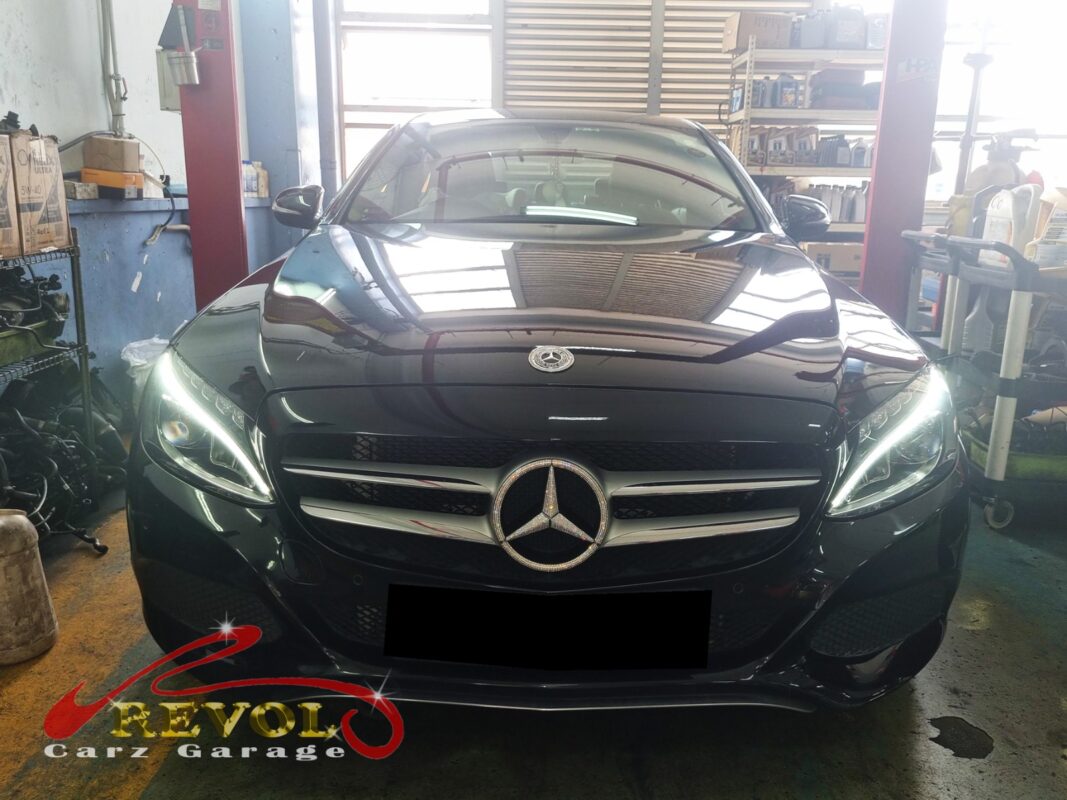
The C180 had been leaving fresh oil puddles overnight, the low-oil warning had appeared twice on the dash, and a quick look underneath showed wet oil around the lower sump. The owner brought it in before the slow loss became a real problem, which is the right move: an engine that's losing oil and being driven anyway is one missed top-up away from a real low-oil event.
The sump is the pan at the bottom of the engine that holds the oil. On this engine it's a steel pan bolted to the block. Years of heating and cooling stress the metal, and a crack can start at one of the bolt seats where the load is concentrated. Once it does, oil weeps out the bottom, which is the overnight puddle and the dropping level.
The diagnosis
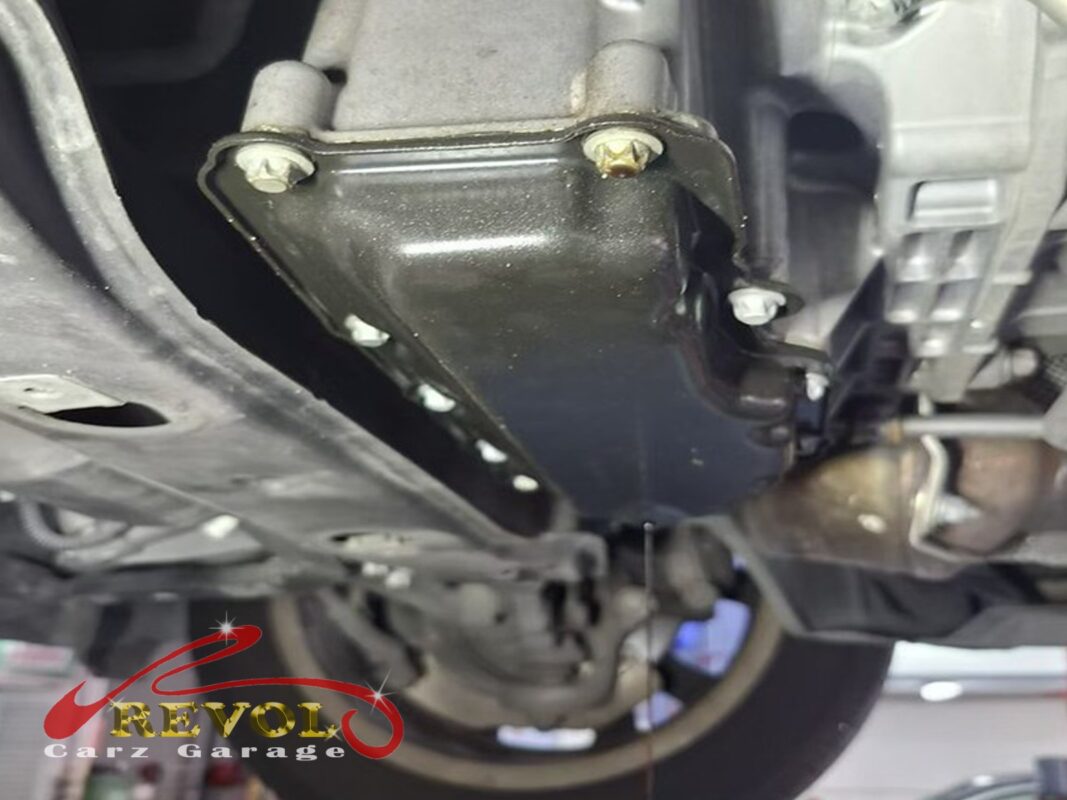
On the lift the leak was traced to a stress crack on the steel sump pan, at one of the bolt seats, the common heat-cycle ageing failure. The gasket between the pan and the block was actually still holding, so it wasn't a re-seal job, the crack in the pan itself was the leak path.
That's a pan replacement. A cracked steel sump isn't something you weld up and trust under an engine, it gets a new one.
The work
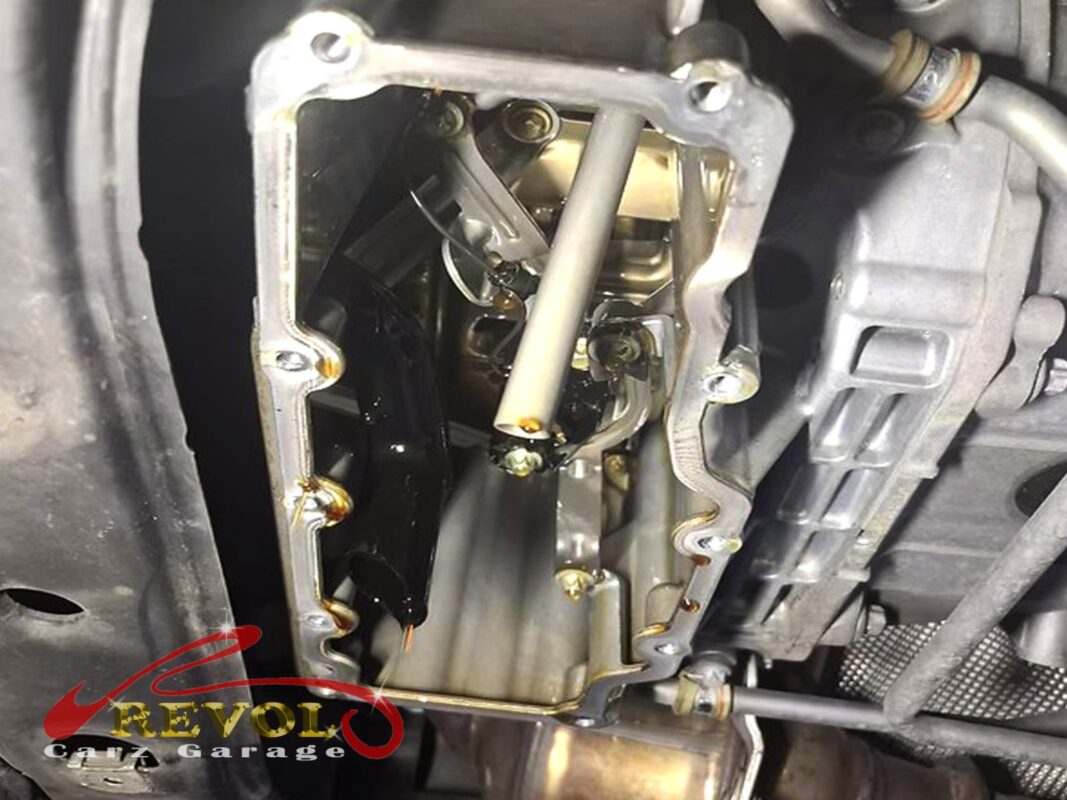
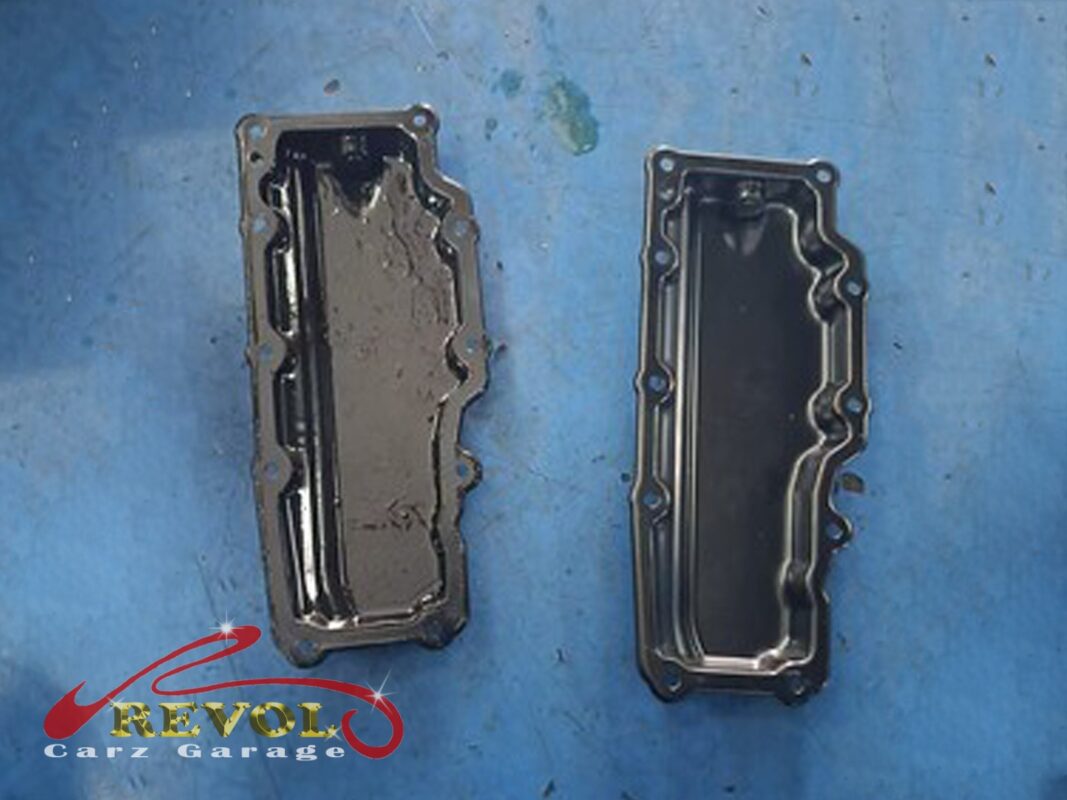
The engine oil was drained, the engine supported, and the cracked lower sump pan dropped off. The mating face on the block was cleaned back to bare metal, and a new Mercedes-spec sump pan went on with a fresh gasket and new bolts, torqued in the proper pattern so it seals evenly.
Then the engine was refilled with the correct oil spec, run, and the underside checked dry before a road test.
The car was left overnight to confirm there was no puddle in the morning.
The outcome
No drips overnight, the oil level holding cleanly, and the low-oil warning hasn't come back.
The C180 went home with the underside dry and the slow loss closed off. A cracked sump caught while it's still a slow weep is a manageable job; ignored, it ends with an engine run low on oil, which is a far bigger and far more expensive problem.