The brief
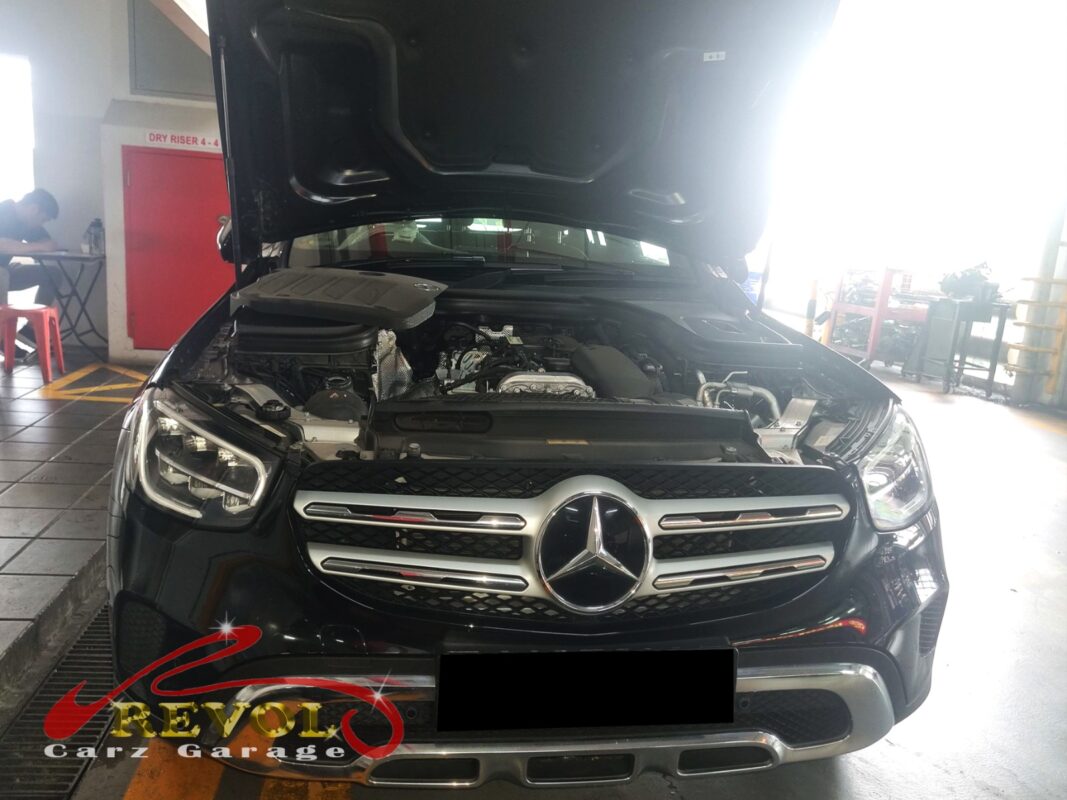
The GLC200 had been losing coolant fast enough that the owner had been topping up the expansion tank every few days, and the temperature gauge had started climbing in traffic. He brought it in before it overheated outright, which is the right call: a cooling system that can't hold coolant is one hot afternoon away from a real overheat.
The cooling system runs at pressure when the engine's hot, so any weak point eventually gives. The plastic expansion tank, the reservoir that holds spare coolant and lets the system breathe, gets brittle with age and can crack at a stress point. The hoses feeding it harden and split along their folds for the same reason. Either way the system bleeds down, the level drops, and the engine runs hotter than it should.
The diagnosis
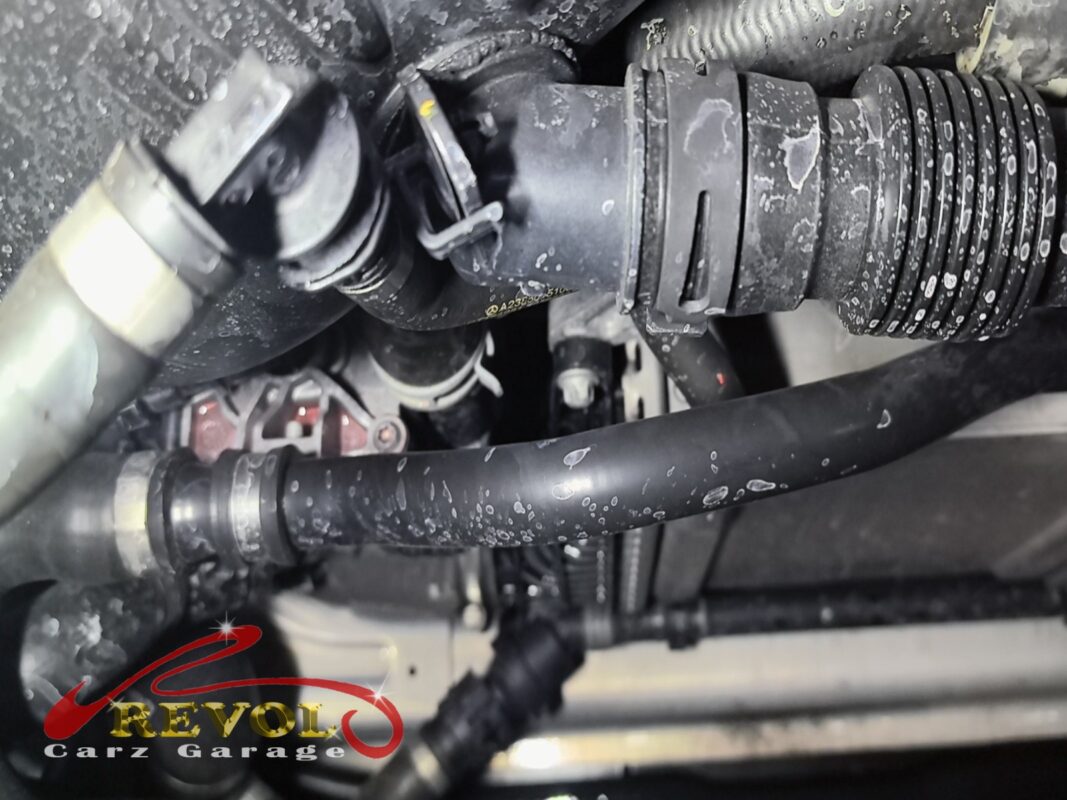
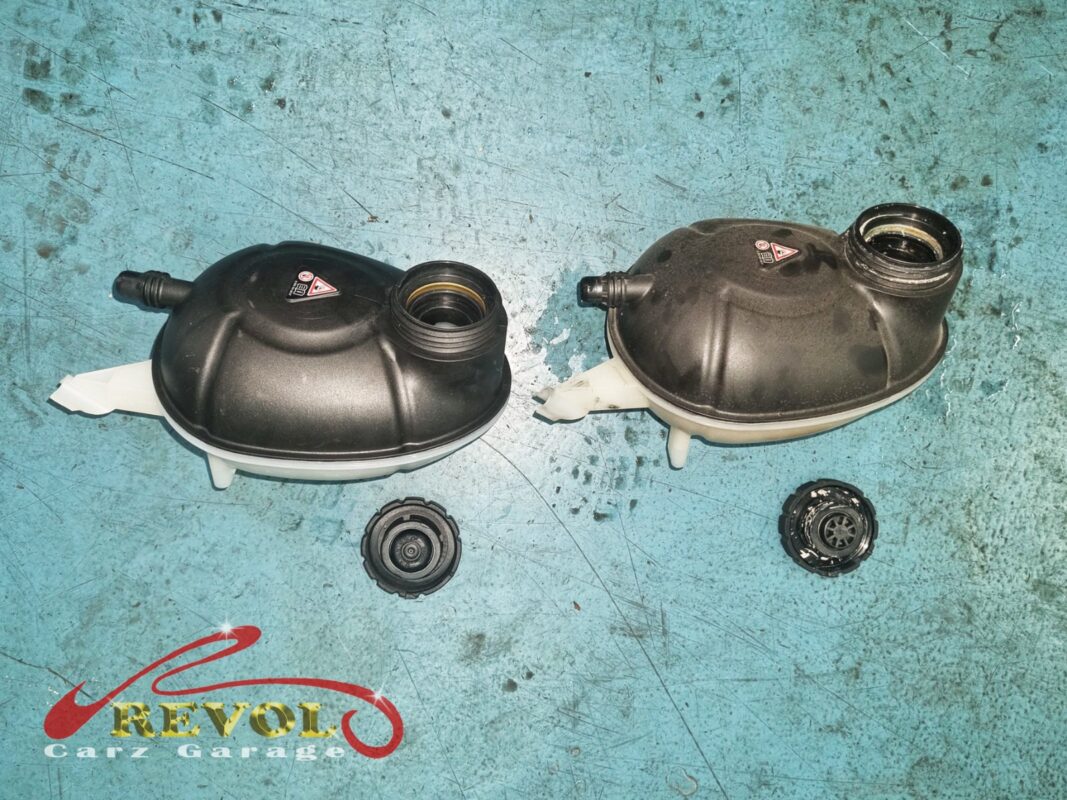
A pressure test exposed two fault points, not one. The plastic expansion tank had a hairline crack along one of its mounting points, and one of the coolant hoses running between the tank and the radiator had split along a fold from age.
Replacing one and leaving the other would just mean another visit a month later when the partner failure let go. So it went down as a combined job: the tank, its cap, and the failing hose, all together.
The work
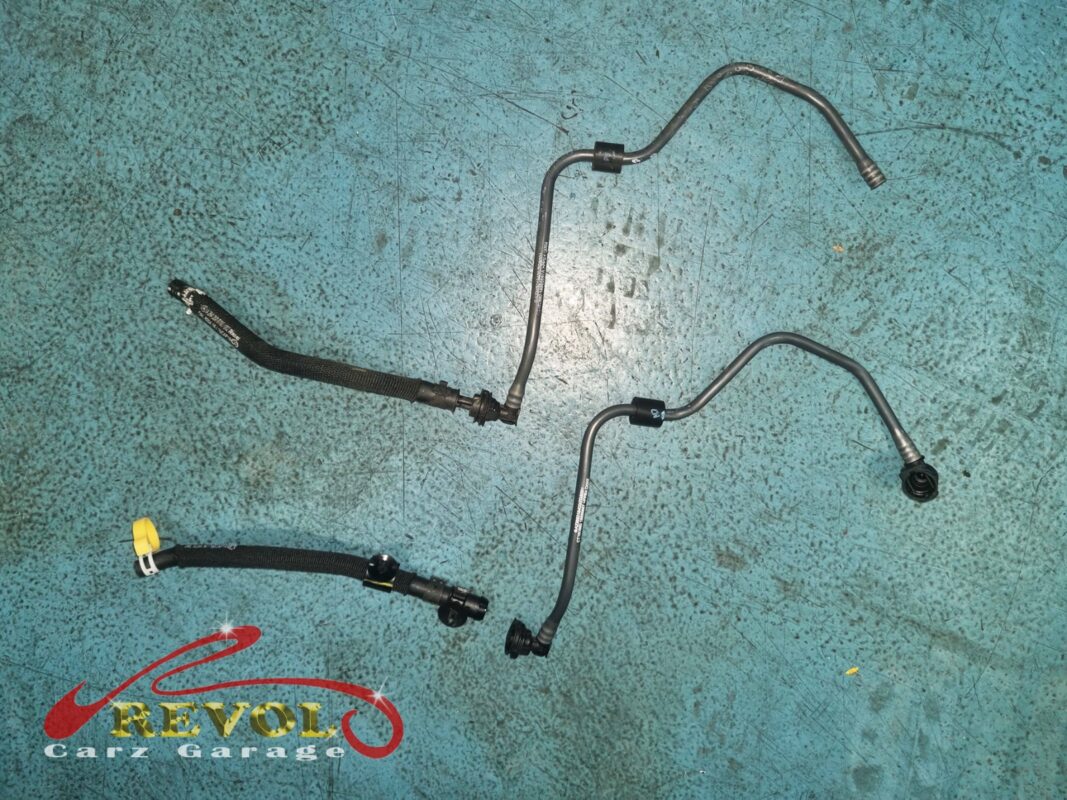
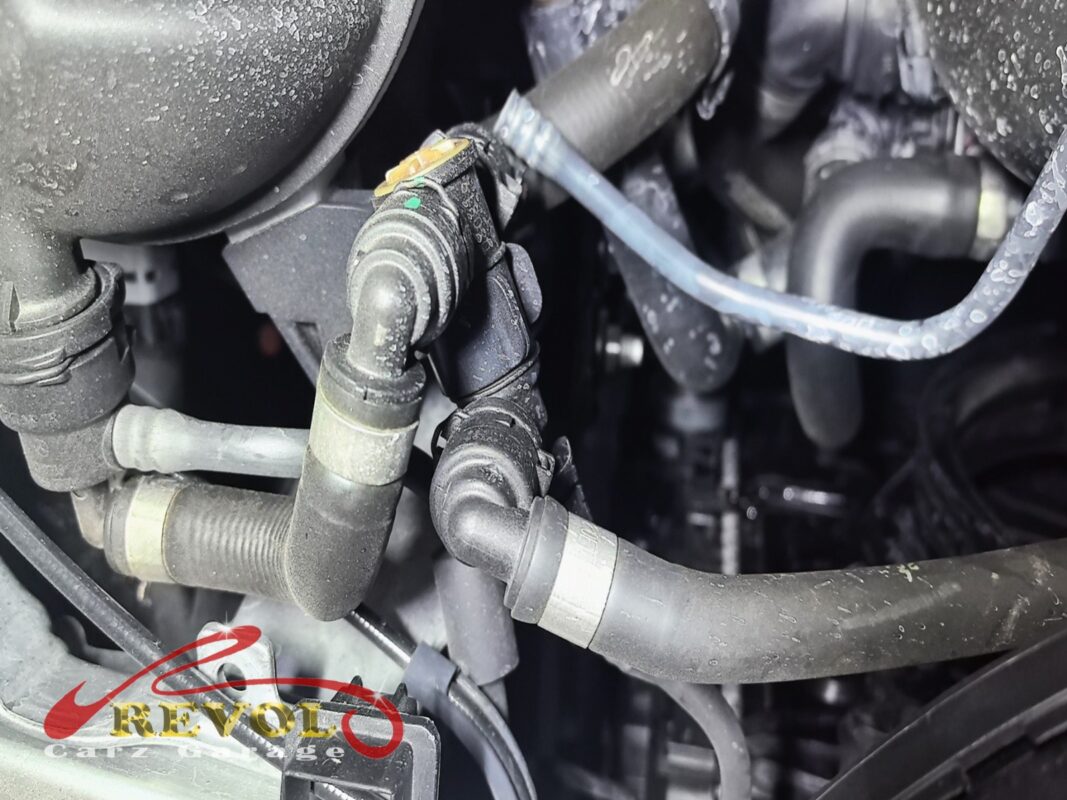
The cooling system was drained, the cracked expansion tank and the failed hose came off, and a new Mercedes-spec tank went on with a fresh cap, plus a new Mercedes-spec hose on new clamps.
Then it was refilled with the correct coolant, bled the proper way so no air pockets were left, and held under pressure to confirm the new tank, cap and hose were all sealed.
A run afterwards, including some slow traffic, confirmed the gauge stayed steady and nothing was weeping.
The outcome
No more drips, the coolant level holds cleanly, and the gauge stays stable through traffic.
The GLC200 went home with the cooling system tight again and the failure pair closed off in one visit. Doing the tank, cap and hose together means the brittle, age-related parts of that circuit are all refreshed at once, rather than picked off one failure at a time with a regas and a top-up in between.