The brief
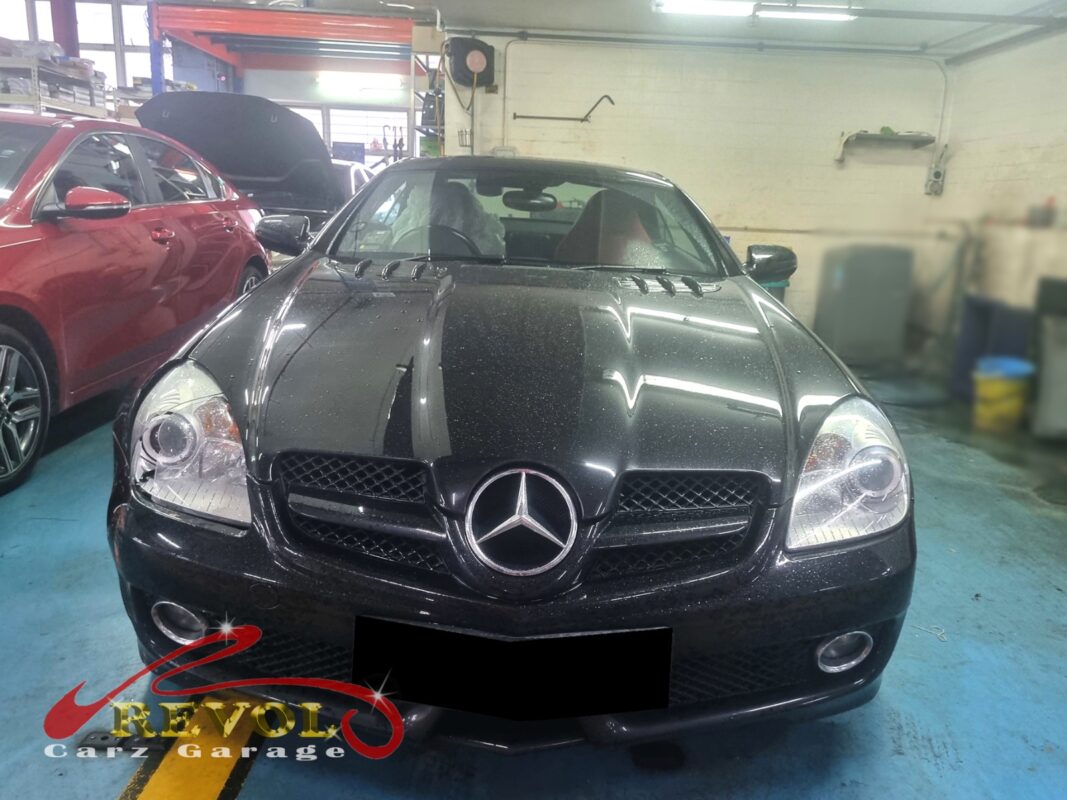
The SLK200 had been smelling burnt after each drive, the owner could see fresh oil traces along the cylinder head when he opened the bonnet, and a small amount of oil had started to track into one of the spark-plug wells. He brought it in before that little bit of oil reached a coil pack.
The valve cover is the lid over the top of the engine that seals the camshafts and the oil in. On this engine the gasket is built into the plastic cover. When the plastic ages and the gasket hardens, oil weeps out, runs down the hot head and burns off, which is the smell, and finds its way into the plug wells. Oil sitting in a plug well eventually creeps into the coil and kills it, so it's not something to leave.
The diagnosis
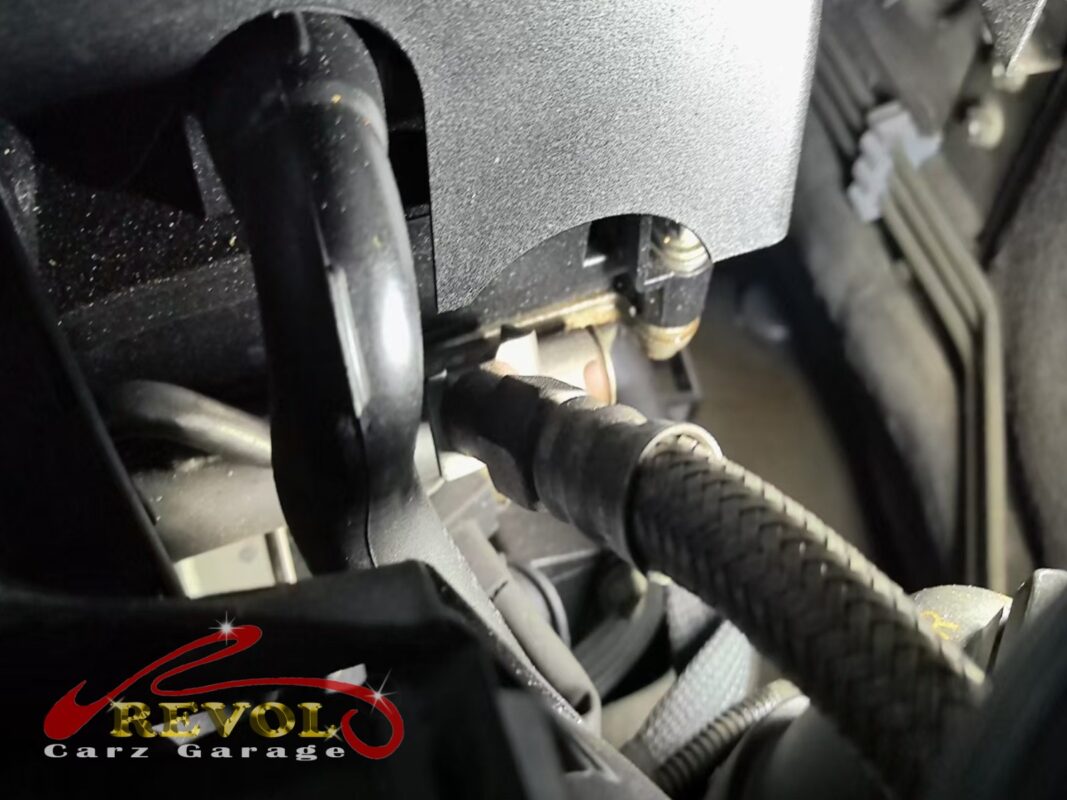
Off the engine, the inspection was conclusive. The integrated gasket had hardened to the point it couldn't seal any more, and the cover itself had a small crack near one of its mounting bosses, which is why the seal had pulled loose in the first place, it couldn't hold itself down evenly.
That's a cover replacement, not just a new gasket. A cracked plastic cover with a hardened gasket isn't something you re-seal and trust.
The work
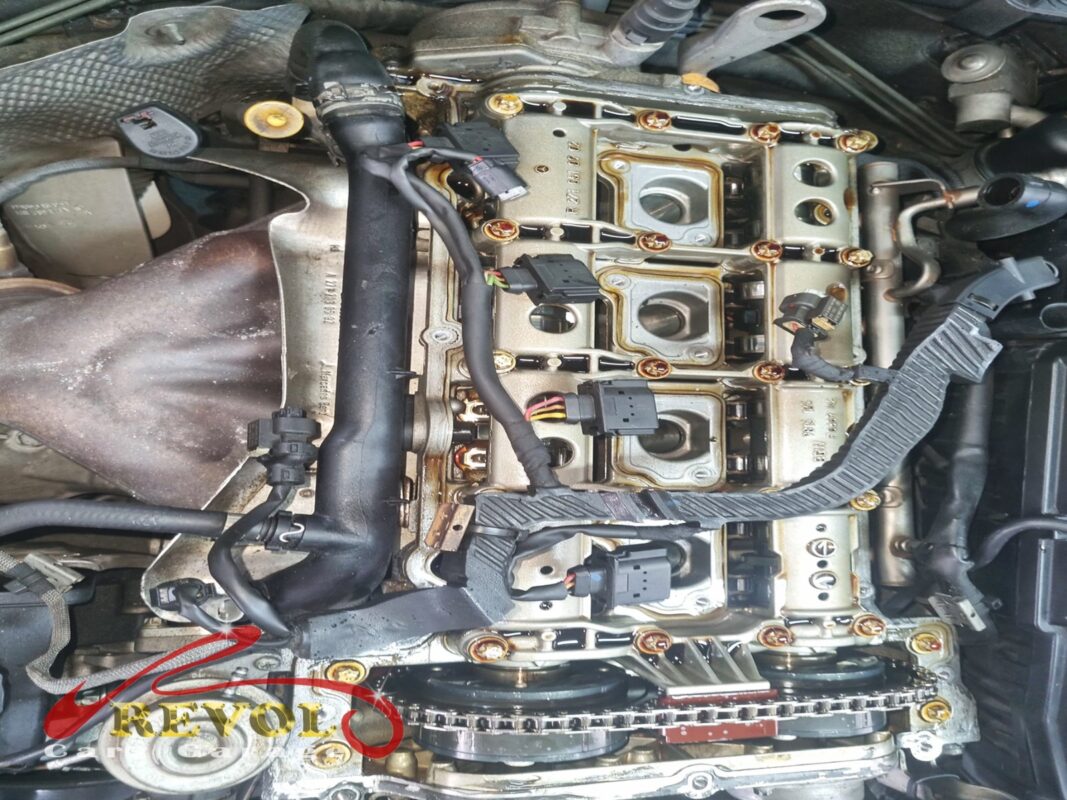
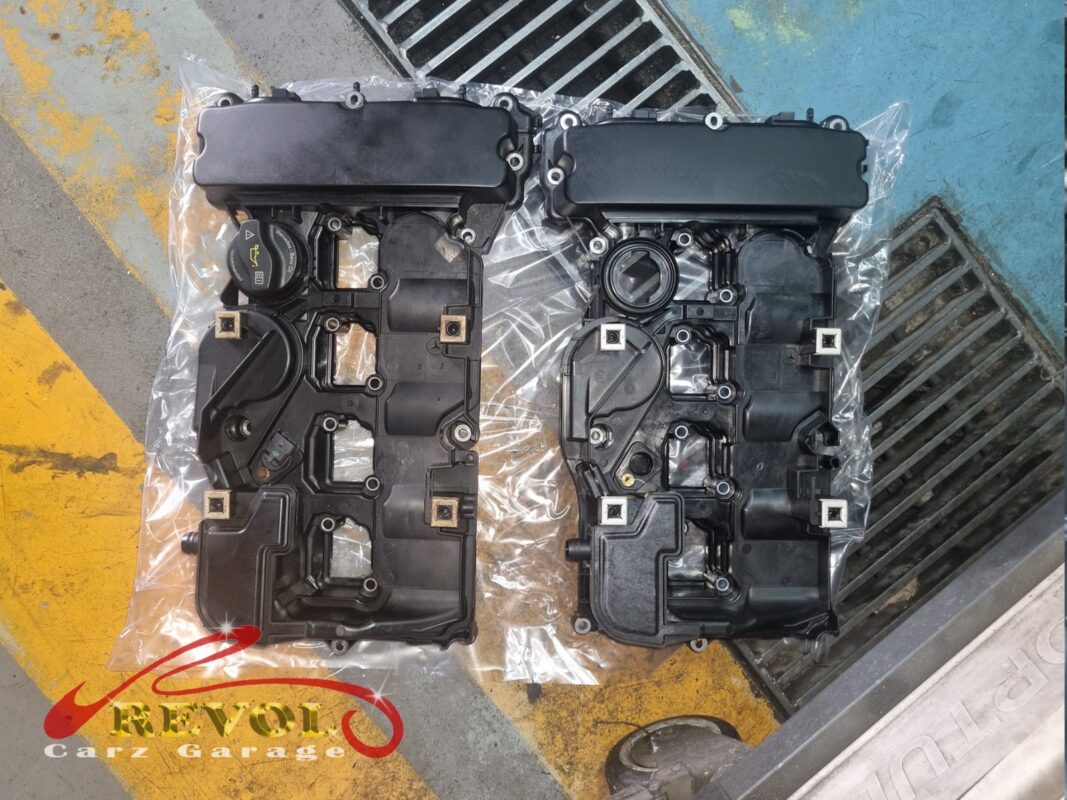
The old cover came off, the cylinder head face was cleaned back to bare metal, and a new Mercedes-spec valve cover went on with its fresh integrated seals and a new set of bolts, torqued in the proper pattern so it seats evenly.
The wiring, the coils and the intake that came off to get to it all went back on.
A run afterwards, then a check of the head and the plug wells, confirmed everything was dry with no burning smell.
The outcome
Dry head, dry plug wells, and no burning smell after a road test.
The SLK200 went home with the top end sealed properly. Doing it as the complete cover, with fresh bolts, means the seal is held down the way it's meant to be and the plug wells stay dry, so there's no slow drip working into a coil and turning a leak into a misfire down the line.