The brief
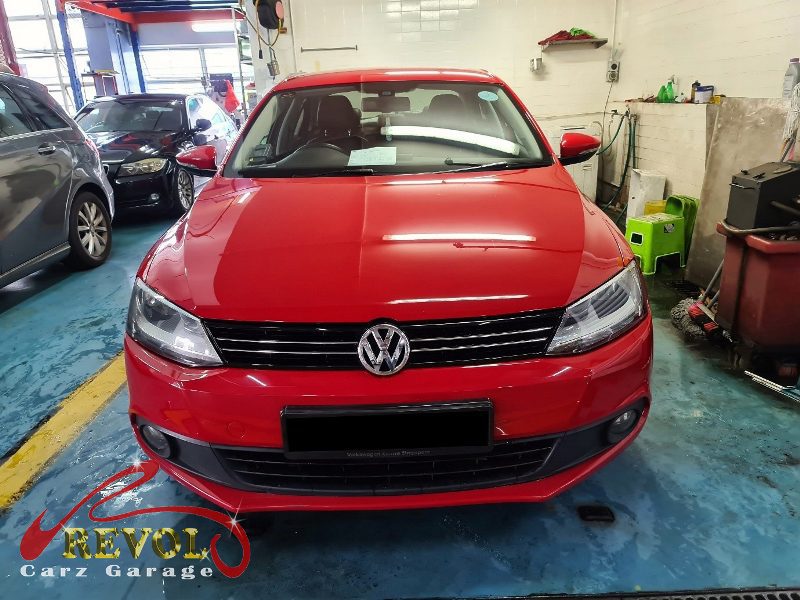
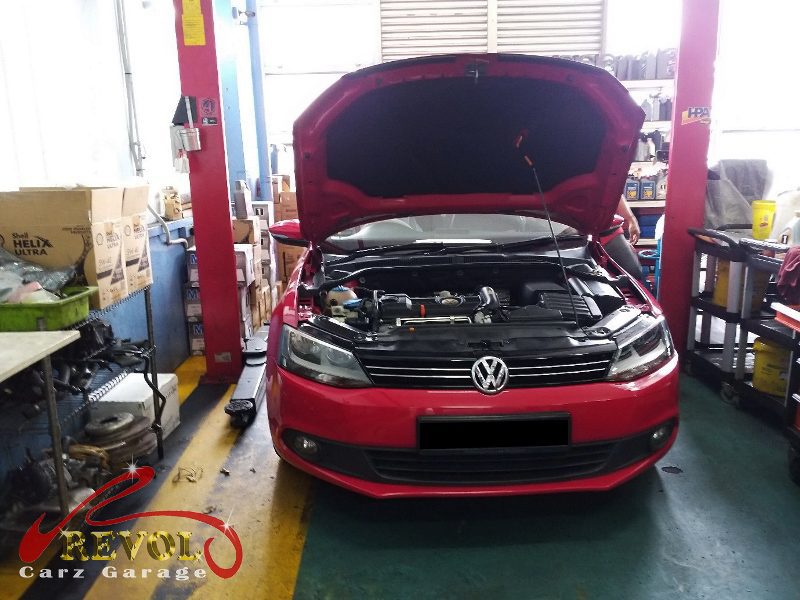
The Jetta was getting on towards 120,000 km and the owner wanted the drive belt done before it became a problem. That's the smart call, the belt is a wear item, and a snapped one isn't a tidy job, it can wrap up, jam, and damage the components it drives on the way out. The drive belt, the long serpentine belt at the front of the engine, runs the alternator, the power steering, and the air conditioning compressor off the crankshaft. Over the miles the rubber hardens, cracks and glazes, and the tensioner and idler pulleys it runs over get tired bearings. So a proper drive belt service isn't just the belt, it's the belt plus the tensioner and the idlers as a set, because a fresh belt on a worn tensioner doesn't last.
The diagnosis
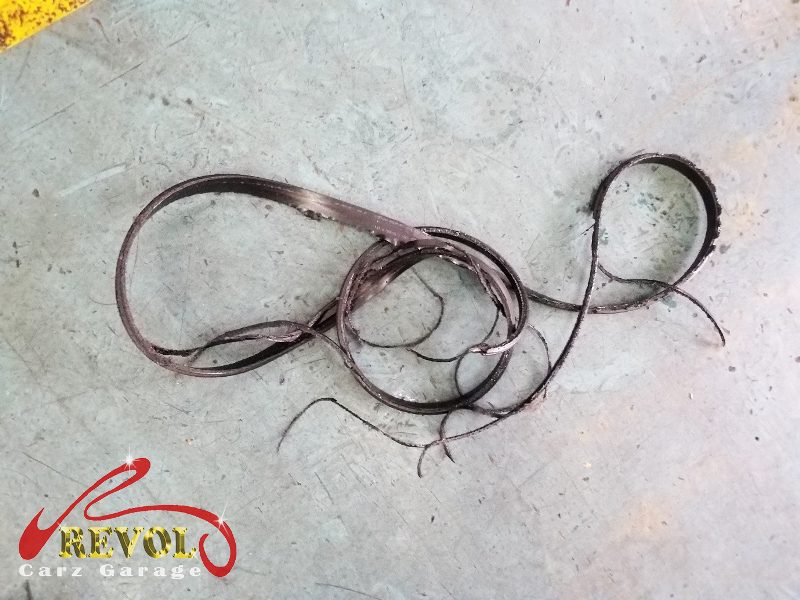
A check confirmed it, the belt was hardened with surface cracks and glazing from its miles, and the tensioner had lost some of its spring with a pulley bearing starting to feel rough. The idler was on its way too. So it was a full drive belt set: the belt, the tensioner and the idler pulleys together, not a belt alone that would soon be chirping on the old hardware.
The work
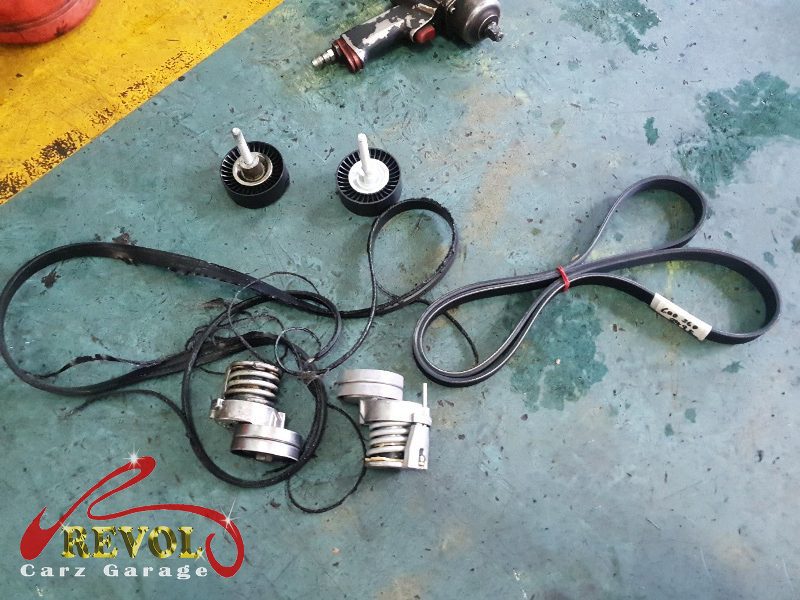
The old drive belt was removed, then the tensioner and idler pulleys, and a new genuine VW-spec belt fitted along with a new tensioner and idlers, the routing checked against the diagram and the belt seated properly across every pulley. With it all back together the engine was run to confirm the belt tracked true and ran quiet. A road test confirmed no chirp, no squeal, and everything the belt drives working as it should.
The outcome
A fresh drive belt running quiet and true, a new tensioner holding it properly, and the accessories, charging, steering and air conditioning, all driven cleanly. The Jetta went home with the belt sorted before it could let go. A belt near 120,000 km is living on borrowed time, and the failure mode is the one that strands you and damages other parts, so changing the set is the proactive job that keeps that day from happening.