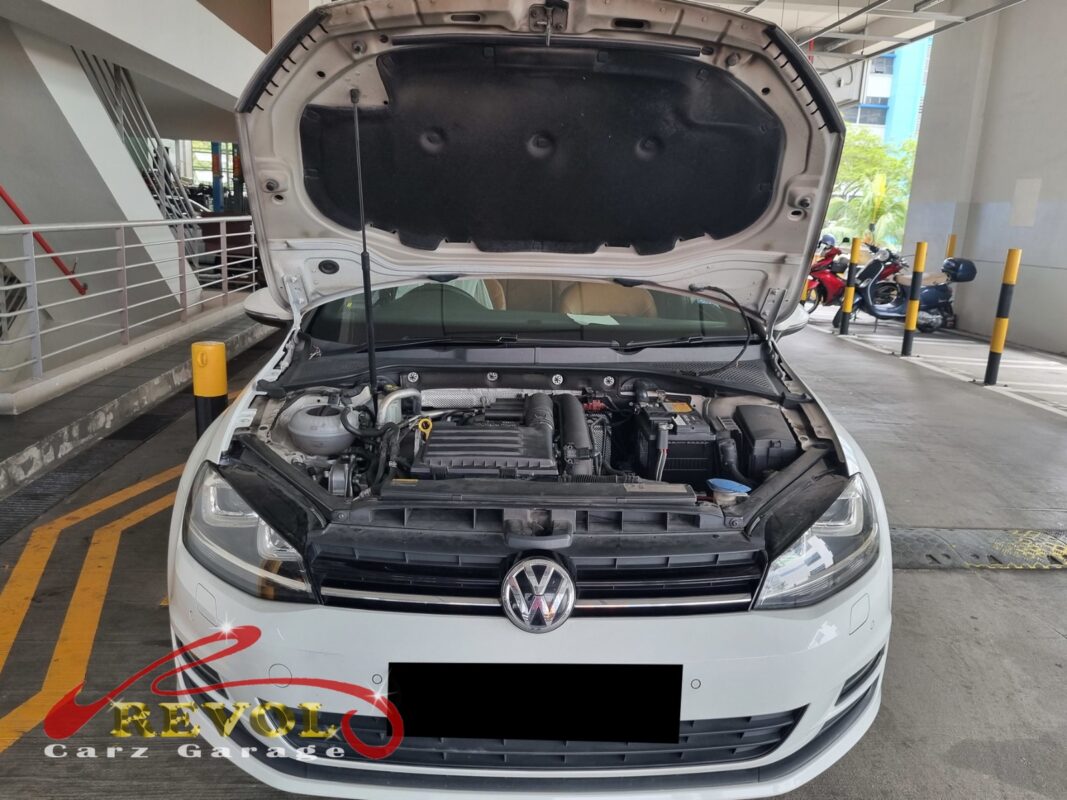
The brief
The Golf's aircon was blowing warm, there were grinding and squealing noises when the AC engaged, and the owner had spotted an oily residue around the compressor. He brought it in. Those are the signs of a failing AC compressor. The compressor is the pump that drives the refrigerant round the system, running off the engine belt with a clutch that engages when the AC is on. When its internal bearings and seals wear, it gets noisy, can't pump properly so the cooling falls off, and it can weep oil from its seal, which is the residue. A compressor that's breaking up can also send debris through the rest of the system if it's left, so a noisy one isn't something to keep running.
The diagnosis
A check confirmed it: the compressor was noisy and not building proper pressure, with the clutch and the internal parts worn and oil weeping from the seal. The rest of the system, the condenser, the lines, the evaporator, checked out, but with a failing compressor the system gets flushed anyway to clear any debris before the new one goes on. That's a compressor replacement, with a receiver-drier and a flush, not something you nurse along.
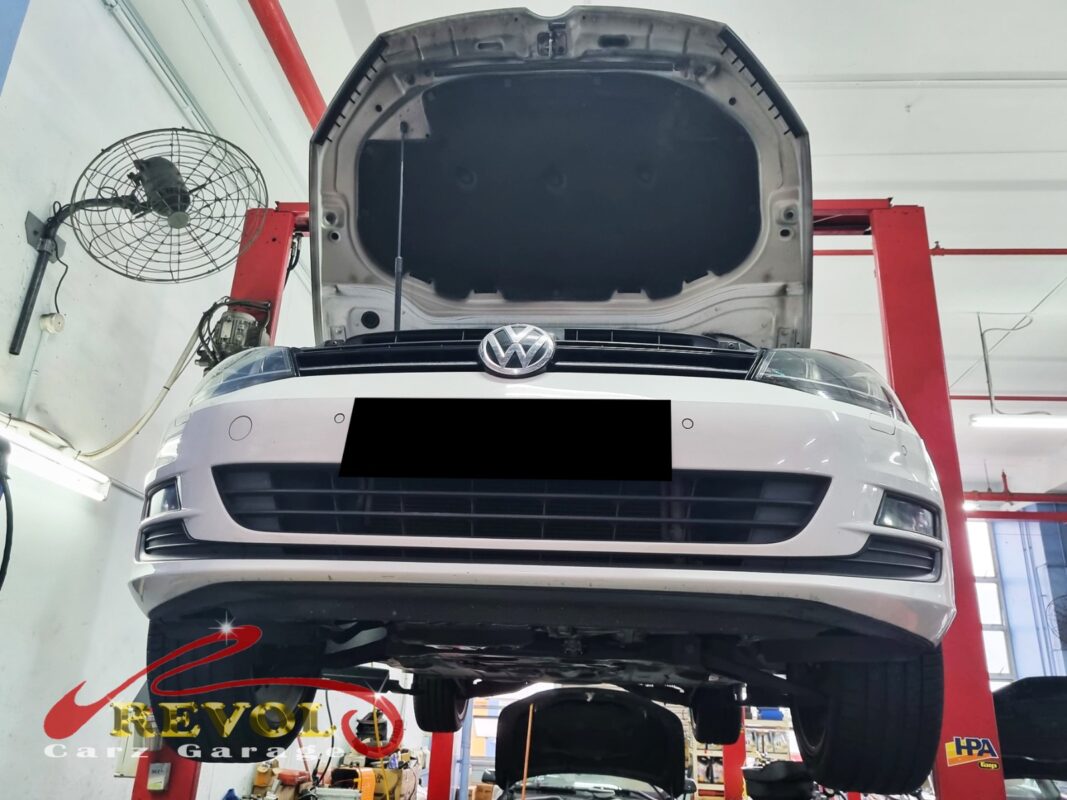
The work
The remaining refrigerant was recovered, the drive belt released, and the failed compressor unbolted and removed. The system was flushed to clear any debris, a new genuine VW-spec compressor fitted along with a fresh receiver-drier and new O-rings, the belt set back up, the system pulled down to a long, deep vacuum, and recharged with the correct weight of refrigerant and the right oil charge. A check at the vents confirmed cold air at idle and no noise from the compressor.
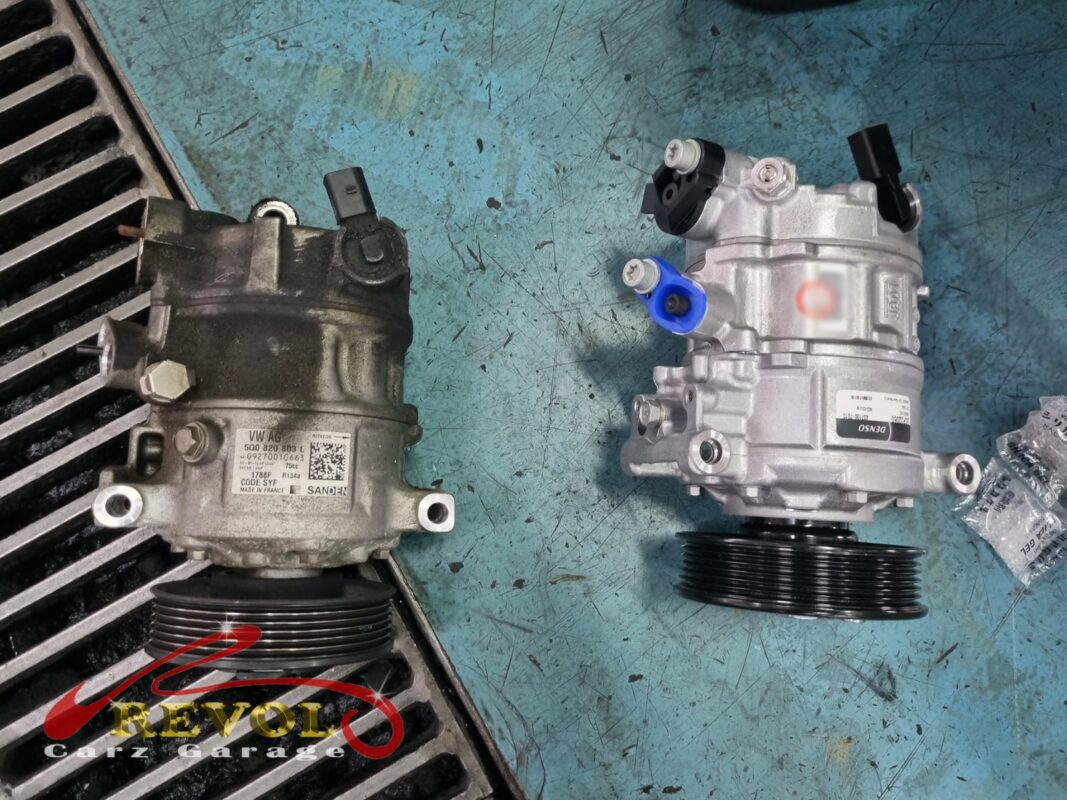
The outcome
Cold air at the vents at idle, strong airflow, no grind or squeal from the AC, and the charge holding. The Golf went home with the aircon working the way it should. A failing compressor only gets noisier and can take the rest of the system down with it, so changing it, flushing the system and recharging properly fixed the cooling and protected the rest of the AC.