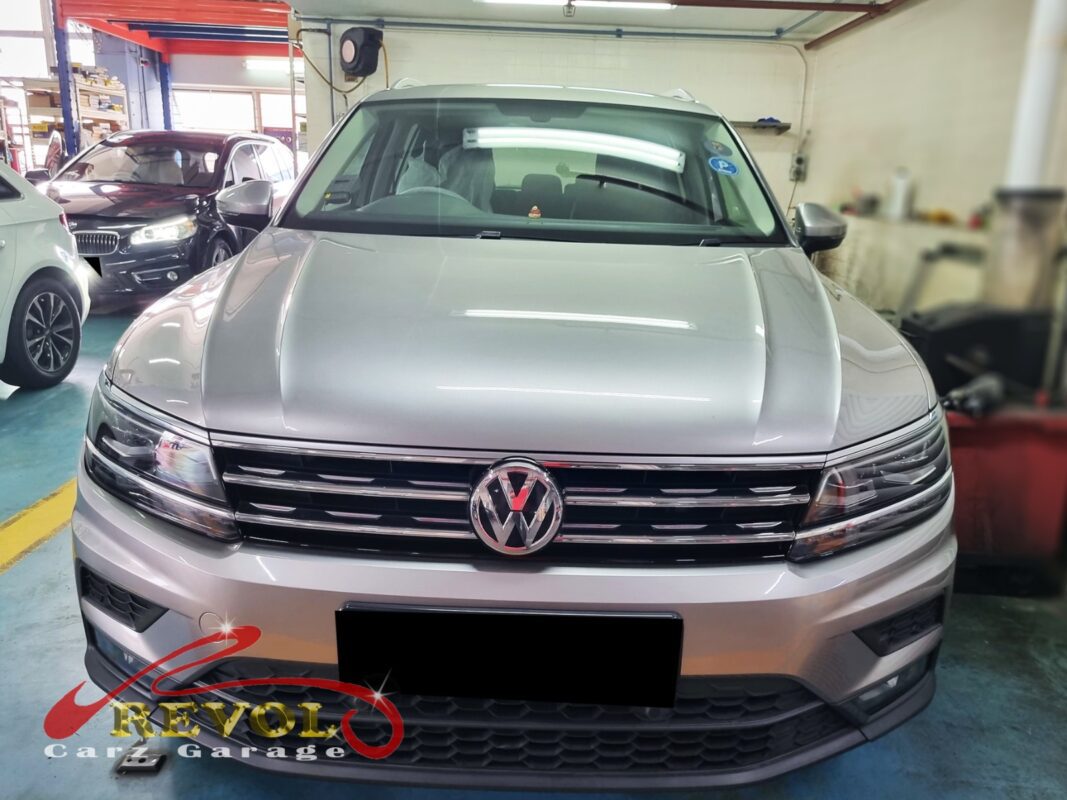
The brief
The Tiguan had developed squeaking and grinding noises from the brakes, the stopping had gone weaker, needing a harder push on the pedal, and there was a vibration through the pedal under braking. He brought it in. Those symptoms say the brakes are worn. Squeaking and grinding mean the pads are down to or past their wear indicator, the weaker stopping is the friction material running out, and the pedal pulse is a disc that's worn unevenly and no longer running true. Brakes are a wear item, and there's no nursing them past the indicator, so when they get to that point the pads and the discs go together, because fitting fresh pads onto a worn disc just beds them into the same uneven surface.
The diagnosis
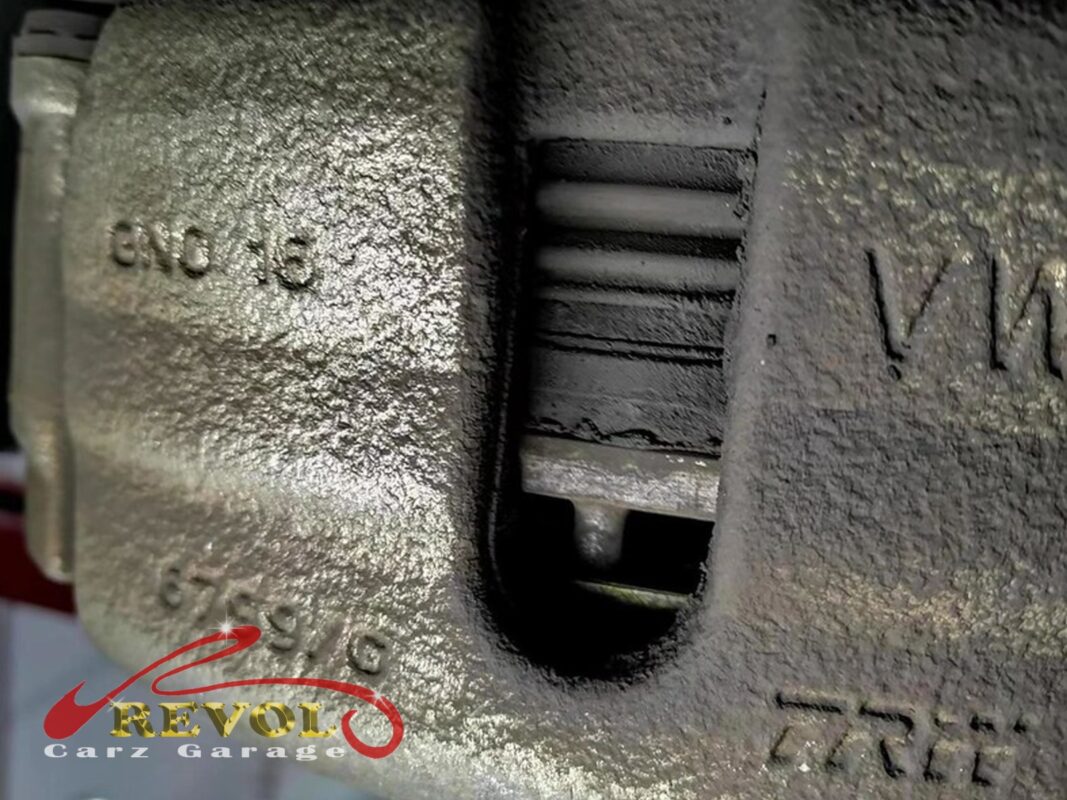
Wheels off, the front pads were down to the wear indicator and the discs had a lip around the edge, measured past the minimum thickness, and showed the uneven surface that was causing the pulse. Fitting new pads onto worn discs doesn't make sense, so it was a set job, front pads and discs together, to reset the braking properly.
The work
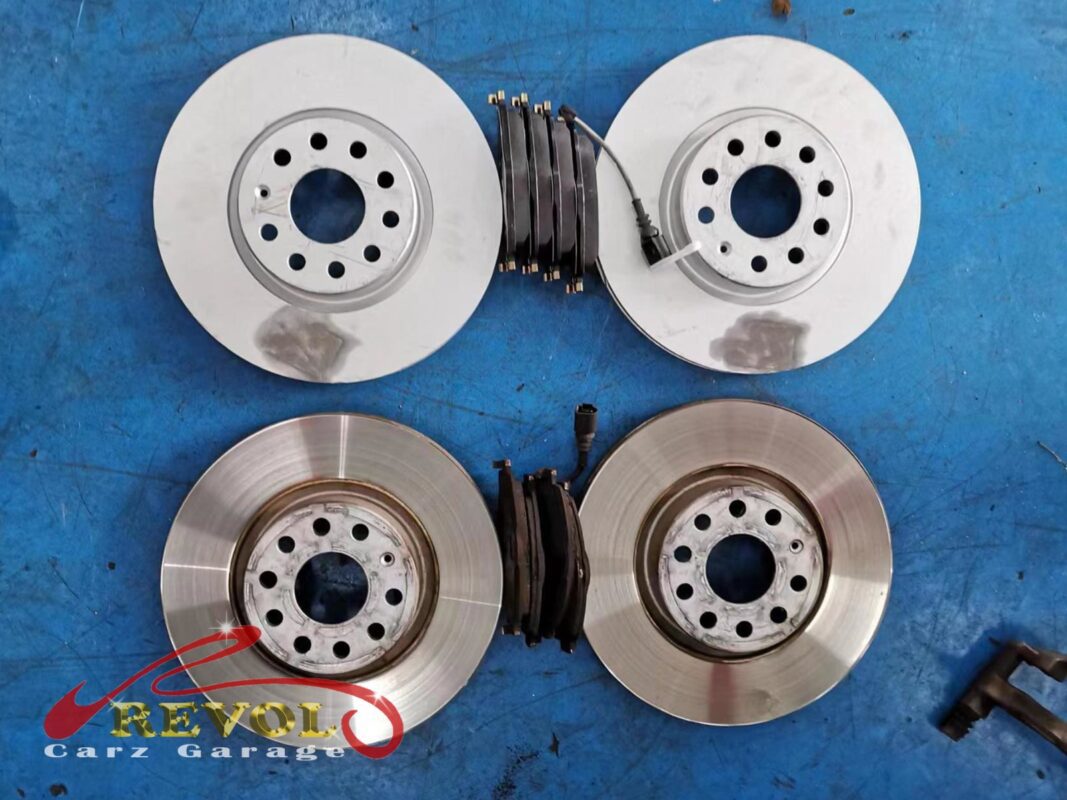
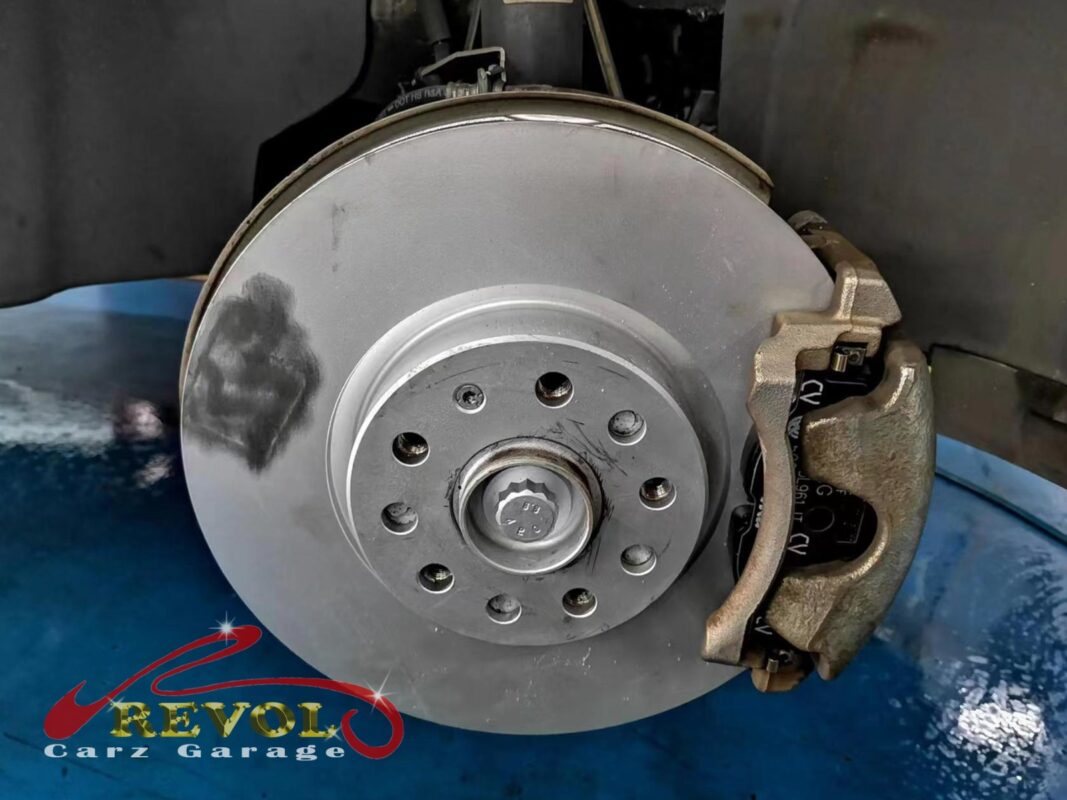
The front callipers came off, the worn discs were swapped for new genuine VW-spec rotors, and a fresh set of pads went in. The slider pins were cleaned and greased so the callipers float freely, everything reassembled to torque, and the brakes bedded in on a controlled road test, a series of measured stops to lay an even layer of pad material onto the new discs. The road test confirmed the noises, the pedal pulse and the weak stopping were gone, the pedal was firm, and the bite was back.
The outcome
No squeak or grind, no pedal pulse, a firm pedal, and full, even bite back at the front. The Tiguan went home with the braking reset to like-new. Brakes are a wear item and there's no nursing them past the indicator, so doing the pads and discs together gave the car back proper, confident stopping power.