The brief
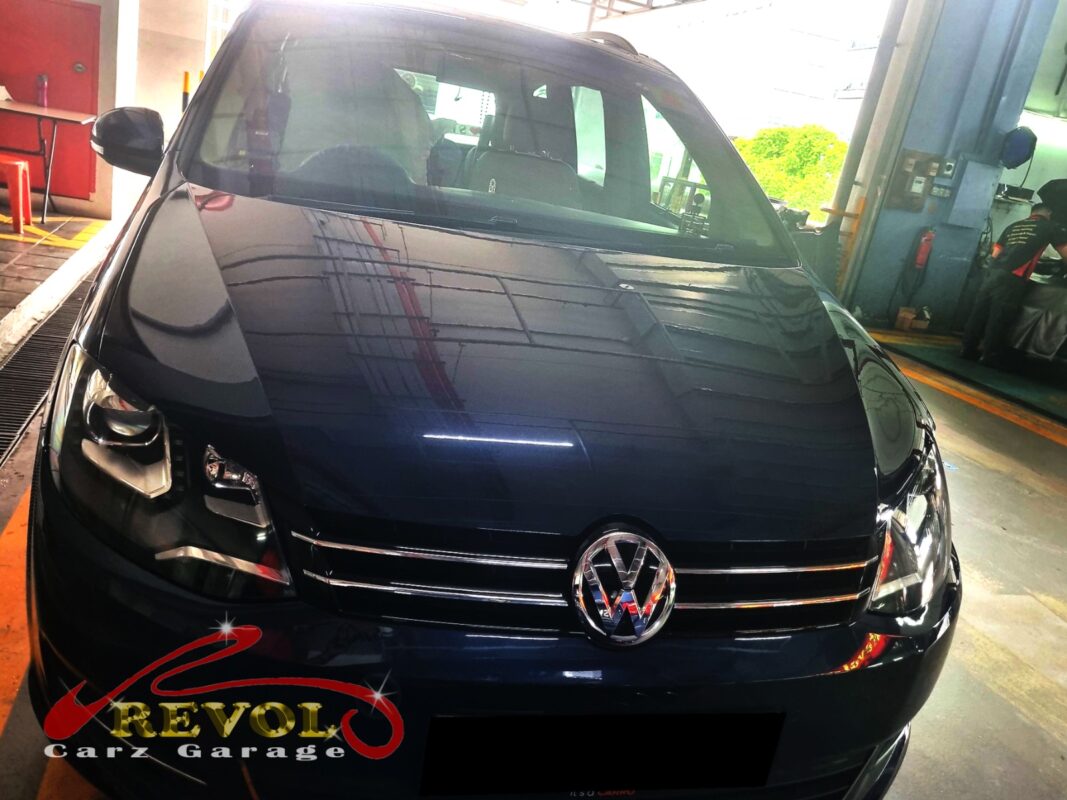
The Sharan had been needing engine oil topped up between services, with a slow drip from the underbody and a stain on the floor where it parked. The owner had assumed it was a seal weep, the usual suspect, but the inspection found something worse.
The sump is the pan at the bottom of the engine that holds the oil. A slow loss like this usually does come from a hardened seal or gasket, but it can also come from the pan itself if the metal has cracked. A crack often starts from a road-debris hit, a stone or a kerb, and then grows over time with the heating and cooling, until it's leaking enough to need top-ups. So the first job was to find out which it was.
The diagnosis
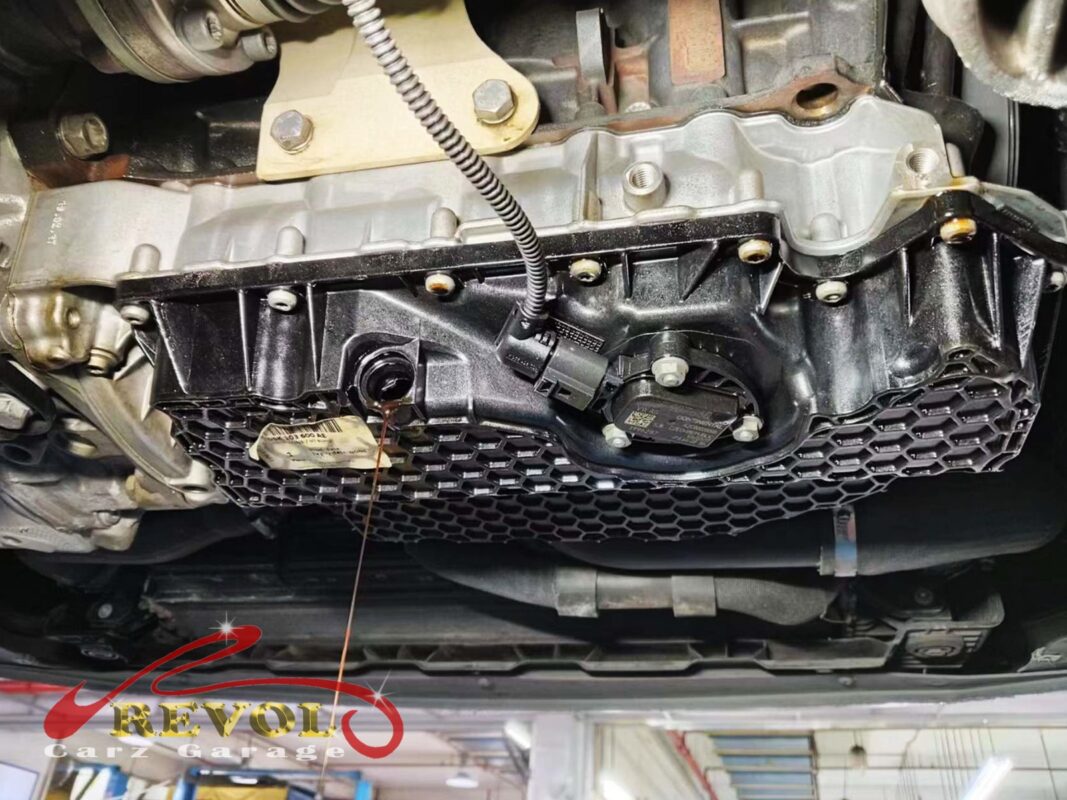
The underbody inspection showed it: a hairline crack along the seam of the oil sump pan itself, not the gasket. The likely story is a road-debris hit that started it, and the crack opened up over time.
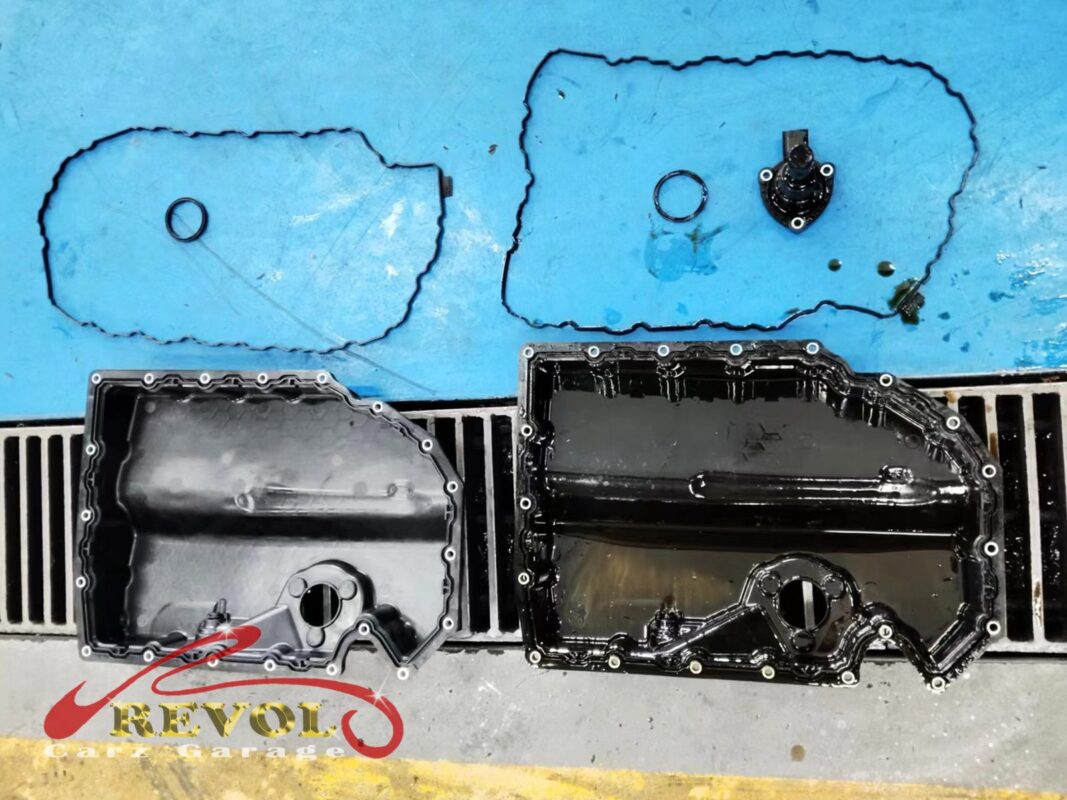
That's a pan replacement, not a gasket job. A cracked sump isn't something you weld up and trust under an engine, it gets a new one, and the gasket gets renewed at the same time since the pan has to come off anyway.
The work
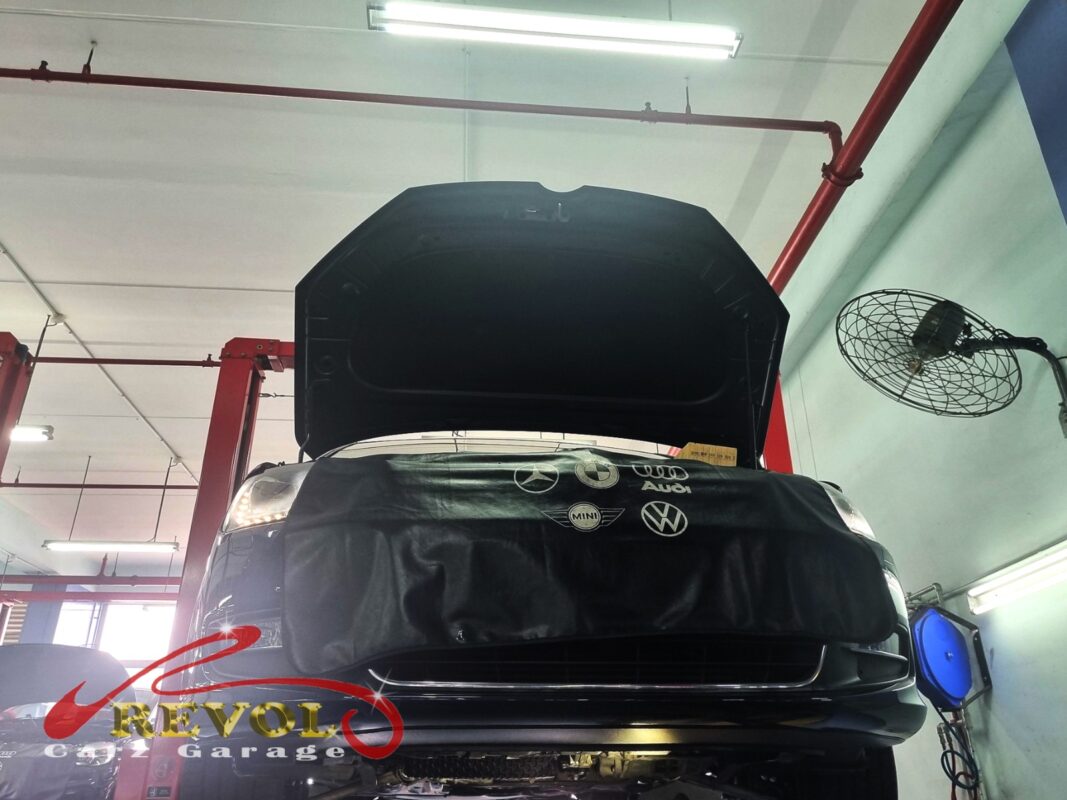
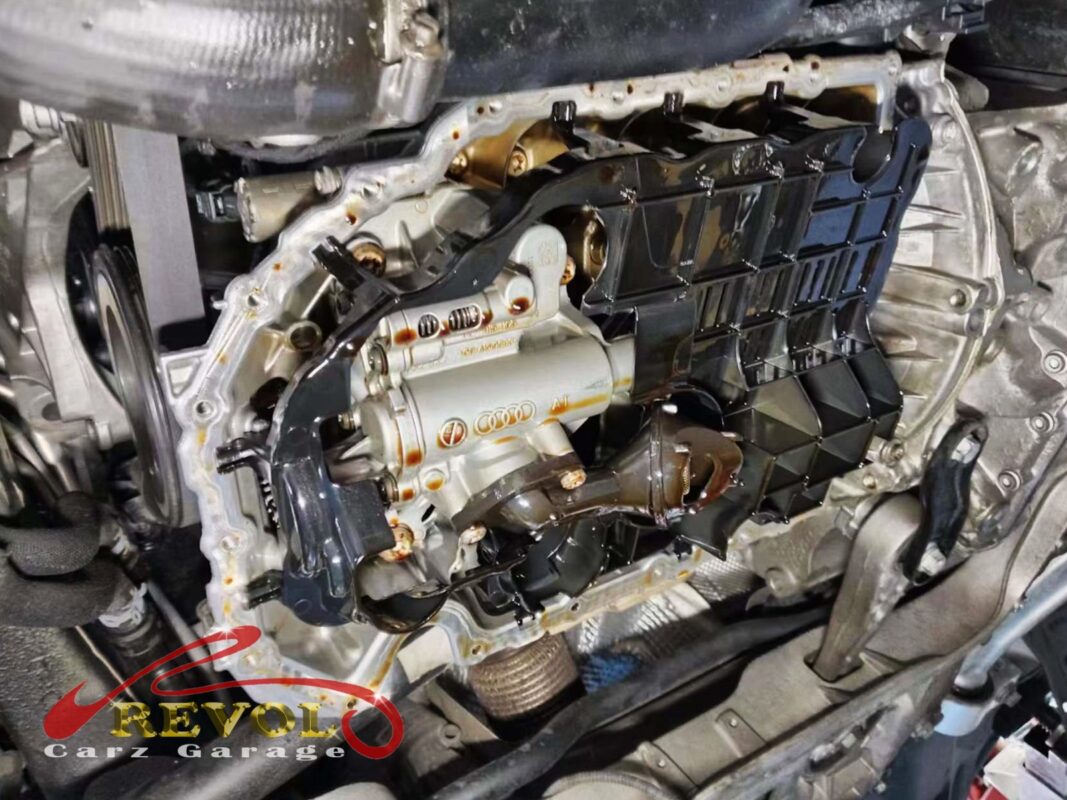
The engine oil was drained into a clean catch, the engine supported, and the cracked sump pan removed. The old gasket material was cleaned off the block face, and a new VAG-spec sump pan went on with a fresh gasket, the bolts torqued to spec in the correct sequence.
Then the engine was refilled with fresh oil to level, run warm, and the underside checked dry.
A test cycle and a check for drips confirmed the leak was closed off.
The outcome
No drip from the sump under the test cycle, no stain on the floor, and the oil level holding between checks.
The Sharan went home with the leak resolved. A cracked sump caught while it's still a slow weep is a manageable job; left to grow, it ends with an engine run low on oil, which is a far bigger and far more expensive problem than a pan and a gasket.