The brief
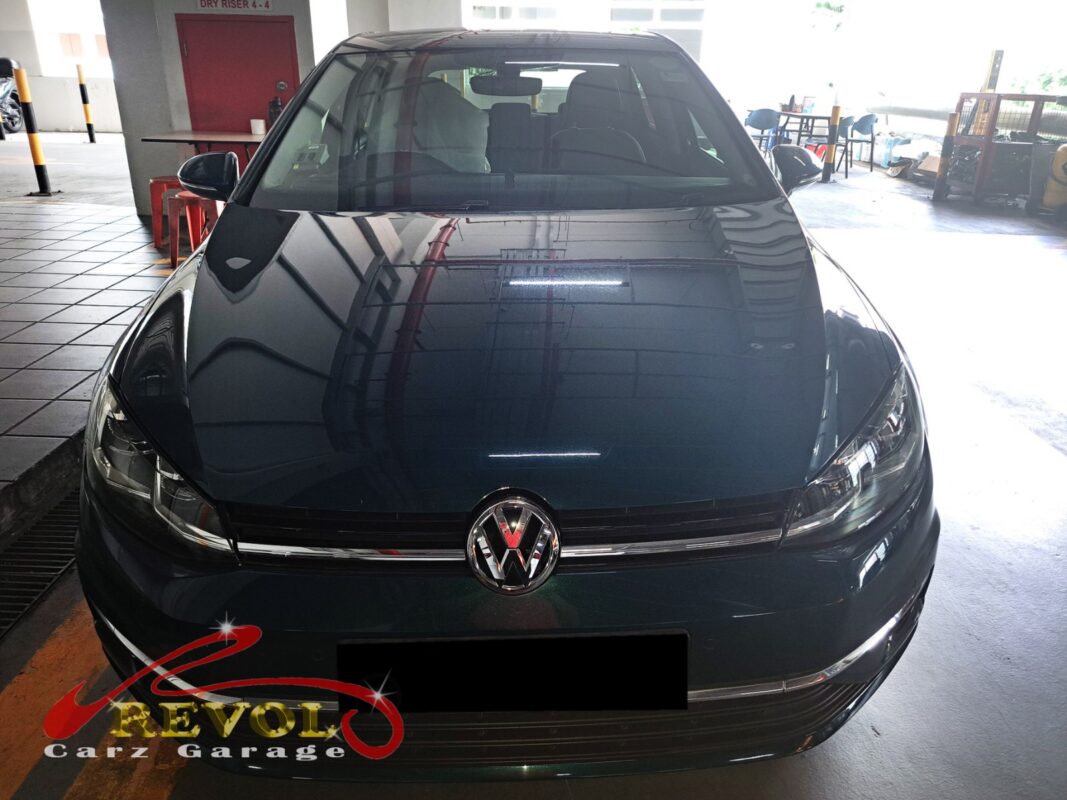
The Golf had been back to the workshop twice in three months for refrigerant top-ups, the vents were producing less airflow than they should, and the owner could hear a faint hiss from inside the dash. Three signs that the leak is on the evaporator side, behind the dashboard, rather than under the bonnet.
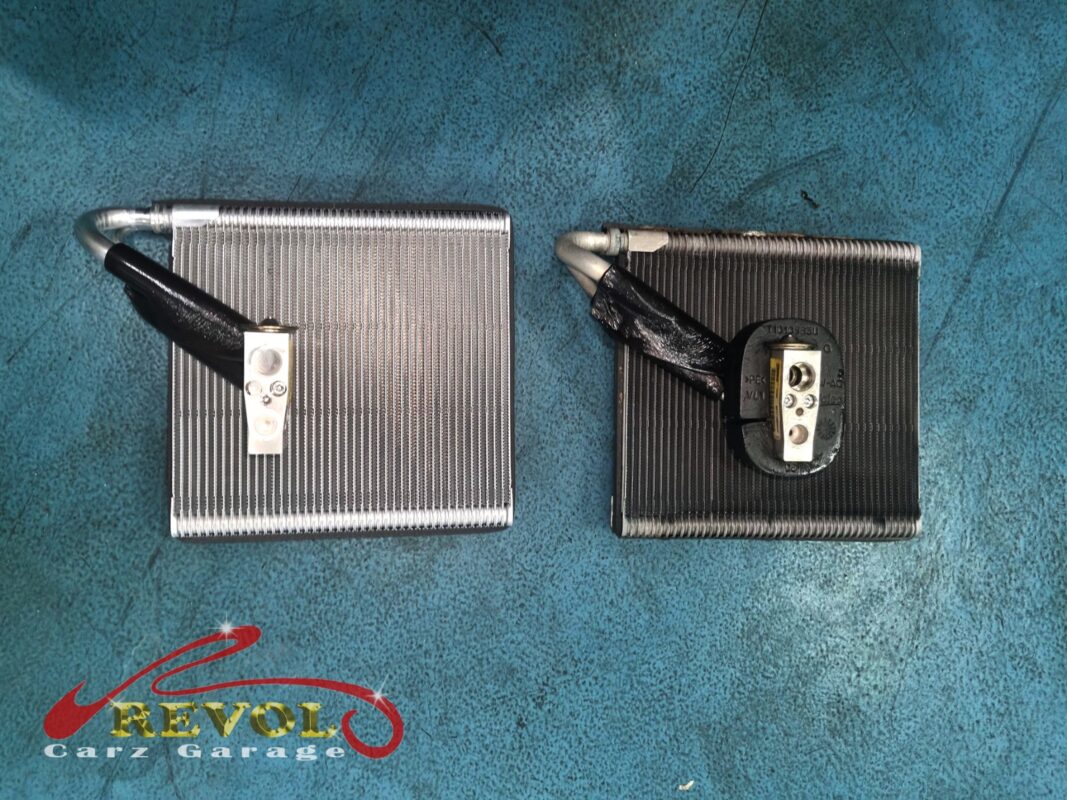
The cooling coil, the evaporator, is the part of the aircon buried in the dash. Refrigerant runs through it, the cabin air blows over it and comes out cold. If the coil itself develops a leak, the system can't hold a charge, which is why it keeps needing topping up, and the hiss is refrigerant escaping. The reduced airflow comes from biofilm building up on a tired coil. There's only one fix for a leaking coil: a new one.
The diagnosis
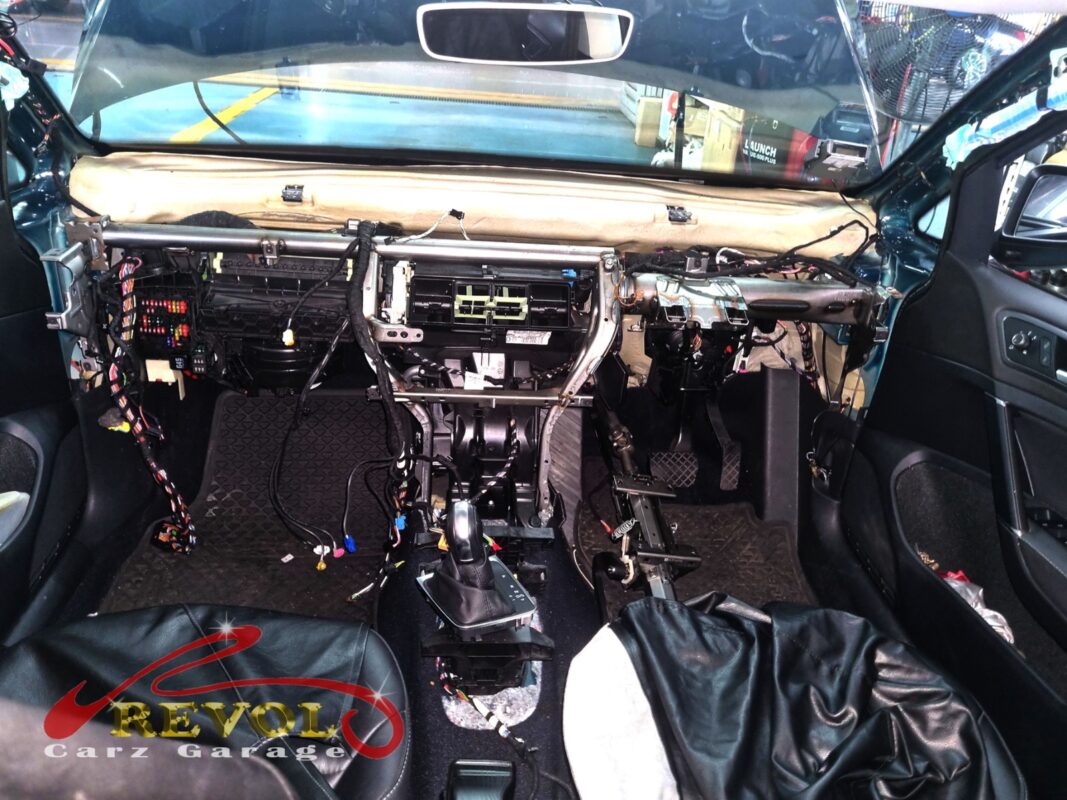
A pressure check confirmed the system was bleeding refrigerant. A leak test pinpointed the cooling coil as the source, not the underbonnet plumbing, the lines, the compressor and the condenser all checked clean.
That's a coil replacement, which means going behind the dash. And since the housing is open once you're in there, the right thing to do is clean the biofilm out of it before the new coil goes back, so the airflow comes back too.
The work
The remaining refrigerant was recovered, the dash trim came out to reach the evaporator housing, and the failed cooling coil was lifted out. The biofilm was cleaned out of the housing, and a new VAG-spec coil went in with fresh seals.
Then the dash and trim were rebuilt, the system vacuumed to a long, deep pull to draw out every trace of air and moisture, and recharged with the correct weight of refrigerant.
A check at the vents confirmed cold air and proper airflow before the car went back.
The outcome
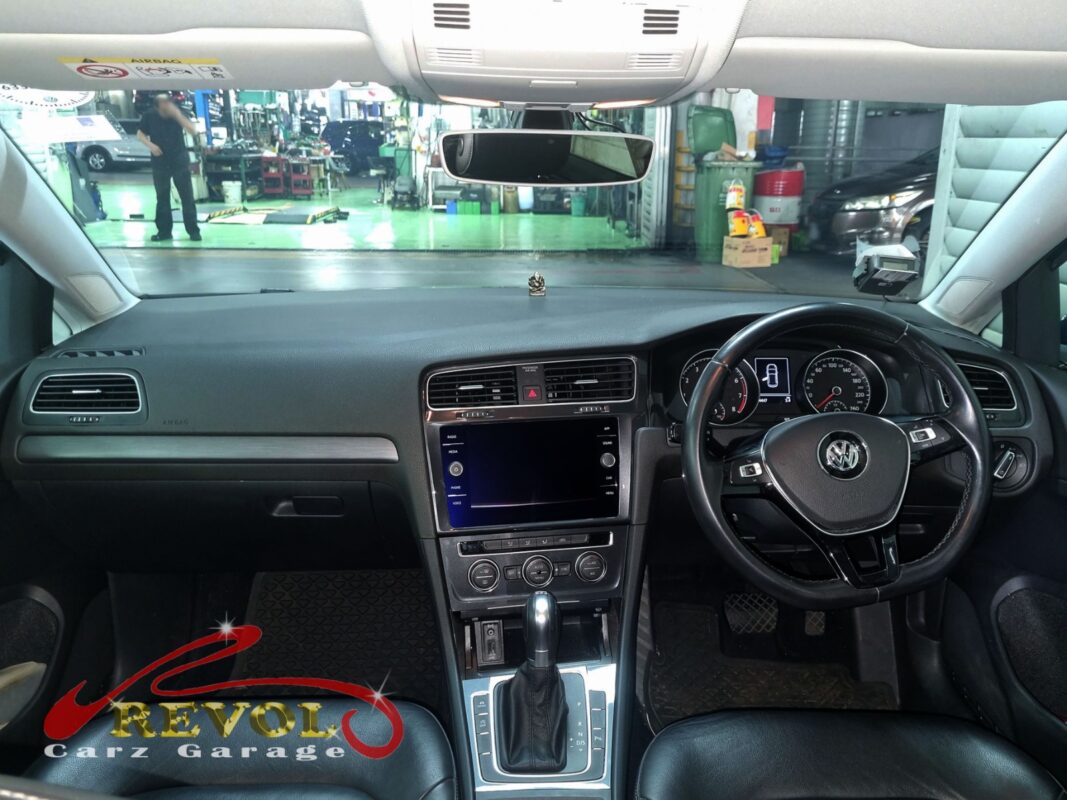
Cold air at the vents, good airflow, no hiss in the dash, and no refrigerant loss across the post-repair check.
The Golf went home with the aircon working the way it should and the regas-every-few-months cycle broken. A leaking evaporator is a big job because of where it lives, but it's a once-and-done one, and doing the housing clean while it was open means the airflow is back too, not just the cold.