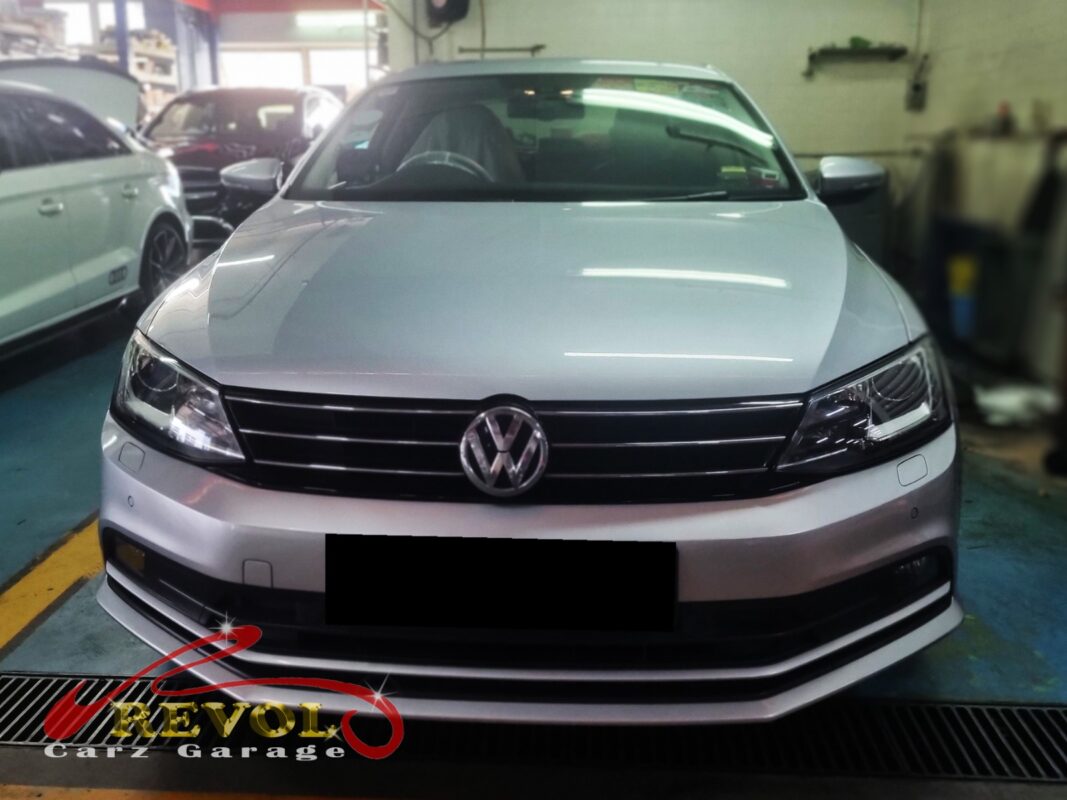
The brief
The Jetta clunked over bumps and expansion joints, the steering felt vague on turn-in, and the front tyres showed uneven wear on their inner edges. Three signs of worn lower control arms that have thrown the alignment out.
The lower control arms locate the bottom of the front wheels and let them move up and down over bumps, riding on rubber bushes, with a ball joint at each outer end. When the bushes crack and a ball joint develops play, the wheels move around a little on their own, which is the vague steering and the clunk, and the geometry drifts, which is why the inner edges of the tyres get chewed. It all comes back to the arms.
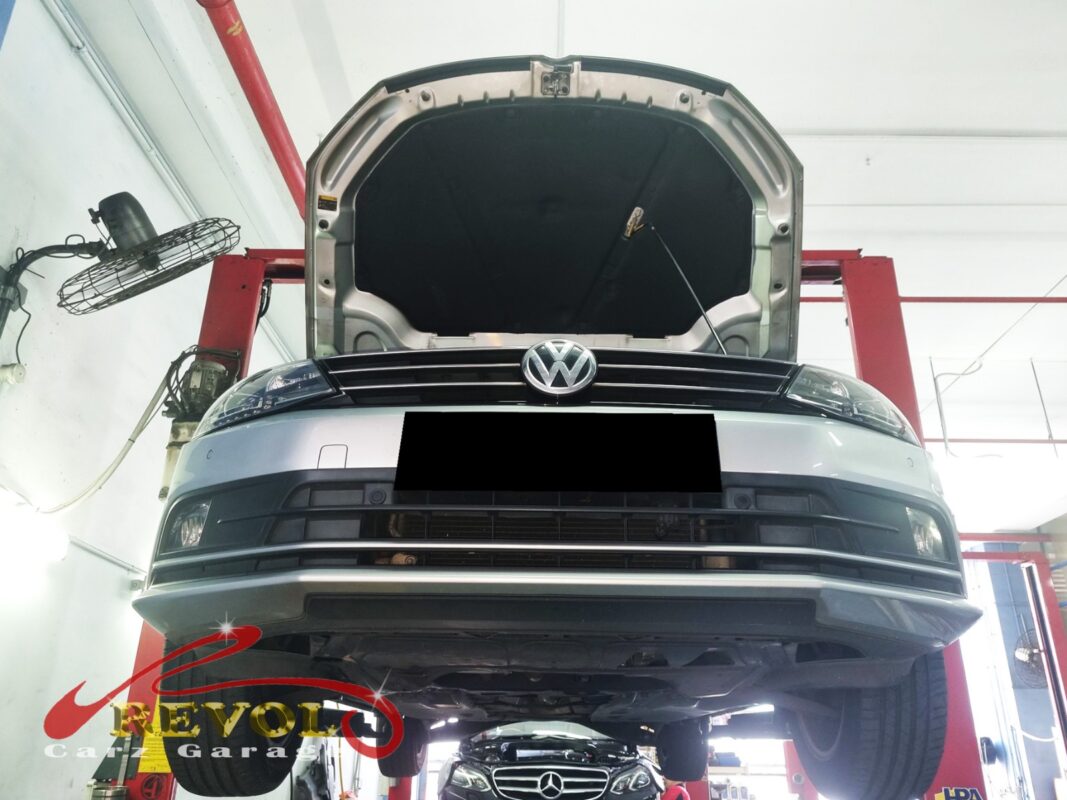
The diagnosis
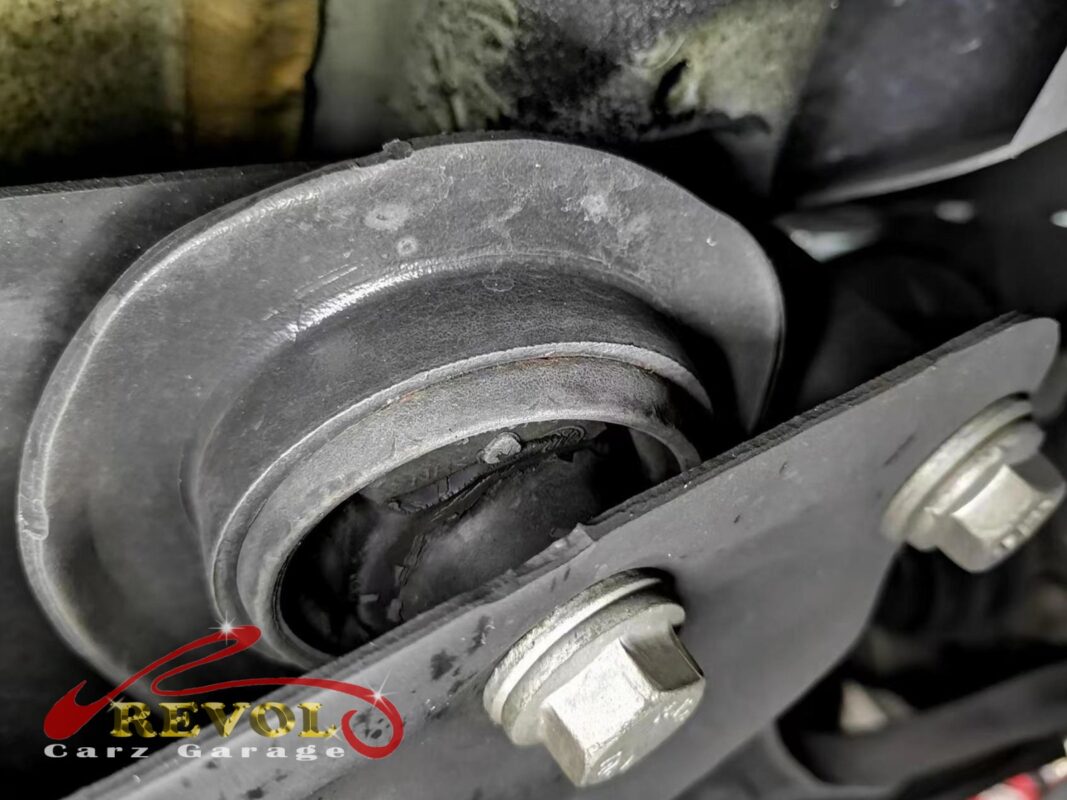
The underbody inspection found it: visible bushing cracks on both lower arms, the rubber separated from its sleeve on one, and play at one ball joint. The tyre wear pattern matched the misalignment the slack was causing.
With both arms worn, the right call is a pair, not one side, so the front sits evenly. And a fresh four-wheel alignment afterwards is non-negotiable, since new arms reset the geometry and the car has to be measured back to factory camber and toe.
The work
The car was lifted, the ball joints disconnected from the knuckles, and both lower arms dropped out. New VAG-spec arms went on, with fresh bushings and ball joints, the chassis bolts torqued to spec.
Then the car went onto the alignment rig for a full four-wheel measurement and adjustment, bringing camber and toe back to factory.
A road test confirmed it tracked straight, no clunks, with a sharp steering response on turn-in.
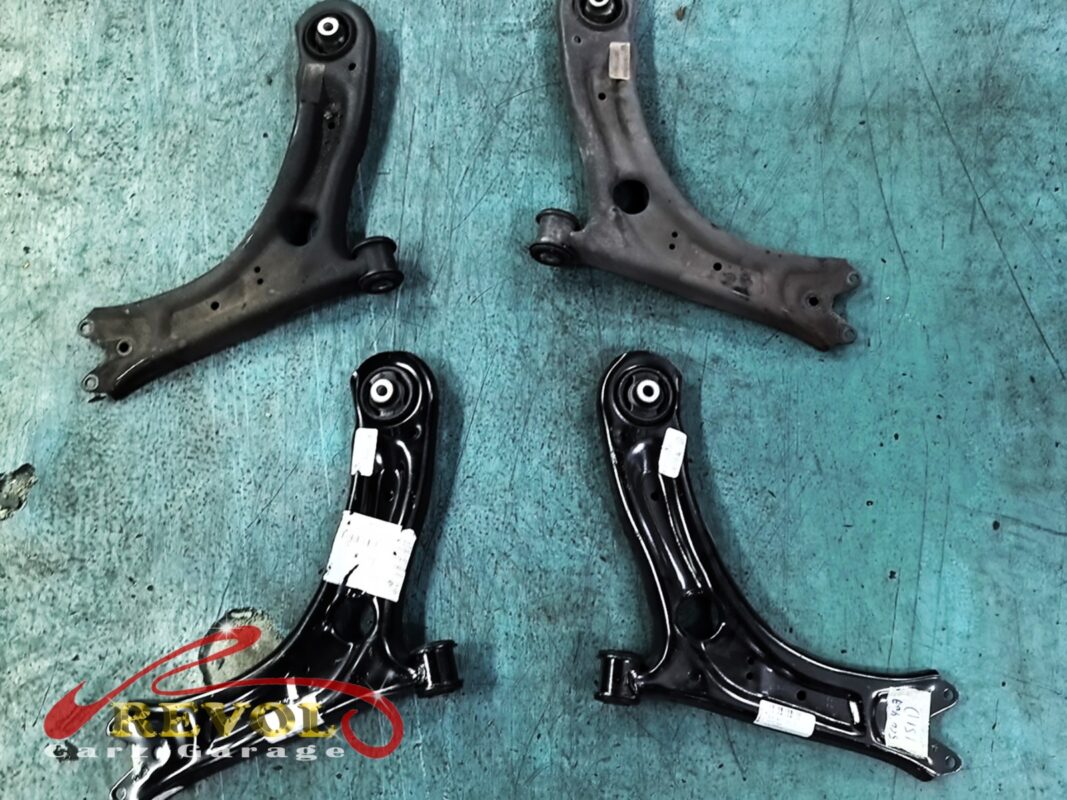
The outcome
No clunking over bumps, sharp steering on turn-in, and the car tracking straight on a flat road.
The Jetta went home with the front end tight. Doing the arms as a pair and aligning it properly means the wheels are located the way they should be and the front tyres will wear evenly again, instead of the inner edges scrubbing away faster than the rest.