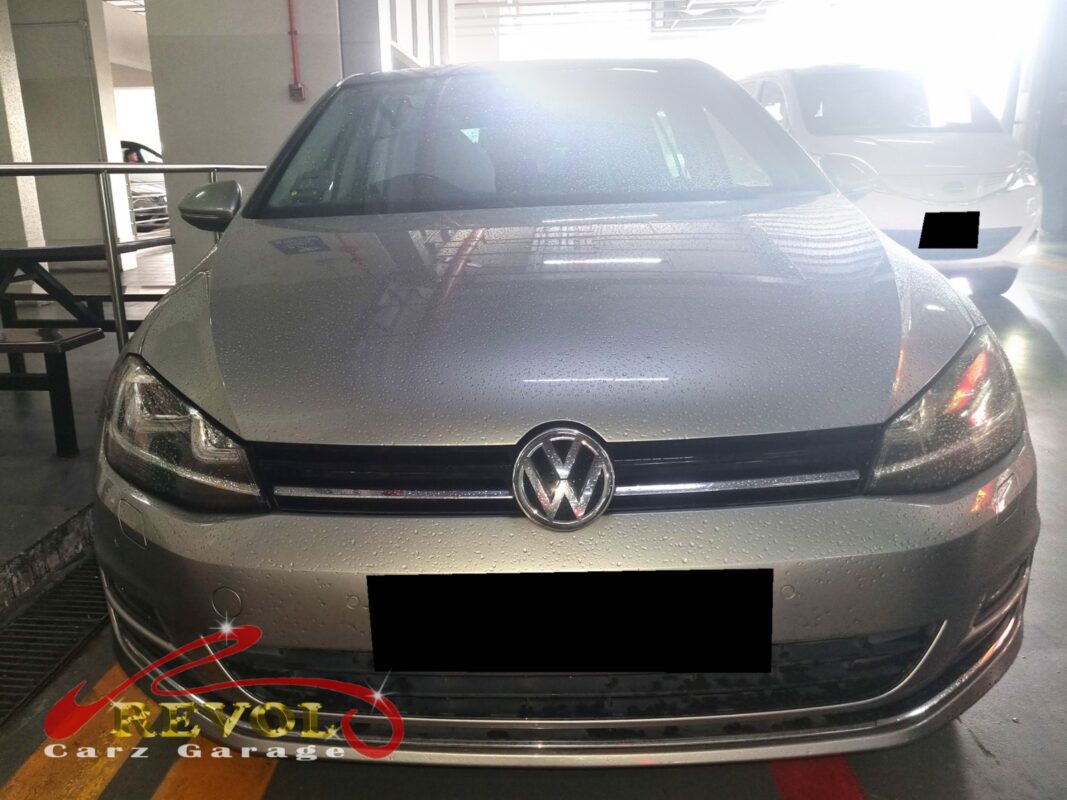
The brief
The Golf was getting harder to start on cool mornings. Cranking had slowed, sometimes needing a second twist of the key before the engine fired.
The owner also noticed the headlights dimming a little at idle, and the dashboard lights flickering whenever the rear demister came on or the aircon ramped up.
Individually, none of those is dramatic. Together, they are the classic signature of a battery near the end of its life.
The other clue was the start-stop system. It had given up and stayed disabled, which the car does on its own when the battery's reserve gets too low to guarantee a clean restart at the next junction.
The diagnosis
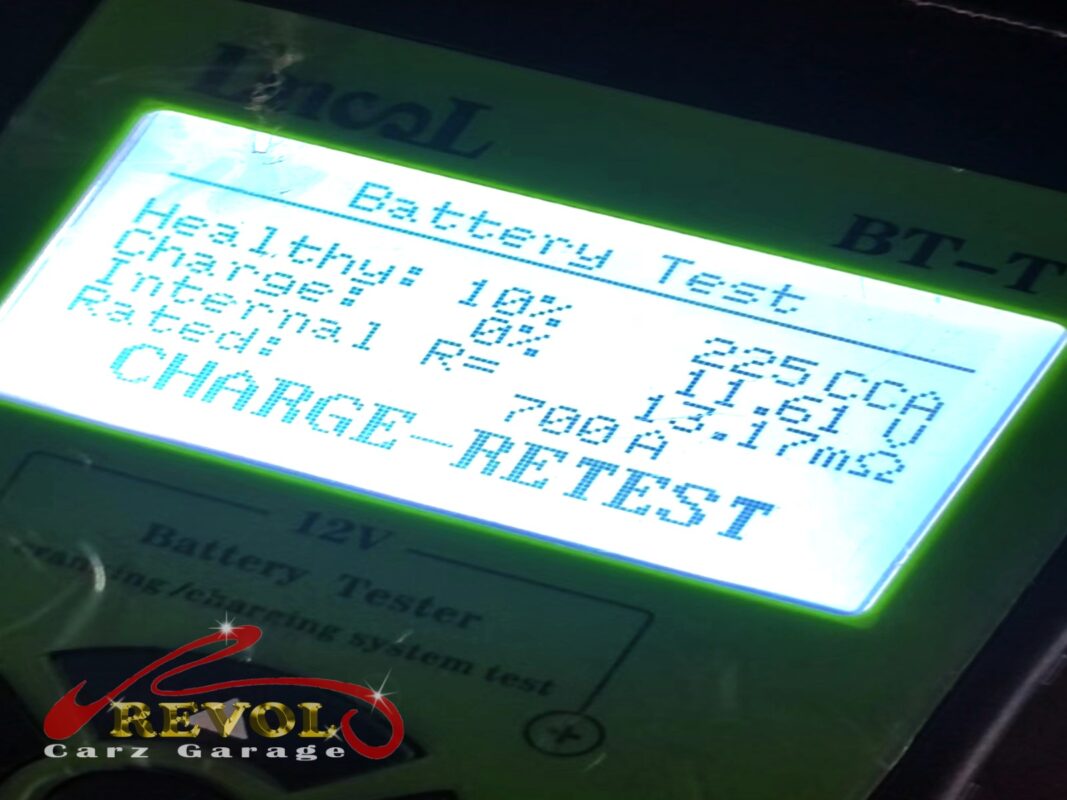
Battery tester told the story. Cold-cranking amps were well below rated, voltage drop on a simulated start pull exceeded spec, and the reserve capacity was reading low.
We also checked the alternator, because there is no point fitting a new battery if the charging system is the real culprit. Alternator output across idle and load came back inside spec, which cleared the charging side.
That left the battery on its own as the fault.
The reason the BMS had disabled start-stop is worth knowing. The car looks at the battery's reserve every time it stops the engine. If it cannot guarantee a clean restart, it leaves the engine running rather than risk stalling at a junction. That self-protection is a feature, not a bug, but it is also a useful early warning that the battery is on its way out.
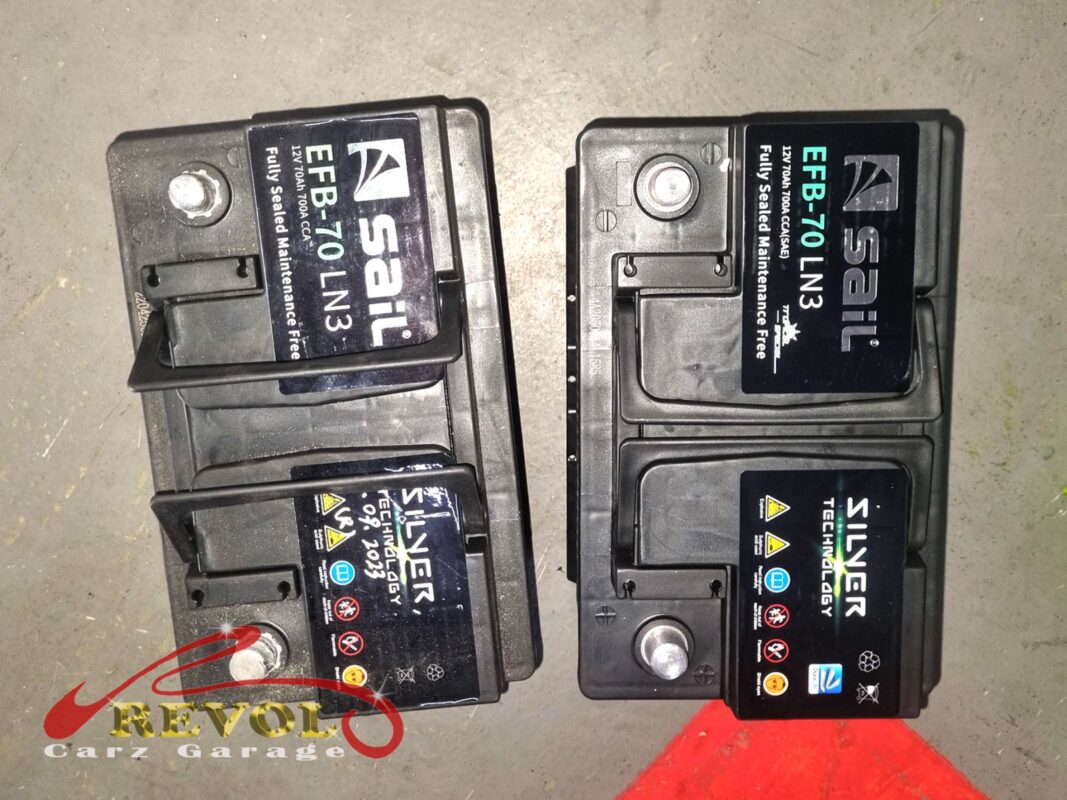
Replacement with a like-for-like AGM unit was the right call, with a BMS re-register so the car learns it has a fresh battery.
The work
Negative terminal off first to break the circuit. Then the failed battery came out of its tray.
We wiped down the terminal posts and the clamps to clear the light corrosion that had built up at the contact faces. New battery, but old corrosion on the posts will cost you voltage and slowly cook the new battery's terminals.
The new battery is a VAG-spec AGM unit matched to the original on cold-cranking amps and reserve capacity. Bedded into the tray, hold-down clamp torqued, terminals reconnected.
Then the register step. With the scan tool, we tell the BMS the car has a fresh battery so the charging profile rebuilds around new-cell behaviour. Skip this and the BMS keeps using the aged battery's curve on the new one, which overcharges it and shaves years off its life.
Last check was alternator output on the test gauge across idle and accessory load, just to confirm everything was talking to everything else properly.
The outcome
Half-second crank from cold the next morning, the way a modern engine should fire. Headlights steady at idle. No flicker on the dashboard when accessories came on.
Most importantly, start-stop was back active and behaving normally at red lights. That is the BMS confirming it now trusts the new battery's reserve, which is the cleanest sign that the underlying problem is fully sorted, not just masked.
For the owner, the Golf is back to feeling like a new car. The smart features that depend on a healthy battery, auto-hold, start-stop, smart entry, are all working again the way they were supposed to.
The new battery should now hold its full rated service life if the car is driven regularly enough to keep it charged.