The brief
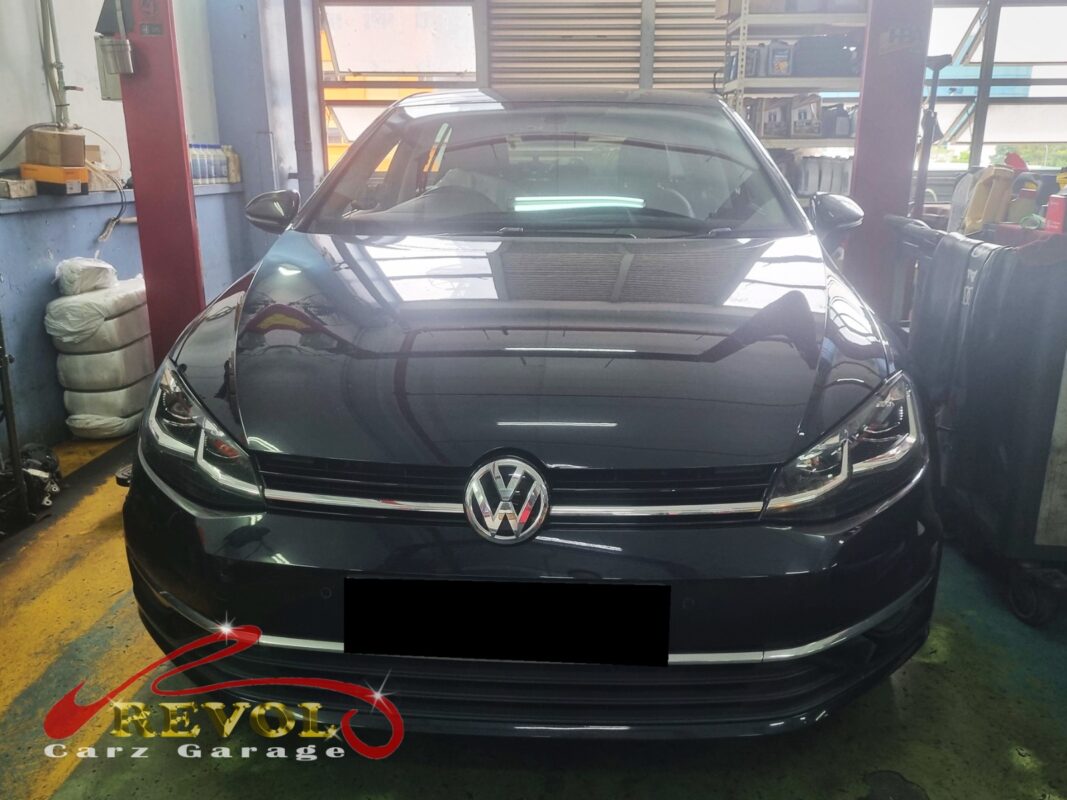
The Golf was squealing under light braking, the pedal had picked up a fine vibration on harder stops, and now the dashboard had flagged a brake-wear warning. Three signs all pointing the same way: the pads and discs were at the end of their life.
Brake pads wear down a little every time you press the pedal, and the discs wear with them. When the pads get thin, a small metal tab built into them starts touching the disc, which is the squeal, and the same low pad triggers the dashboard warning. The vibration on a hard stop is the disc itself, worn unevenly and no longer running true. A brake set doing all of that has had its time.
The diagnosis
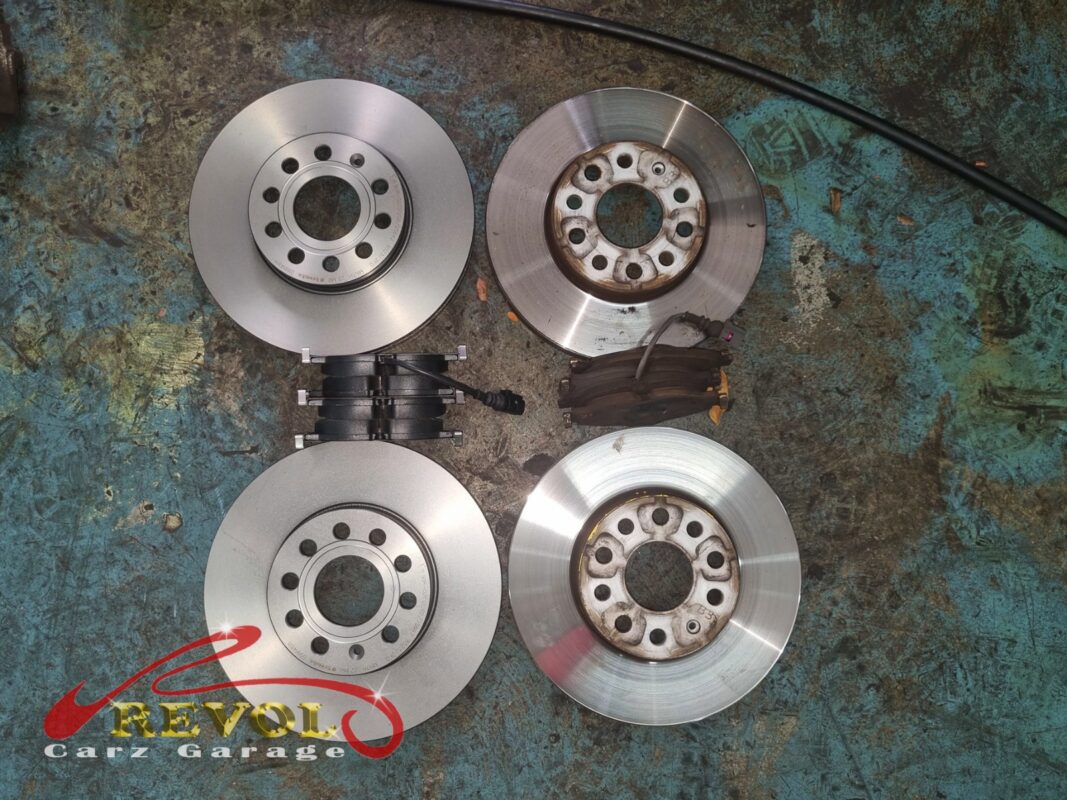
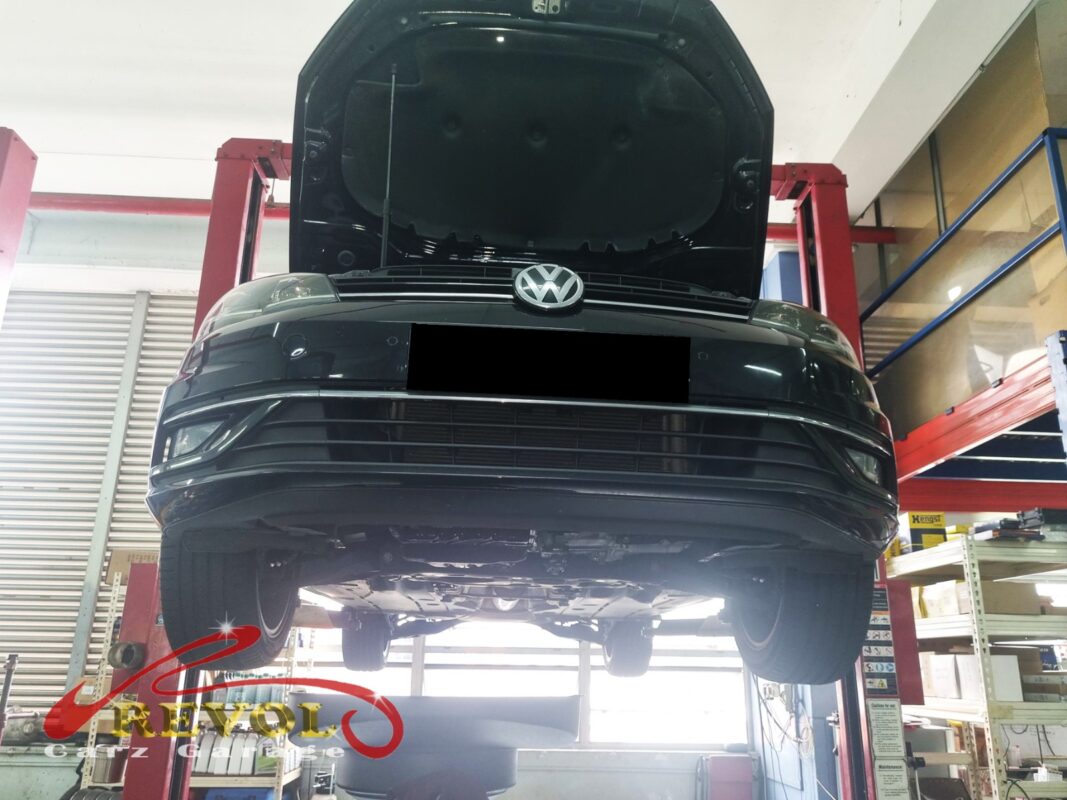
Wheels off, the front pads were down to the wear-indicator metal, which is as far as you let them go. The discs had a clear lip worn around the edge and measured past the minimum thickness on the gauge, so they were done too.
Fitting new pads onto worn discs would just bed the fresh pads into the same uneven surface, so it doesn't make sense to do one without the other. With the rears at a similar age, the call was a full set, all four corners, so the whole system is even again.
The work
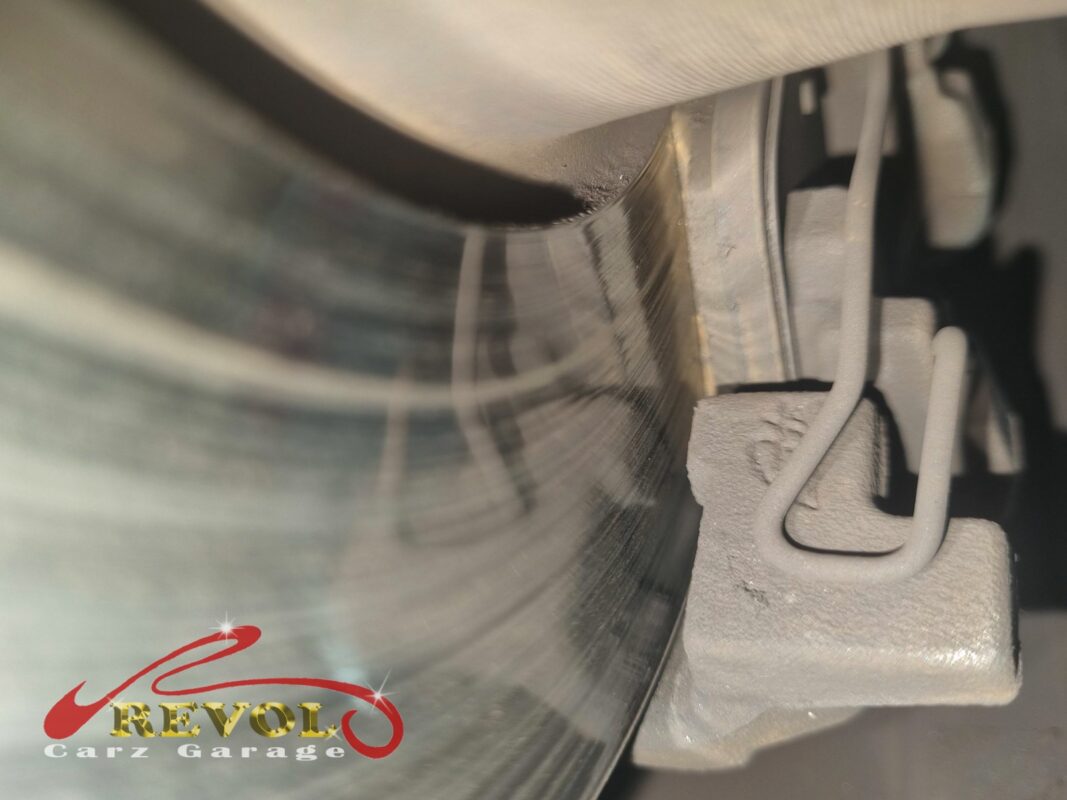
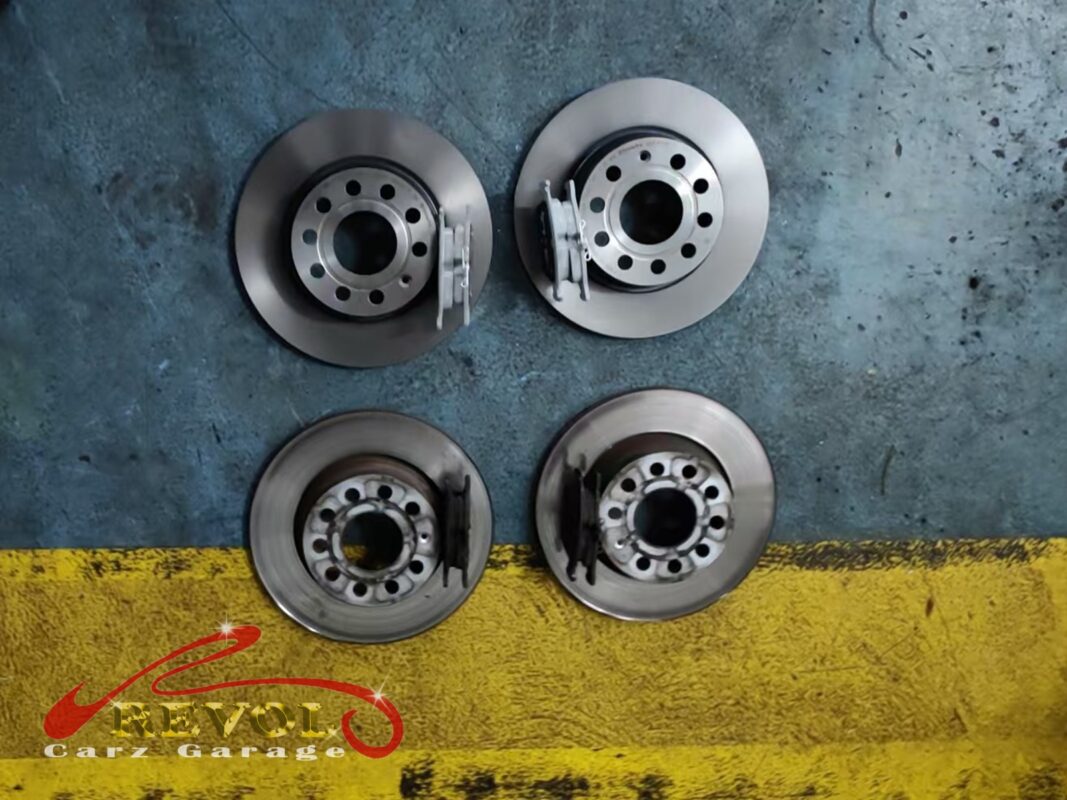
The front and rear callipers came off, all four discs were swapped for new VAG-spec rotors, and a fresh set of pads went in at every corner. The slider pins were cleaned and greased so the callipers float freely, and the calliper bolts torqued back to spec.
Then the new brakes were bedded in on a controlled road test, a series of measured stops to lay an even layer of pad material onto the new discs.
The road test confirmed the squeal was gone, the pedal was smooth, and the bite was back.
The outcome
No squeal, no pedal vibration, firm consistent bite, and the dashboard warning cleared.
The Golf went home with the braking system reset front to back. Brakes are a wear item and there's no nursing them past the indicator, so doing the full set together means even braking and a clean slate rather than chasing one corner at a time.