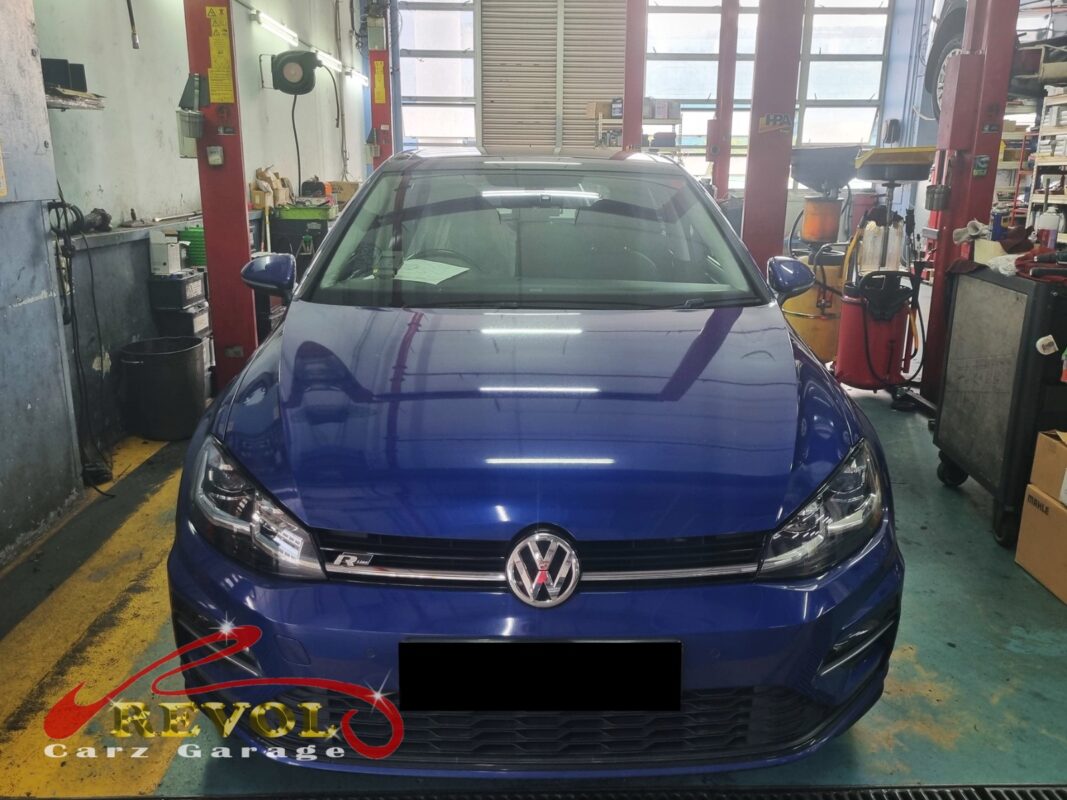
The brief
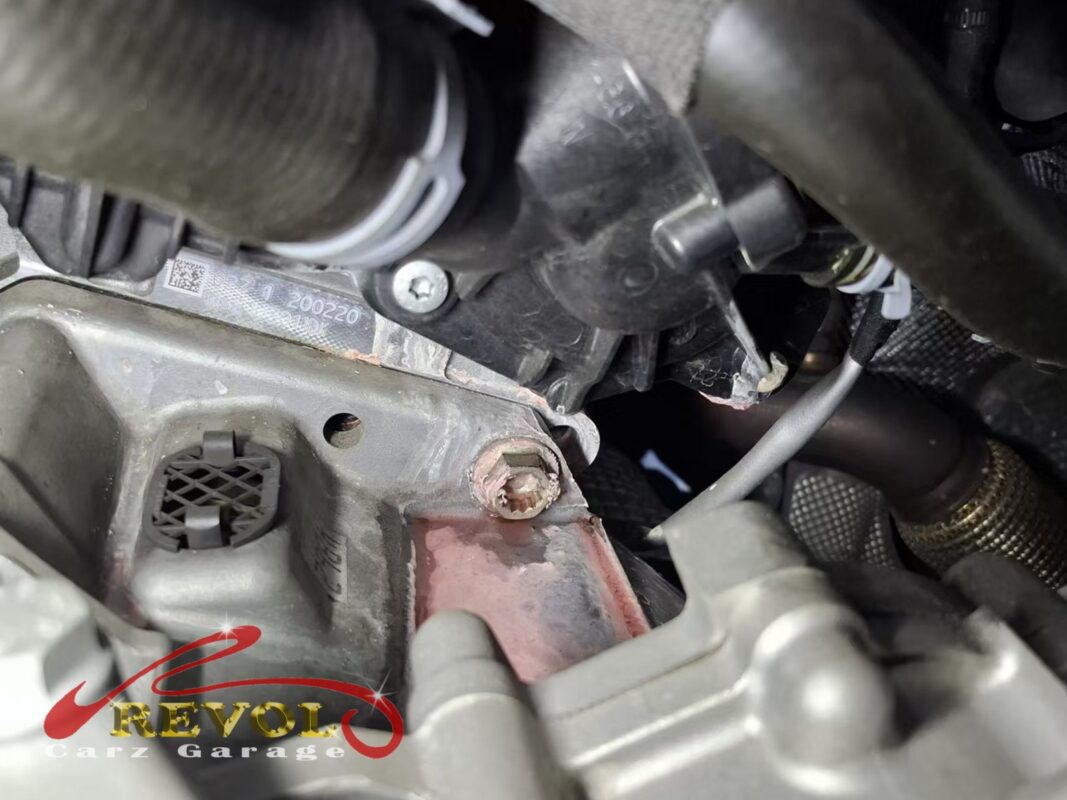
The Golf had a textbook coolant pump failure on its hands: a sweet smell from the engine bay, a pink puddle under the car, white and pink crust (dried coolant) around the pump, and a low-coolant warning on the dash. Four signs of the one fault.
The coolant pump pushes coolant around the engine and through the radiator to carry the heat away. It spins on a shaft, and that shaft runs through a seal. When the seal wears, coolant weeps out past it, a little every time the engine runs, which is the puddle, the smell and the crusty residue where it dries. Lose enough and the level drops far enough to trip the warning, and an engine low on coolant is an engine heading for an overheat.
The diagnosis
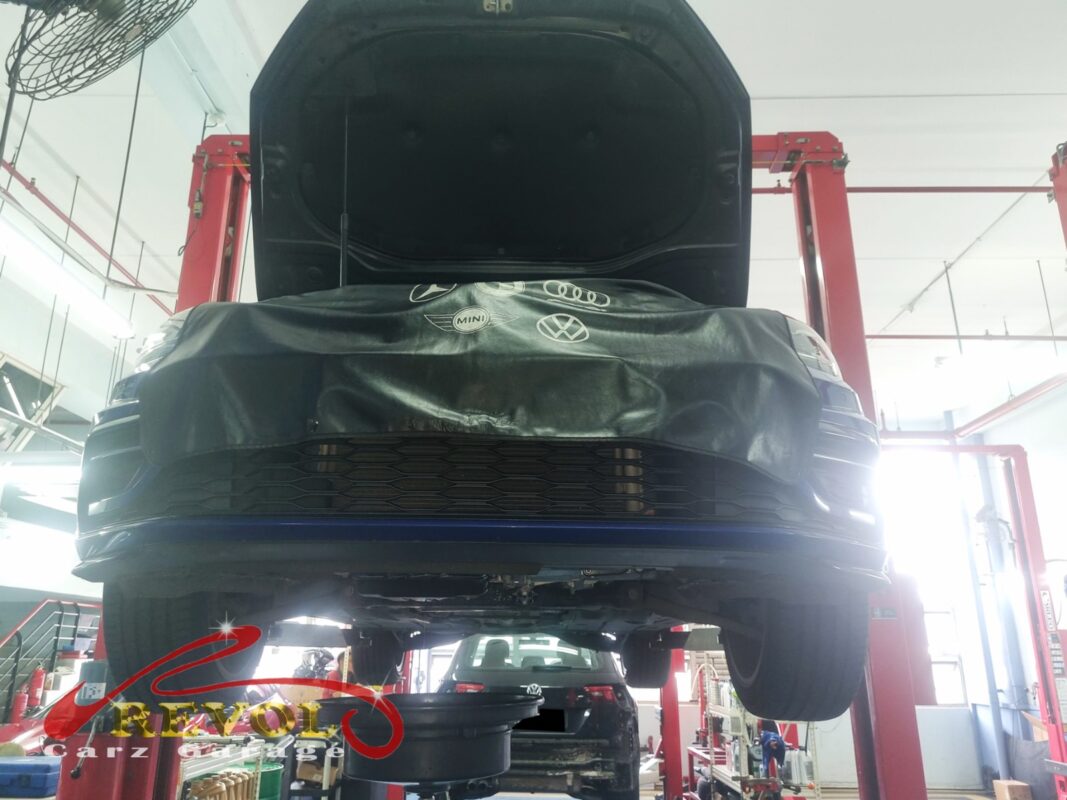
A pressure test traced the leak straight to the pump's shaft seal. The crust around the pump was simply coolant that had been drying after each drive, building up over time.
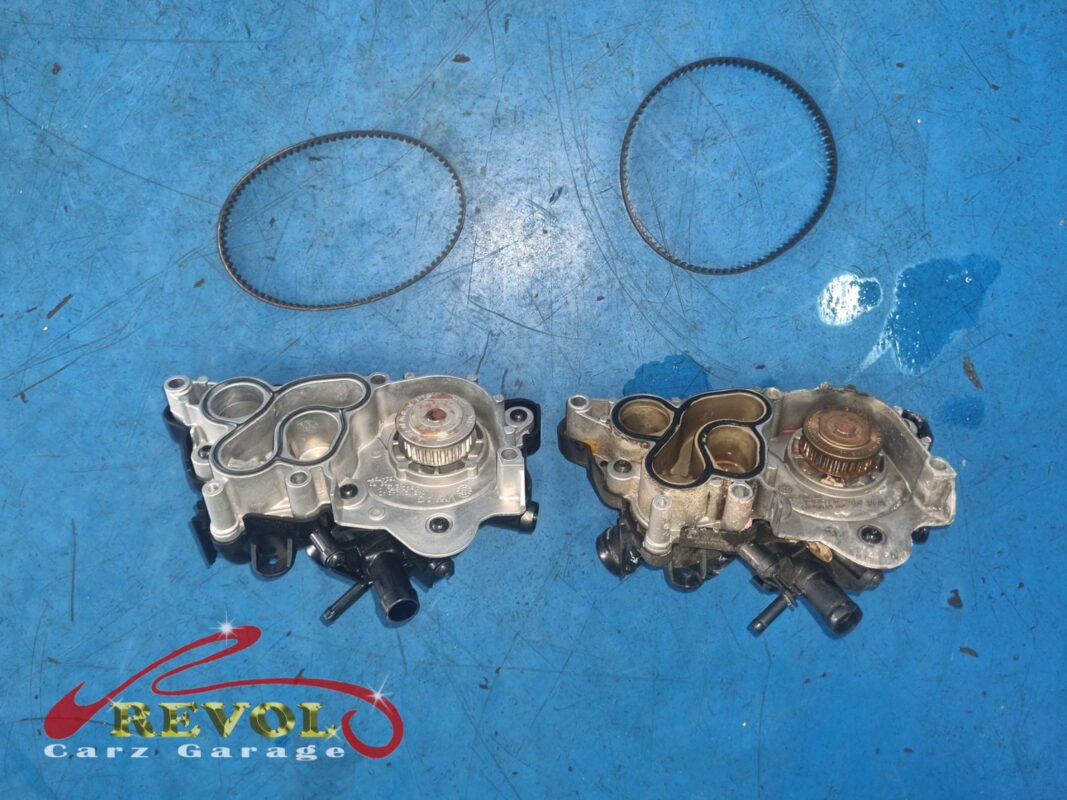
That's a pump replacement, not a re-seal. The seal is part of the pump assembly, and a pump that's started weeping only weeps more, so the unit gets changed.
The work
The cooling system was drained, the pump's drive belt section released, and the failed pump removed. The dried coolant residue was cleaned off the housing area, a new VAG-spec coolant pump fitted with a fresh seal, and the drive belt set back up.
Then the system was refilled with the correct coolant, the air bled out the proper way so no pockets were left, and held under pressure to confirm the seals were dry.
A road test confirmed the level held and there was nothing dripping.
The outcome
No drips, no low-coolant warning, no sweet smell, and the level holding steady.
The Golf went home with the cooling system back to spec. A weeping coolant pump only gets worse, and the failure at the end is an overheat that can cost a head gasket or worse, so changing the pump on the first signs kept it to a straightforward job.