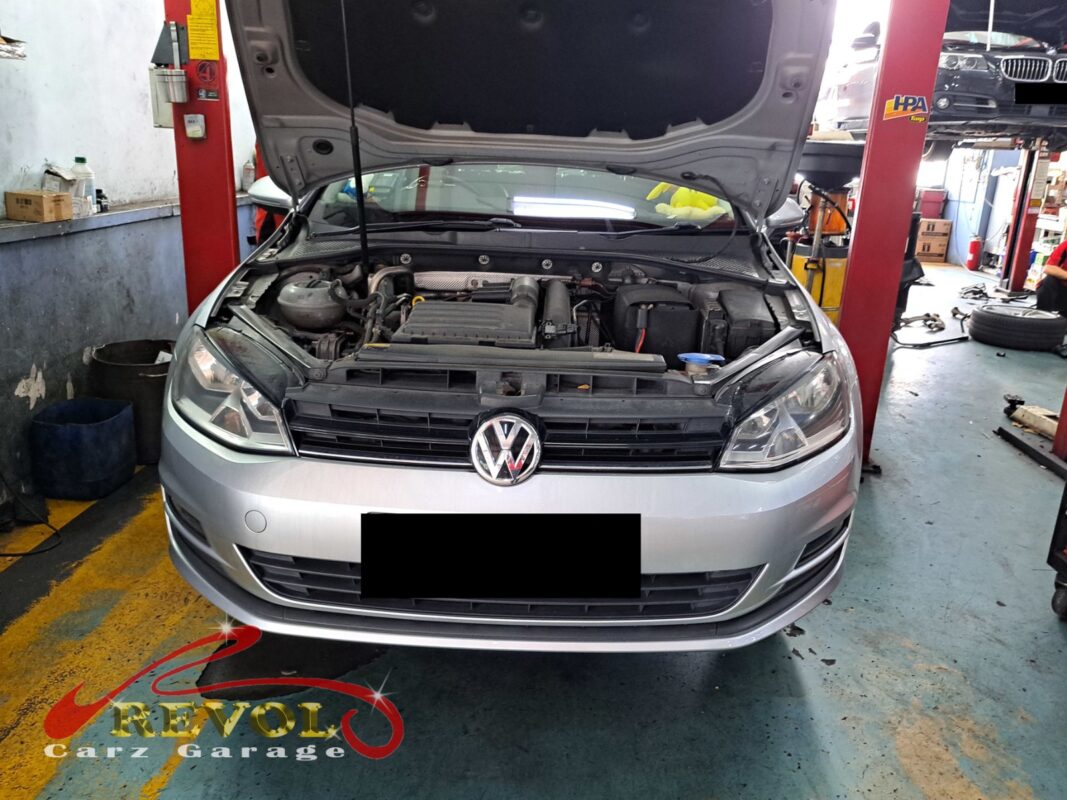
The brief
The Golf had crossed 125,000 km, a little past the recommended timing belt interval. The owner had been meaning to book it in for a while and finally did, before any ticking or hard-start symptom had a chance to show up. On this engine a snapped timing belt takes the valves with it, so doing it on schedule is the only sensible approach.
The timing belt keeps the top of the engine spinning in step with the bottom, and on this engine it also drives the water pump. It's a service item with a set life, and the belt, the tensioner, the idler pulleys and the pump all age together as a set. Wait for one of them to actually fail and you risk a bent-valve engine, so the job is preventive, done by the clock.
The diagnosis
With the covers off, the old belt was lightly glazed but still in one piece, the tensioner had a small but real wobble in its bearing, and the water pump, which this belt drives, was just starting to weep at its shaft seal.
Doing the belt on its own and leaving the pump would mean the car back in within months when the pump let go properly, and you'd be paying the labour to get back in there twice. So it was a full kit, belt, tensioner, idlers and pump, all together.
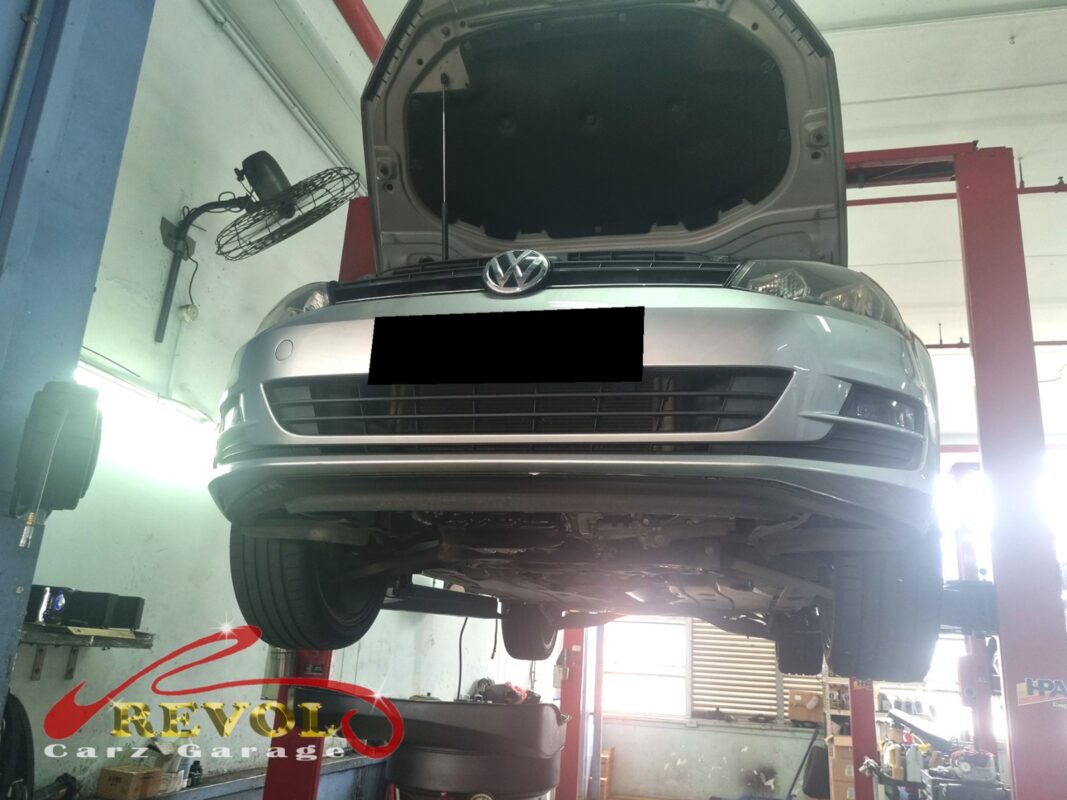
The work
The timing was locked with the proper VAG tools so nothing could move, and the old belt, tensioner, idler pulleys and water pump all came off. A new VAG-spec timing kit went in, the timing set back to spec on the tools, and the cooling system refilled with the correct coolant.
Then the engine was run through a warm-up cycle to confirm the belt drive was silent and the pump was dry.
A road test confirmed it ran clean through the rev range.
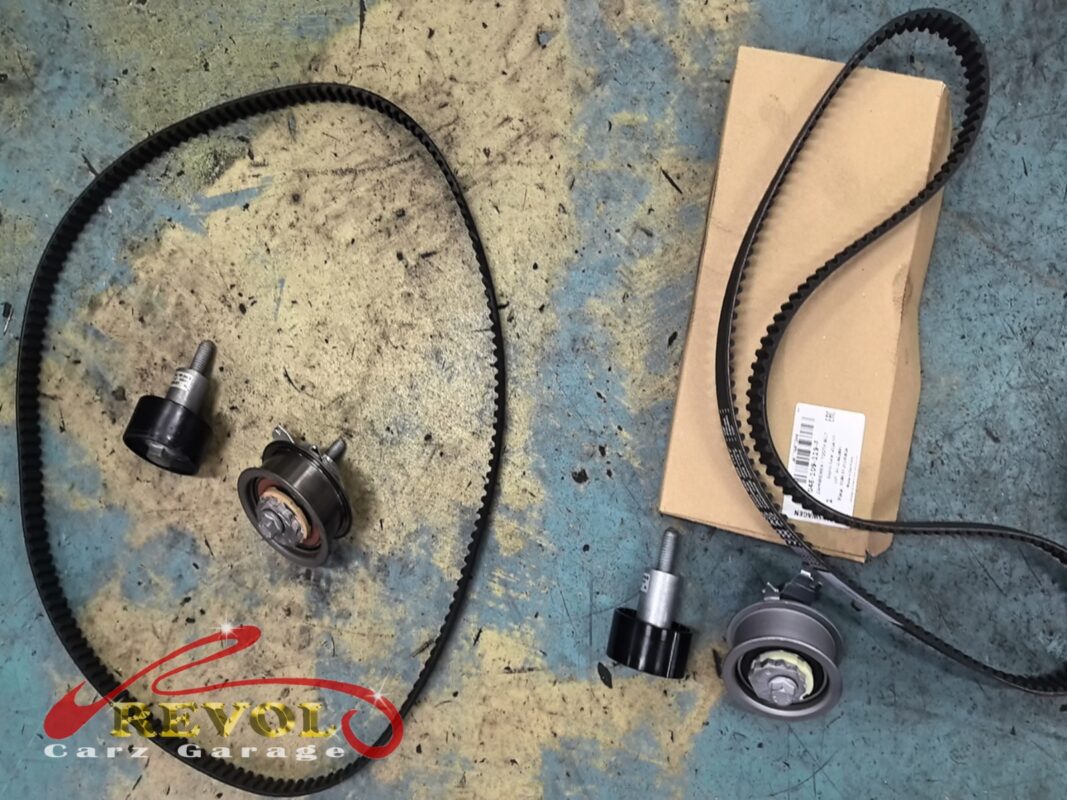
The outcome
Clean timing reset, a dry water pump, a silent belt drive across the rev range, and the biggest single failure point on this engine taken off the table.
The Golf went home good for the next belt interval. A timing belt gives you no warning when it snaps, so spending the money on the full kit on time is the cheap insurance against a far bigger repair later.