The brief
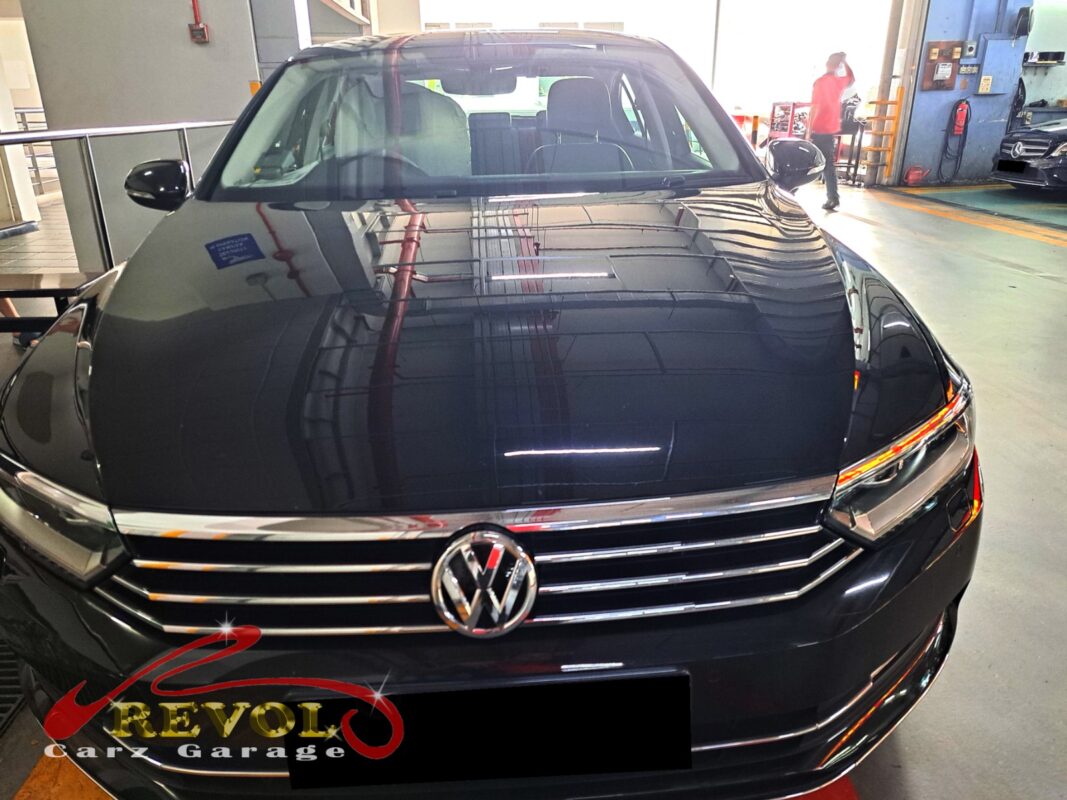
The Passat had been leaving oil spots under the front of the engine, catching a burning smell after longer drives, and developing a faint misfire that came and went under load. Three signs that the front of the engine was leaking oil, and that some of it had found a place it shouldn't be.
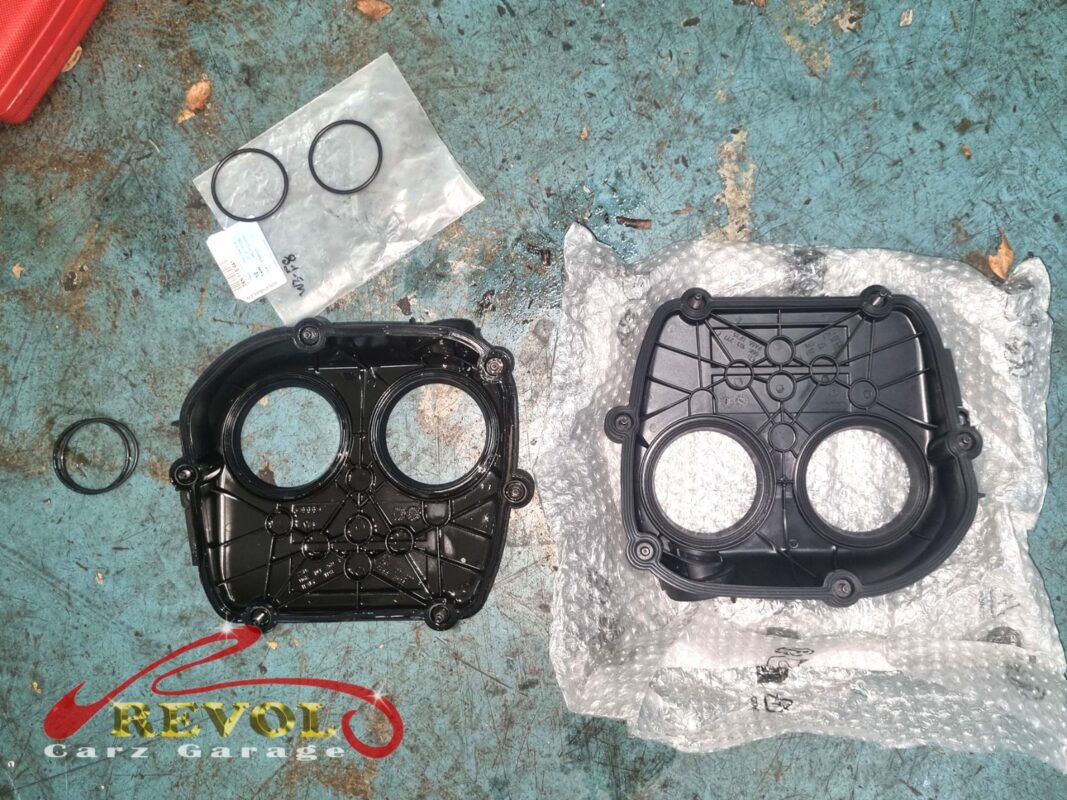
The timing cover seals the front of the engine where the chain and sprockets run, and on this engine that's a plastic cover with the seal built into it. The plastic ages, the seal hardens, and oil starts weeping out, which is the spots on the ground and the burning smell when it drips onto something hot after a run. And if that oil tracks down toward a spark plug well it can soak the coil boot, which is the on-off misfire. All of it points back to that cover.
The diagnosis
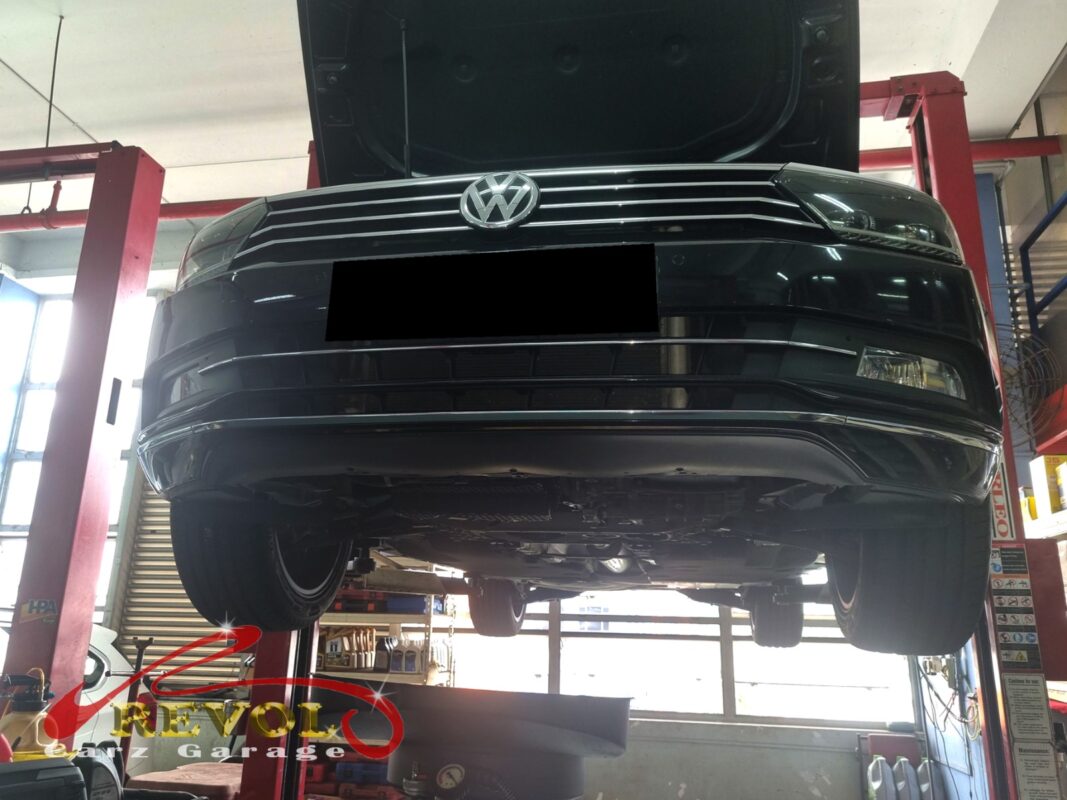
On the lift the leak was confirmed at the timing cover. The cover's plastic and its seal had aged past the point of sealing, so it was weeping oil down the front of the engine. The other gaskets in the area were dry. And the intermittent misfire traced to oil tracking into one of the plug wells and occasionally wetting the coil boot, not to a failed coil.
So this was a timing cover replacement, the whole plastic cover with fresh seals, plus a clean-out of the affected plug well and coil boot so a perfectly good coil didn't get replaced for nothing.
The work
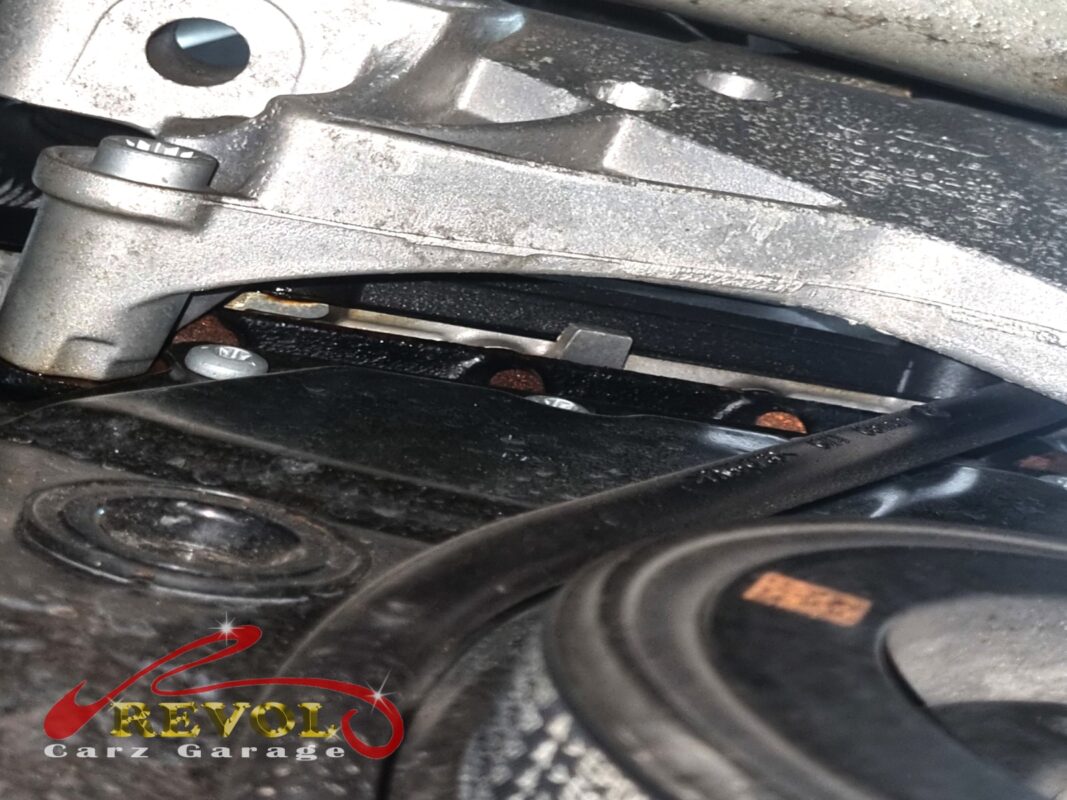
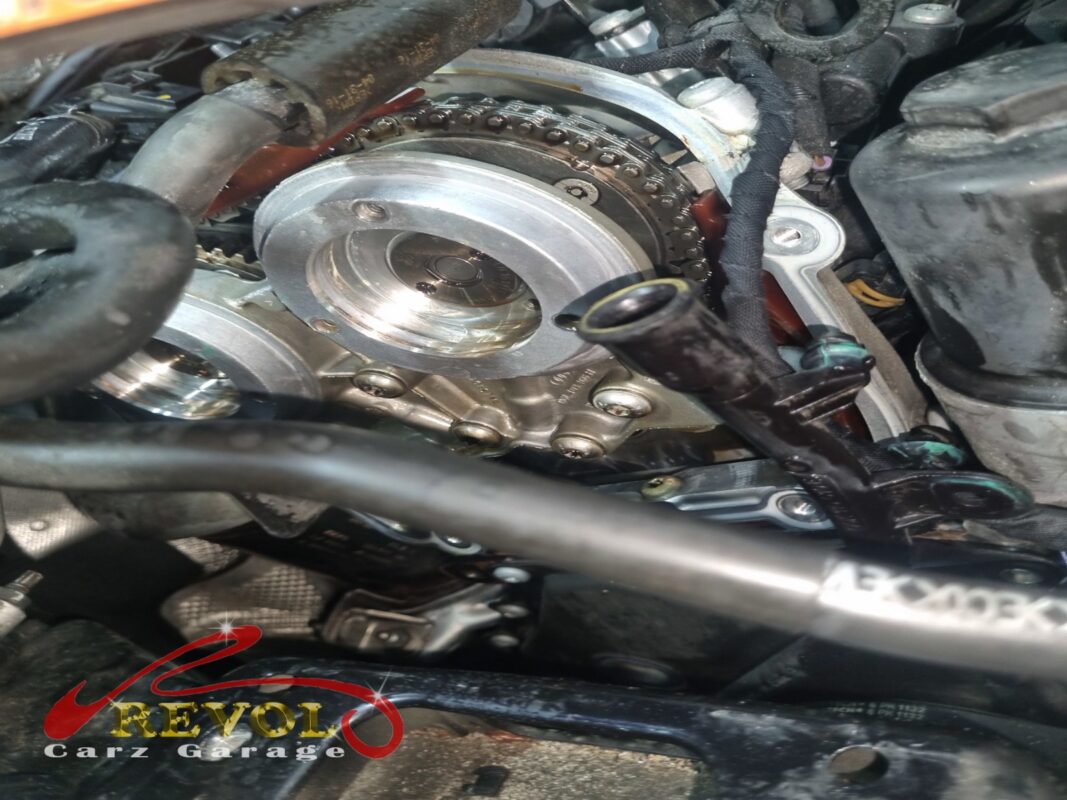
The accessory belts and brackets came off, the engine was supported, and the old timing cover removed. Both mating surfaces were cleaned back to bare metal, a new VAG-spec timing cover went on with fresh seals, and the bolts torqued to spec in the proper pattern before the front of the engine was reassembled. The oil-soaked plug well was drained and dried, the coil boot cleaned, and everything reseated.
A road test followed to confirm it was sealed and running clean.
The outcome
Dry timing cover, a clean bay liner after the road test, no burning smell, the misfire gone, and no fault codes.
The Passat went home with the front of the engine sealed properly and a coil that didn't need replacing left where it was. An oil leak at the timing cover only spreads, and once it's into the plug wells it starts costing coils, so sorting the cover when it did kept the job to the cover and a clean-up.