The brief
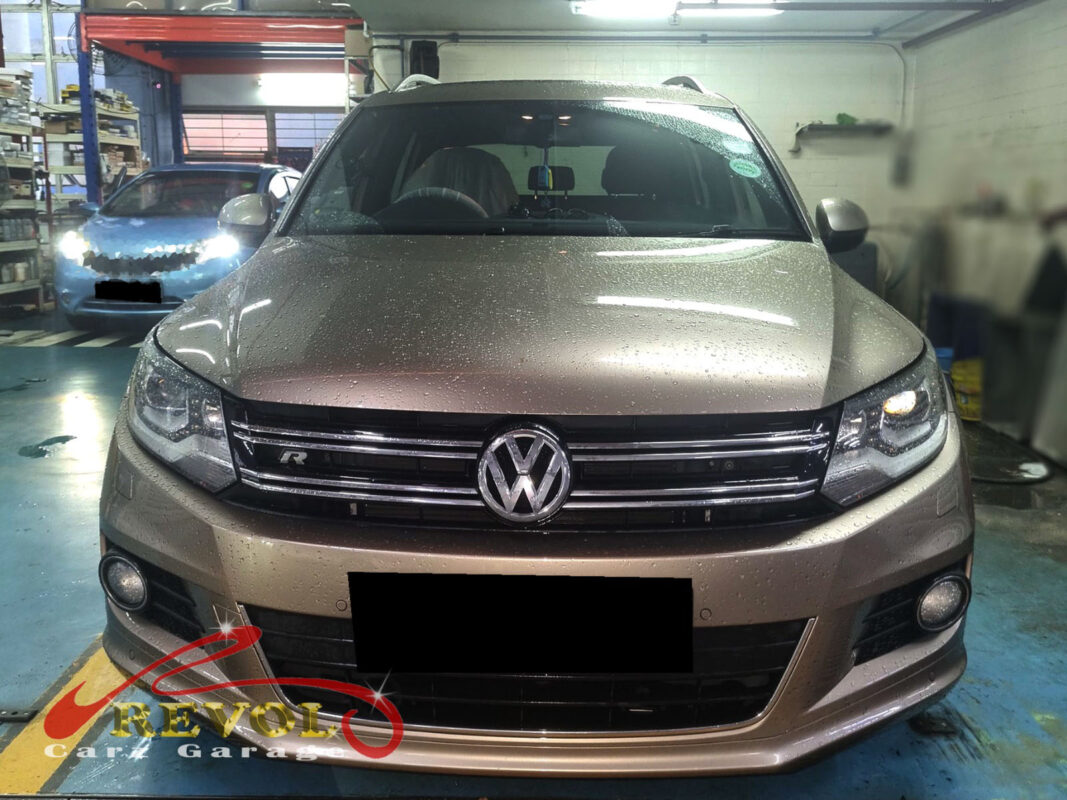
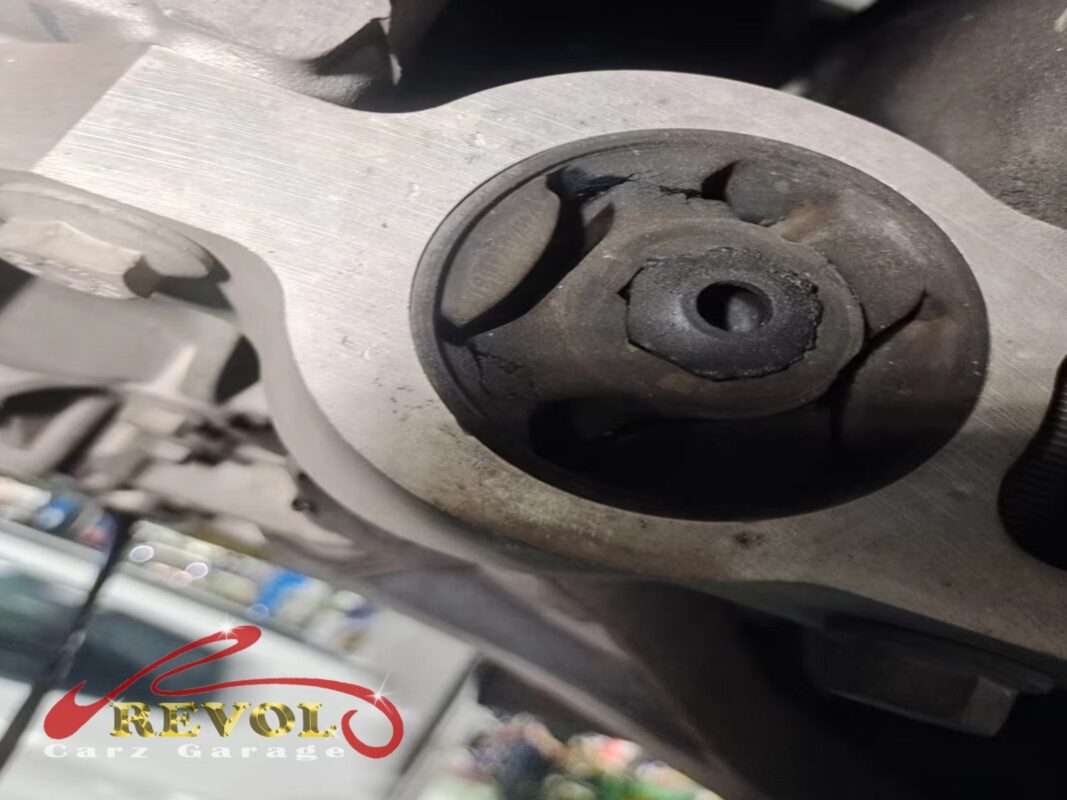
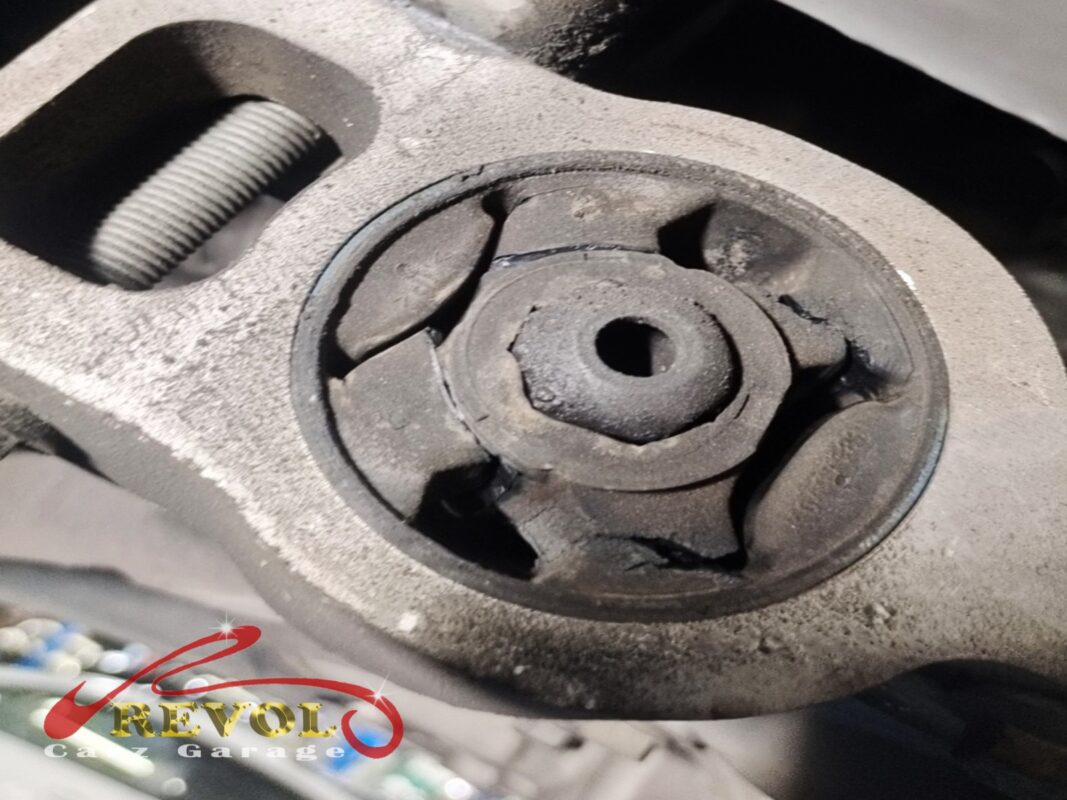
The Tiguan had picked up clunks from the undercarriage over bumps, and the steering had gone vague enough that the owner found himself correcting the wheel more often than he should. A look underneath showed the rubber bushes cracked, visible to the eye.
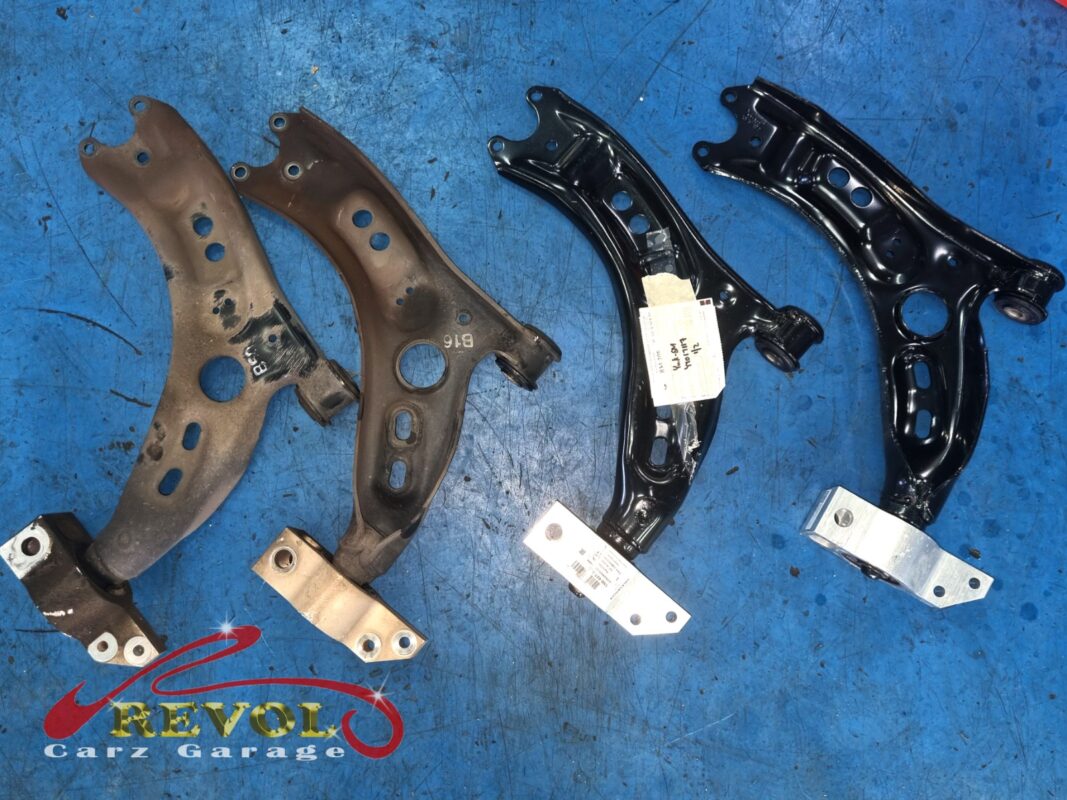
The front lower arms locate the bottom of each front wheel and hold it at the angles the geometry is set to. They pivot on rubber bushes, and when those bushes crack and the rubber starts breaking up, the wheel can move around more than it's meant to. That extra play is the clunk over bumps, the vague feel as the steering wanders, and uneven tyre wear because the wheels aren't sitting where they're aimed.
The diagnosis
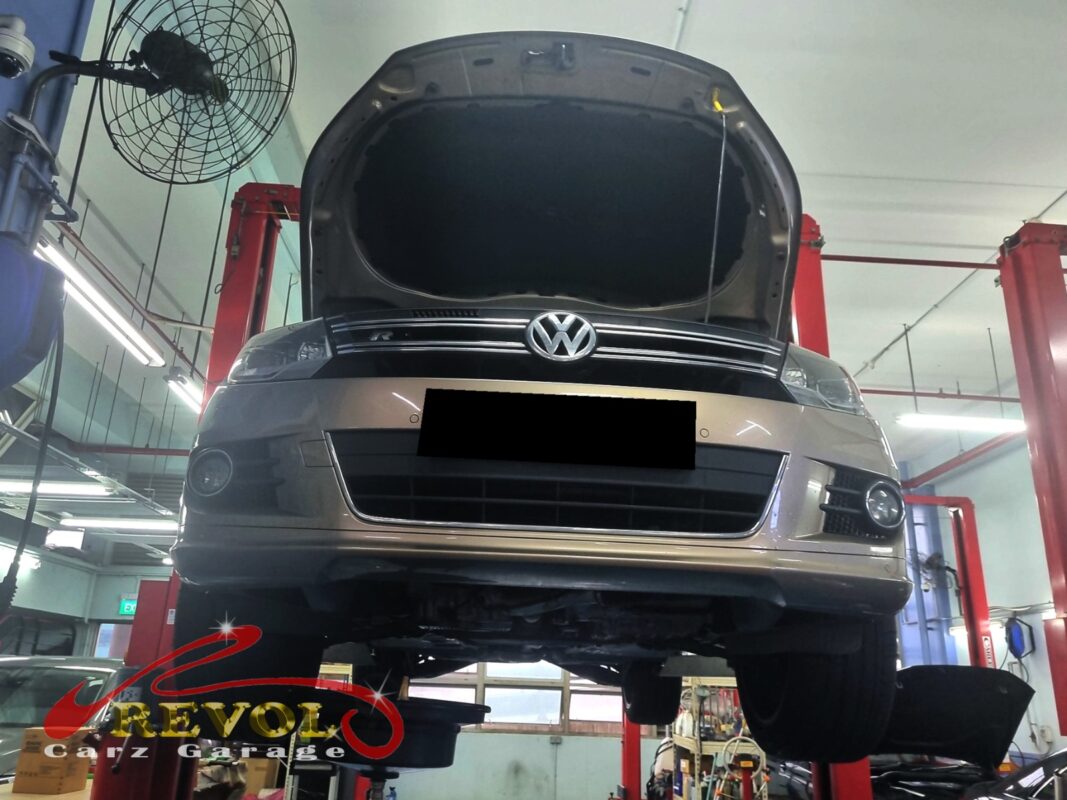
A pry-test on both front lower arms confirmed it: the bushes were deflecting well past the service limit, with the rubber visibly cracked on both sides. One arm was no better than the other.
When both arms are tired together you do them as a pair. Fitting one fresh arm against an old one leaves a stiffness mismatch front to front, and you'd be back to do the second soon anyway, so it was both arms, with a four-wheel alignment after to reset the geometry on the new parts.
The work
Both front lower arms came off, and a matched pair of VAG-spec replacements went on with new bushes, every fastener torqued to the manual figures. Then the car went onto the alignment rig for a four-wheel set-up.
A road test confirmed the clunk was gone and the steering had firmed back up.
The outcome
Knock gone, steering tightened up, and the alignment back in spec, so the front tyres will wear evenly again.
The Tiguan went home with the front end behaving the way it should. Lower-arm bushes carry the front geometry, and once they crack the handling drifts and the tyres pay for it, so a fresh matched pair and a reset alignment put it all back where it belongs.