The brief
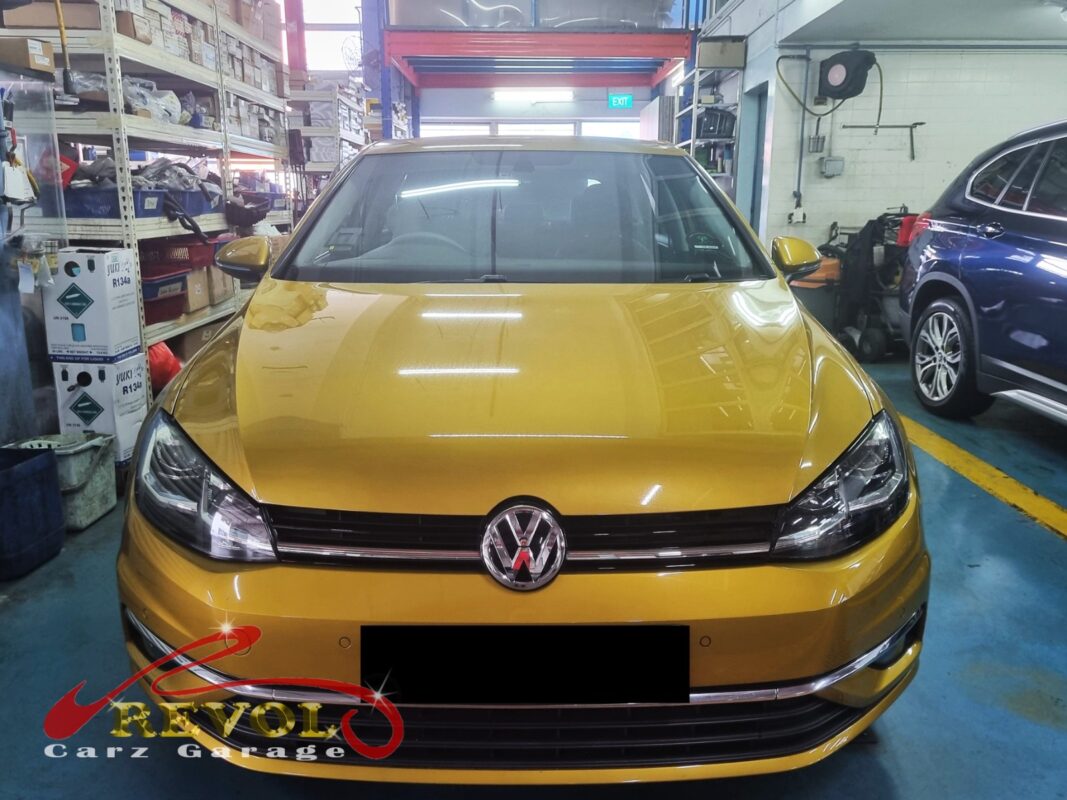
The Golf had a low growl from the front that built steadily with road speed and got noticeably louder turning one way, which loads the wheel on the opposite side. The owner had read enough to know that a wheel bearing left long enough can let the wheel wobble, so he booked it in before it got to that.
A wheel bearing lets the wheel spin freely while carrying the weight of the car at that corner. As it wears, the rolling surfaces roughen, which is the growl, and the noise rises and falls with speed and with cornering load because that changes how hard the bearing is working. A bearing making that noise has had its run, and the sensible move is exactly what he did, change it before there's play at the hub.
The diagnosis
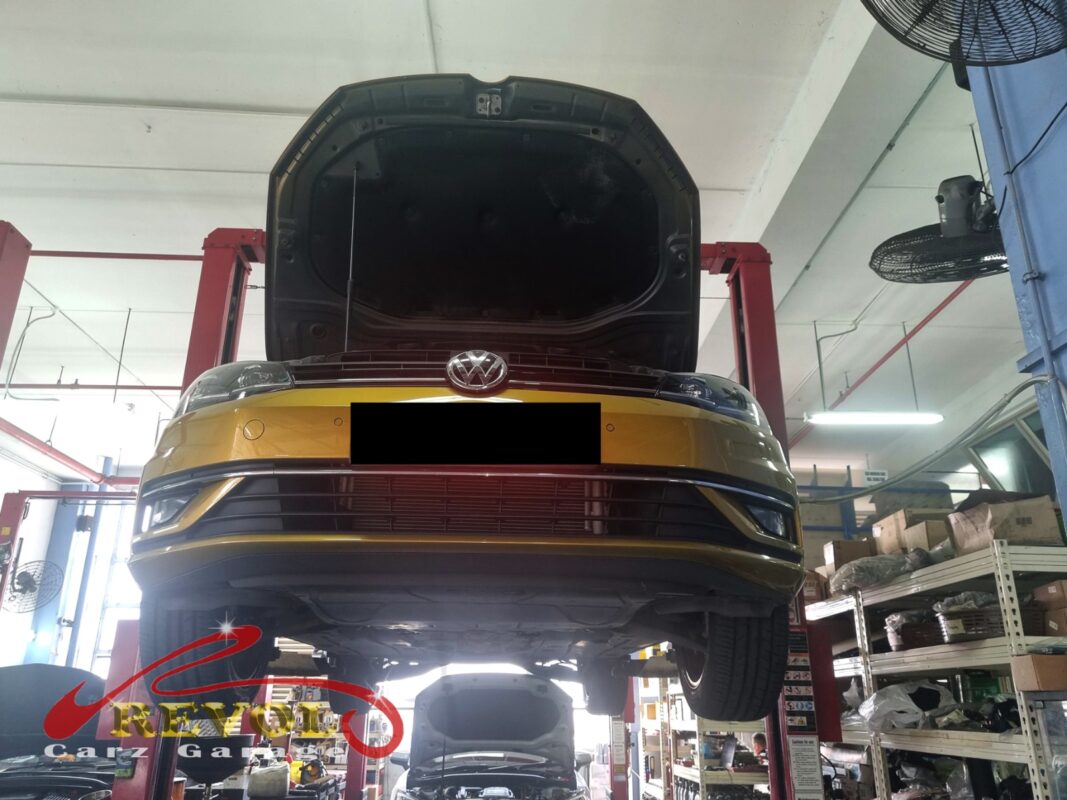
On the lift the workshop spun each front wheel by hand and listened, and rocked them top and bottom. The bearing on the affected front side had a clear gritty resistance and a small amount of play at the hub, the play you don't want. The other side felt smooth.
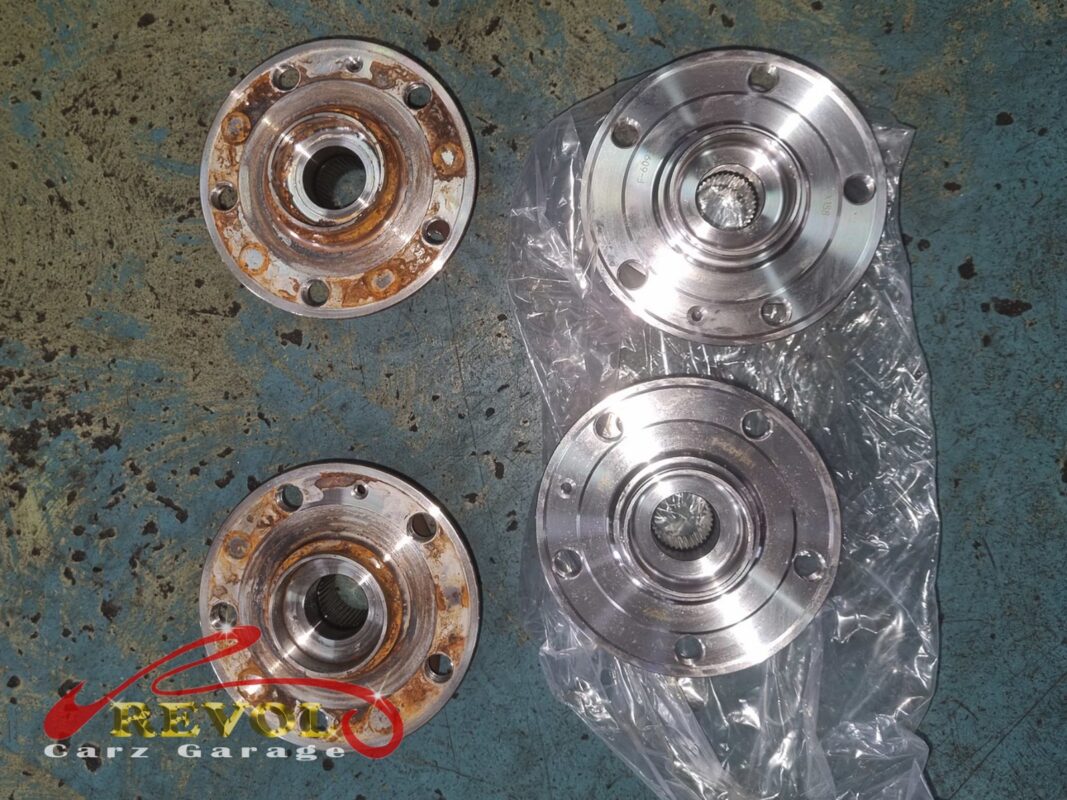
With both front bearings the same age and the same wear item, and one already worn, the call was to do the pair rather than leave the second to start growling a few months later, so both front hub bearing assemblies were getting changed.
The work
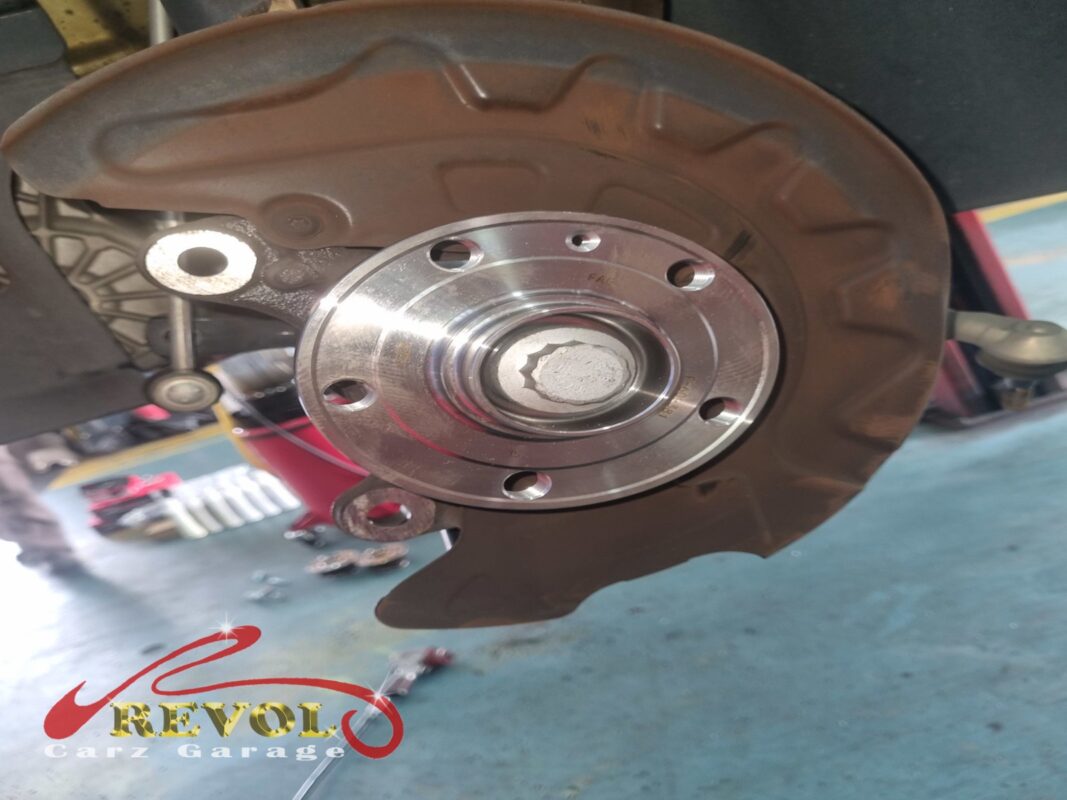
The brake calliper and disc came off each side, the old hub bearing assemblies were unbolted and lifted away, and new VAG-spec hub bearing units bolted on in their place. The axle bolts were torqued to spec, the brakes reassembled, and each hub turned by hand to confirm it ran smooth and silent.
A road test confirmed the growl was gone, smooth at every speed and through corners both ways, with no play at the hubs.
The outcome
Growl gone, smooth at every speed and through corners either way, and no play at the hubs.
The Golf went home quiet at the front again. A wheel bearing gives you a good warning before it lets go, so acting on the growl and doing the pair while it was in meant a clean job rather than a return visit for the other side.