The brief
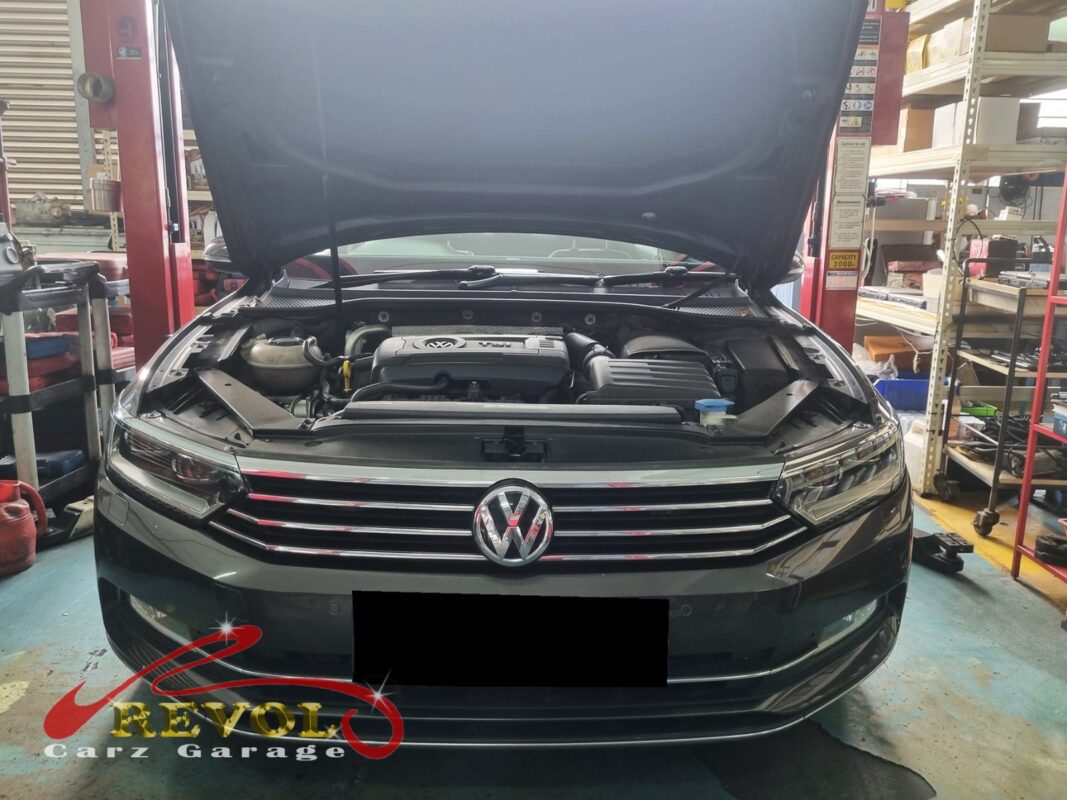
The Passat had been dropping oil between services, and the owner was finding fresh traces under the front of the engine. He brought it in before the slow loss turned into a real one.
Oil under the front of the engine and a dipstick that keeps reading low means the sump, the pan that holds the engine's oil supply, is leaking at its seal. On this engine the sump is a plastic pan bolted to the bottom of the block on a gasket, and over years of heat cycles the gasket can stop sealing, or the pan itself can distort just enough to let oil weep past. It doesn't pour out, it drips, but it's a steady loss, and an engine that runs low on oil is an engine you don't want to keep driving.
The diagnosis
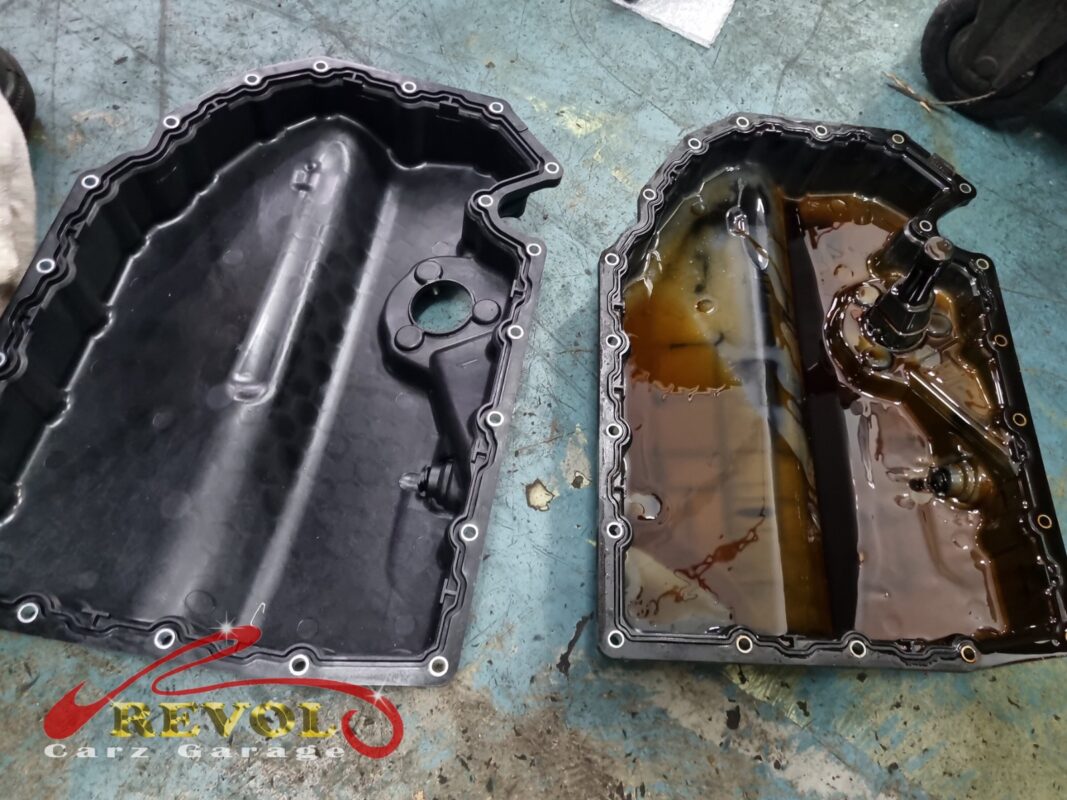
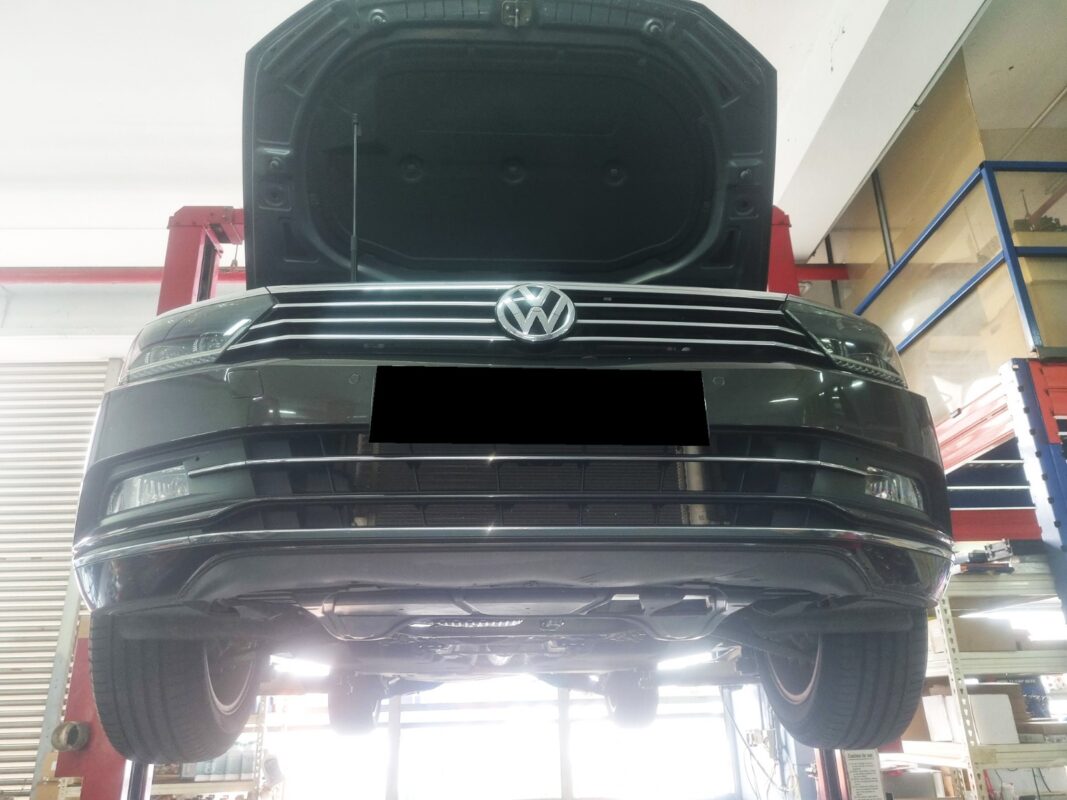
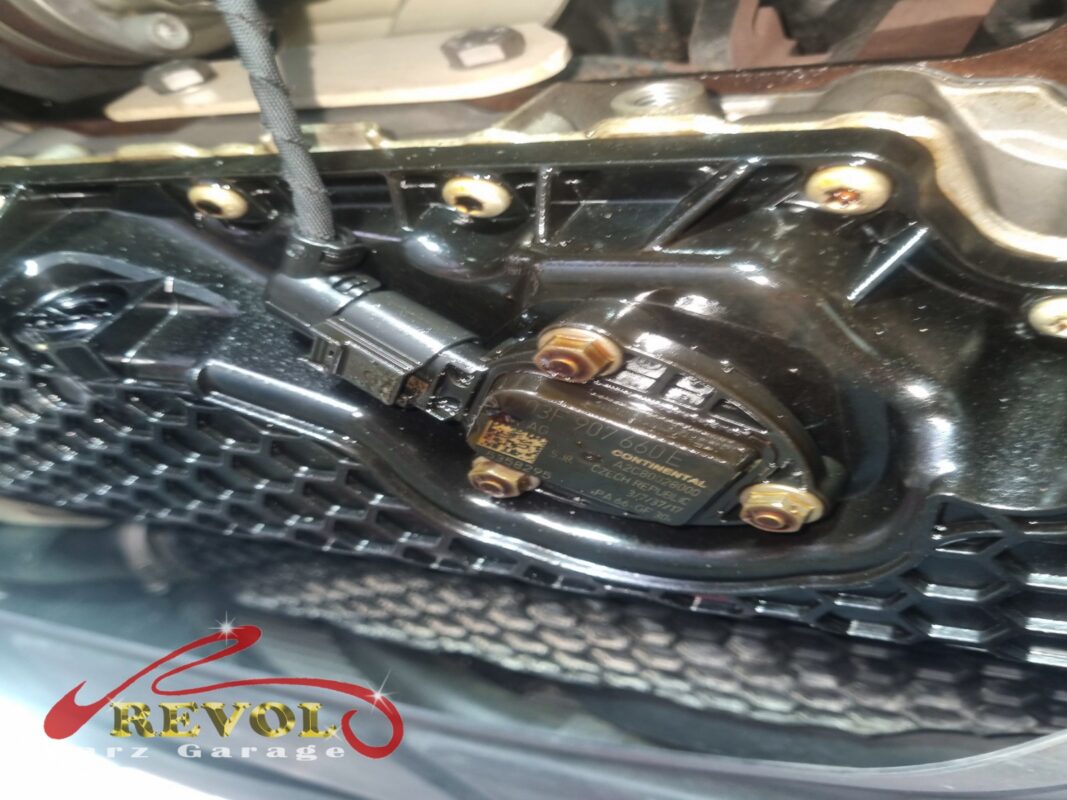
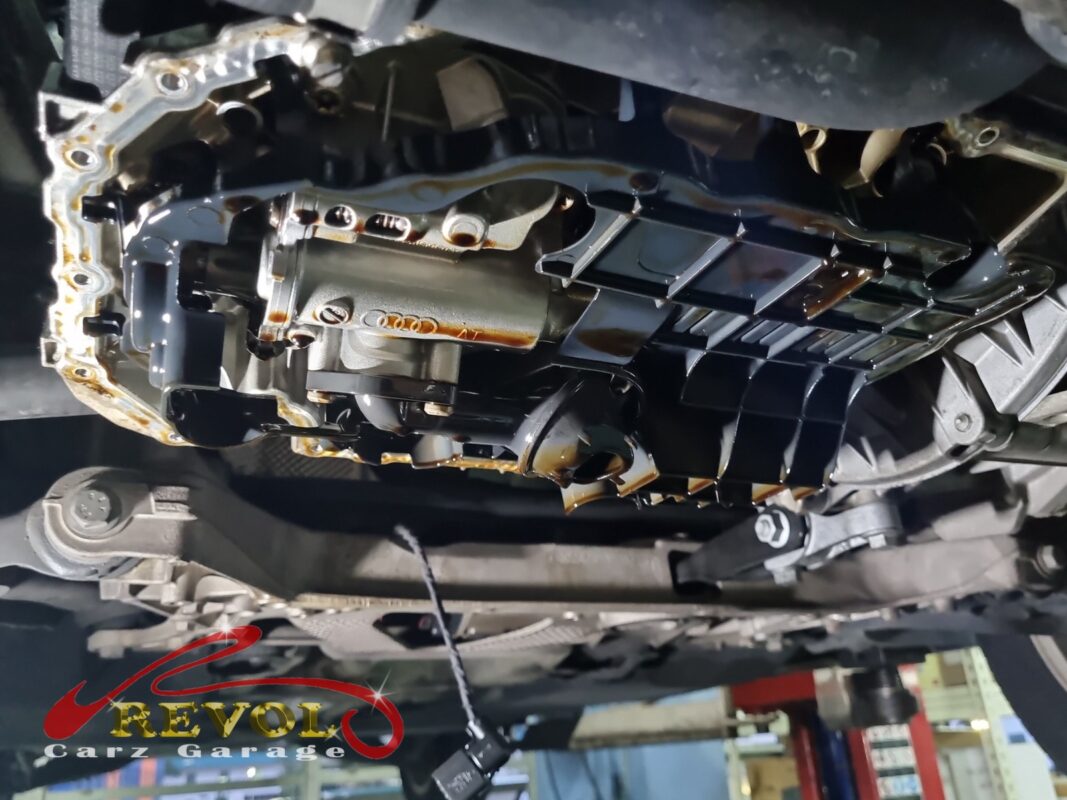
On the lift the leak was traced cleanly to the sump pan gasket line. The pan had a small distortion at one of the bolt seats from years of heat cycling, and that was stopping the gasket sealing properly along that edge.
So this was a pan replacement, not just a re-seal of the old one. A pan that's distorted won't seal reliably no matter how good the new gasket is, so the pan was getting changed.
The work
The engine oil was drained, the engine supported, and the old sump pan dropped. The block face was cleaned back to bare metal, a new VAG-spec sump pan went on with a fresh gasket and new bolts torqued in the proper pattern, and the engine refilled with the correct oil.
Then it was held at idle and checked underneath to confirm nothing was weeping before the car went out.
A road test followed to confirm it stayed dry.
The outcome
No drips overnight, the oil level holding cleanly, and no warning lights.
The Passat went home with the underside dry and the slow loss closed off. A sump leak is the kind of thing that's easy to keep topping up and forget about, right up until the level gets away from you, so sorting it on the first traces kept it to a straightforward pan swap.