The brief
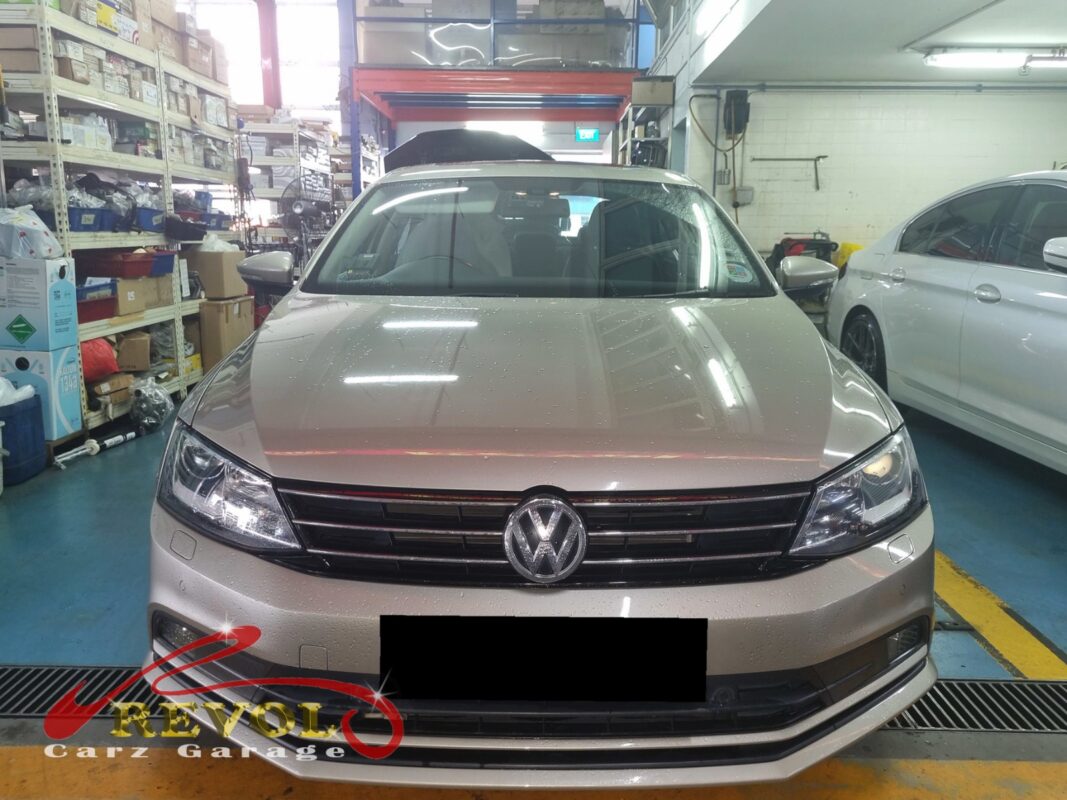
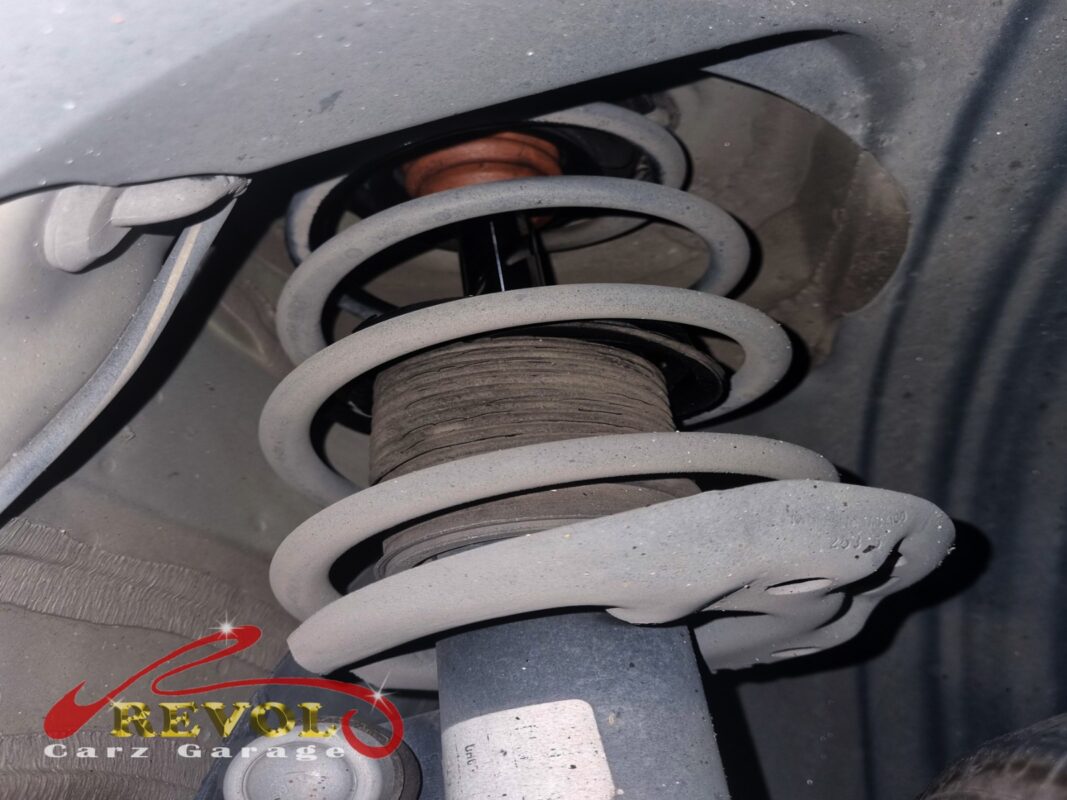
The Jetta had picked up a small oil weep visible halfway up the driver-side front strut, the front was bouncing an extra cycle over speed humps, and the nose dipped further than usual under braking. Three signs converging on the front struts.
A strut does two jobs: the spring holds the corner of the car up, and the damper inside it controls how the spring moves so the body settles instead of bouncing. The damper works by pushing oil through small valves, and when its seal goes the oil weeps out, which is the damp ring on the body, and it loses its control, which is the extra bounce over bumps and the deeper dive under braking. A strut leaking and a strut that's lost its damping are the same strut at the end of its life.
The diagnosis
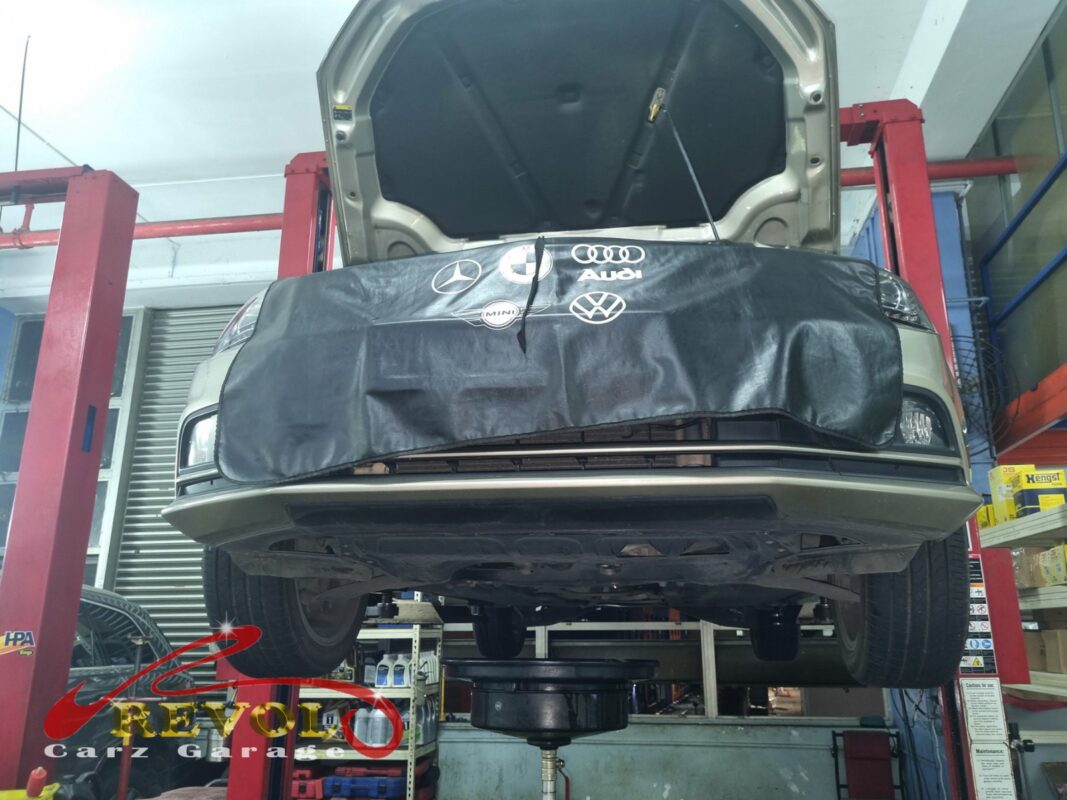
On the lift the driver-side front strut had clear oil weeping past its seal. Bouncing each front corner by hand confirmed both struts had lost rebound damping past the service spec, the other side just hadn't started leaking yet.
With one wet and the other tired, the call was to do both. Struts work as a pair across an axle, and fitting one fresh strut against a worn one leaves the front pulling unevenly over bumps and under braking, so it was a matched pair, with a four-wheel alignment after.
The work
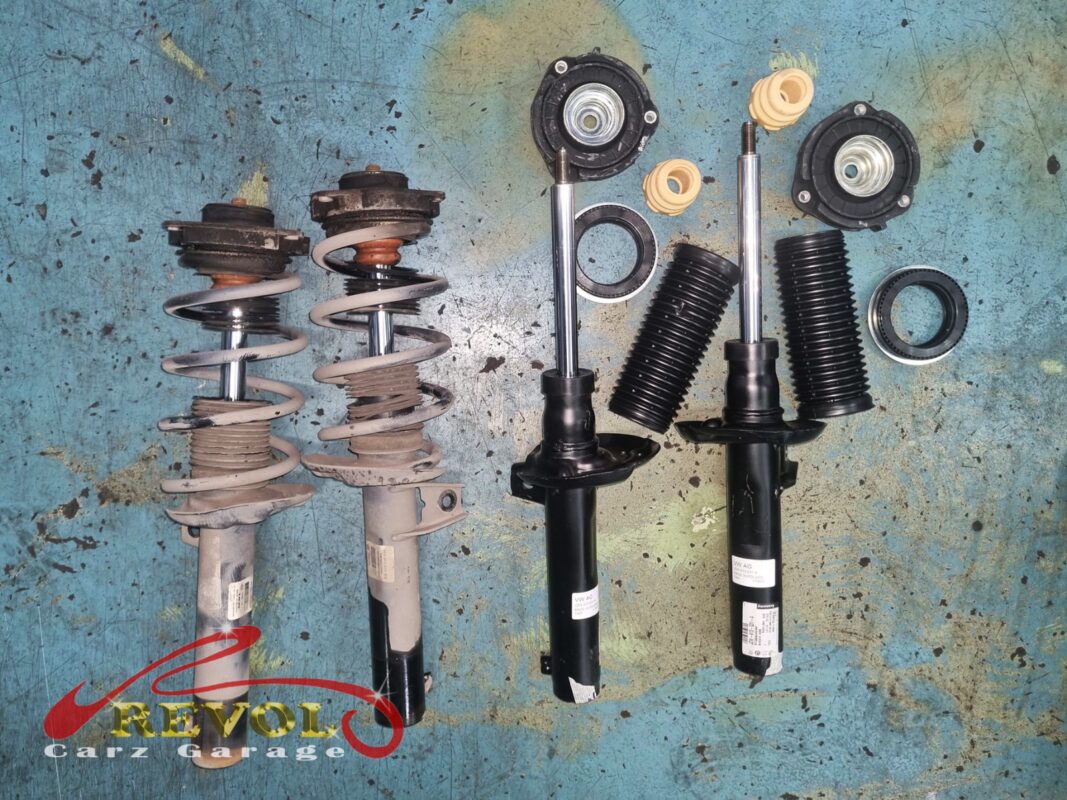
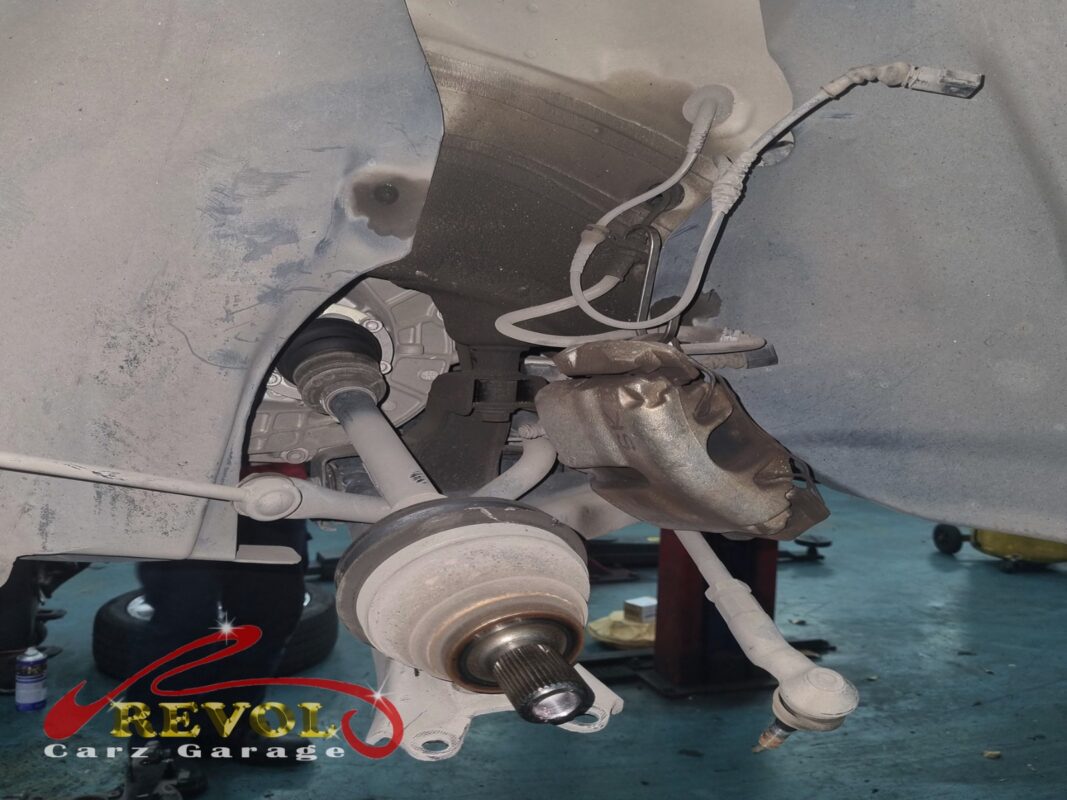
Both front strut assemblies came off, and a matched pair of VAG-spec replacements went on, complete with new top mounts, bump stops and boots, the upper and lower mounts torqued to the manual figures. Then the car was rolled to settle the suspension and put onto the alignment rig for a four-wheel set-up.
A road test confirmed the bounce and the nose dive were gone and the front sat planted.
The outcome
No bounce over humps, no nose dive under braking, no oil on the strut, and the alignment back in spec.
The Jetta went home with the front end planted again. Struts wear together and they take the car's composure and its braking stability down with them, so a fresh matched pair and a reset alignment brought the front back to how it should drive.