The brief
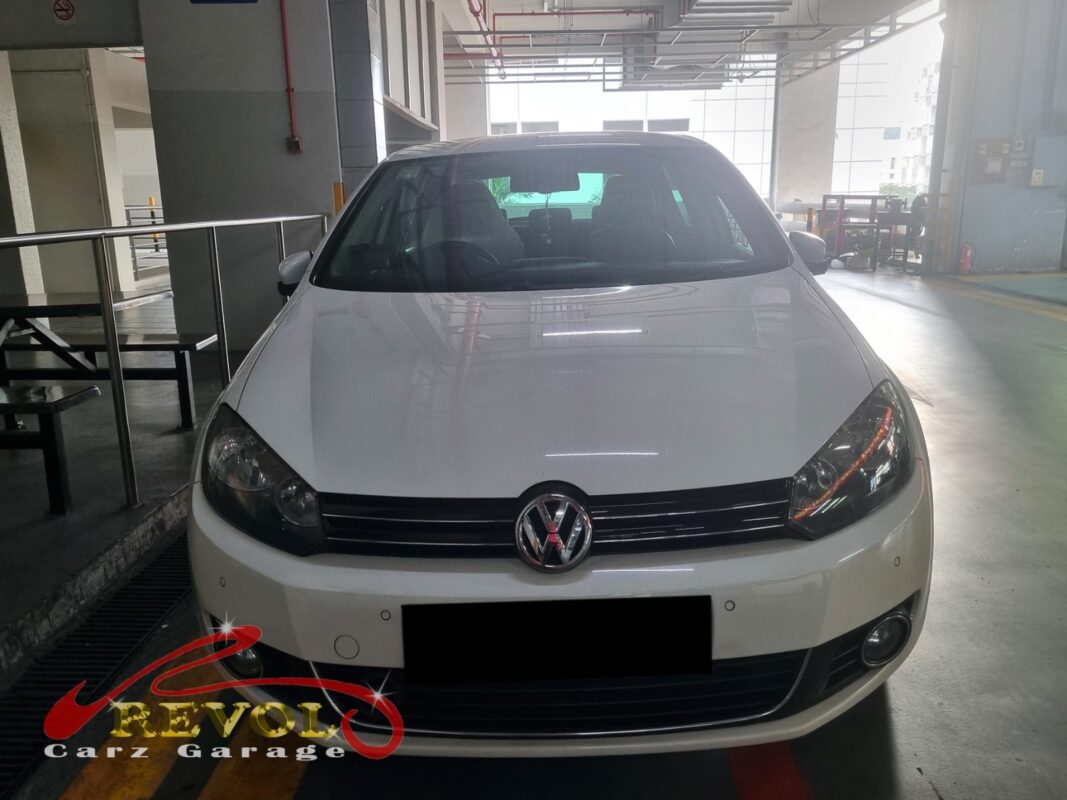
The Golf had developed a steady hum at motorway speed. The owner felt it through the steering and the floor before he heard it, which is the giveaway pattern for a wheel bearing rather than a tyre noise.
A wheel bearing lets the wheel spin freely while taking the weight of the car at that corner. As it wears, the rolling surfaces roughen, and that's the hum, which builds with road speed because that's the bearing turning faster and working harder. A bearing making that noise has run its course, and the job is to change it before there's play at the hub.
The diagnosis
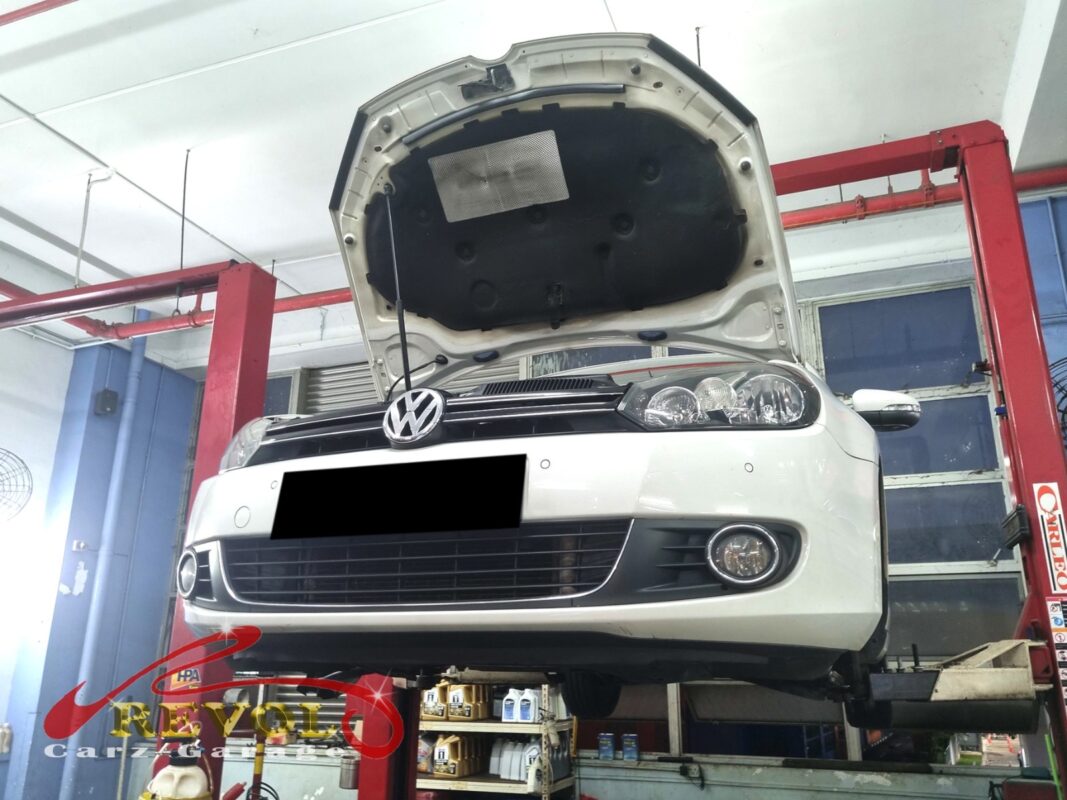
Wheels off, spinning each by hand: the affected front wheel turned with a clear gritty resistance while the others were smooth, and a small amount of play at the hub confirmed it.
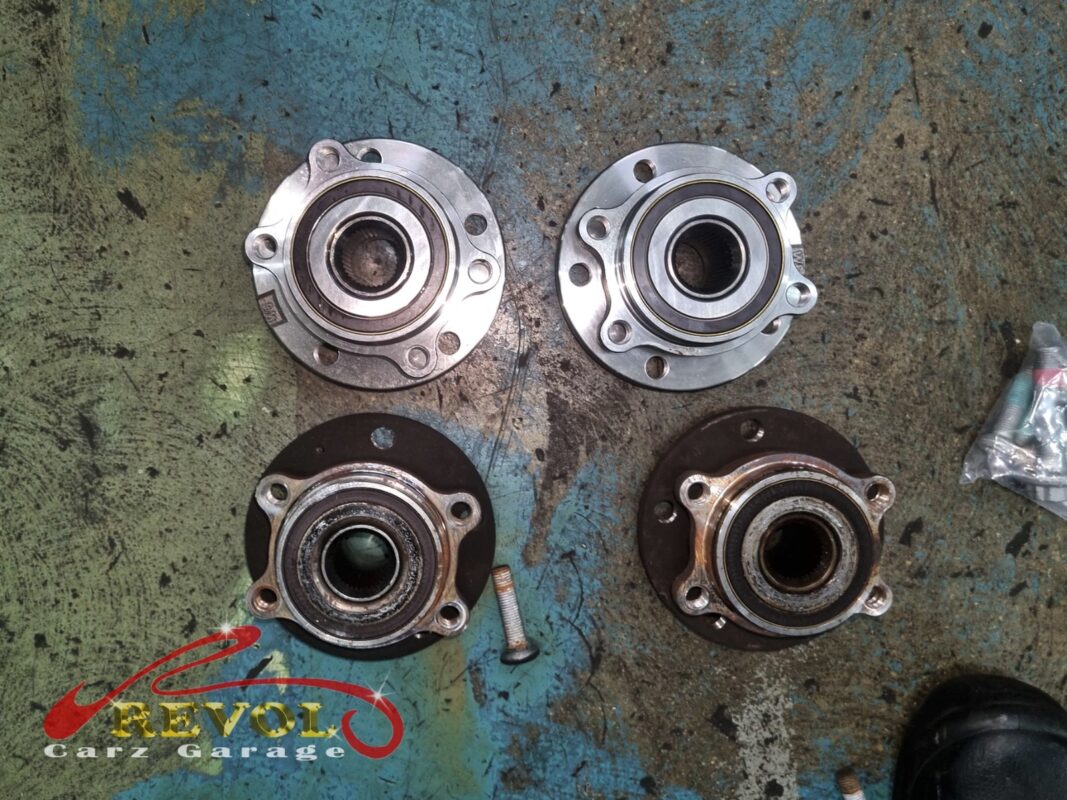
With both front bearings the same age and one already worn, the call was to do the pair rather than leave the second to start humming a few months later, so both front hub bearing assemblies were getting changed.
The work
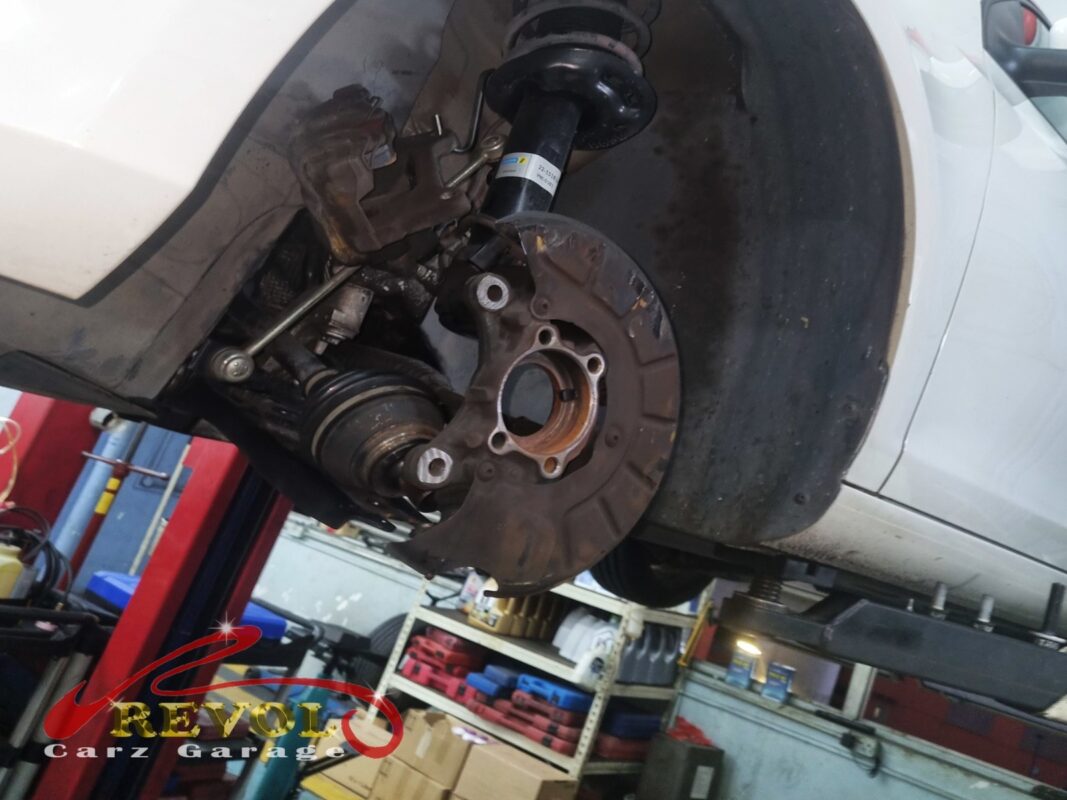
The brake calliper and disc came off each side, the old hub bearing assemblies were unbolted and lifted away, and new VAG-spec hub bearing units bolted on in their place. The axle bolts were torqued to spec, the brakes reassembled, and each hub turned by hand to confirm it ran smooth and silent before the wheels went back on.
A road test confirmed the hum was gone, smooth at every speed, with no play at the hubs.
The outcome
Hum gone through the floor, smooth at every speed, and no play at the hubs.
The Golf went home quiet at the front again. A wheel bearing gives you a good warning before it lets go, so acting on the hum and doing the pair while it was in meant a clean job rather than a return visit for the other side.