The brief
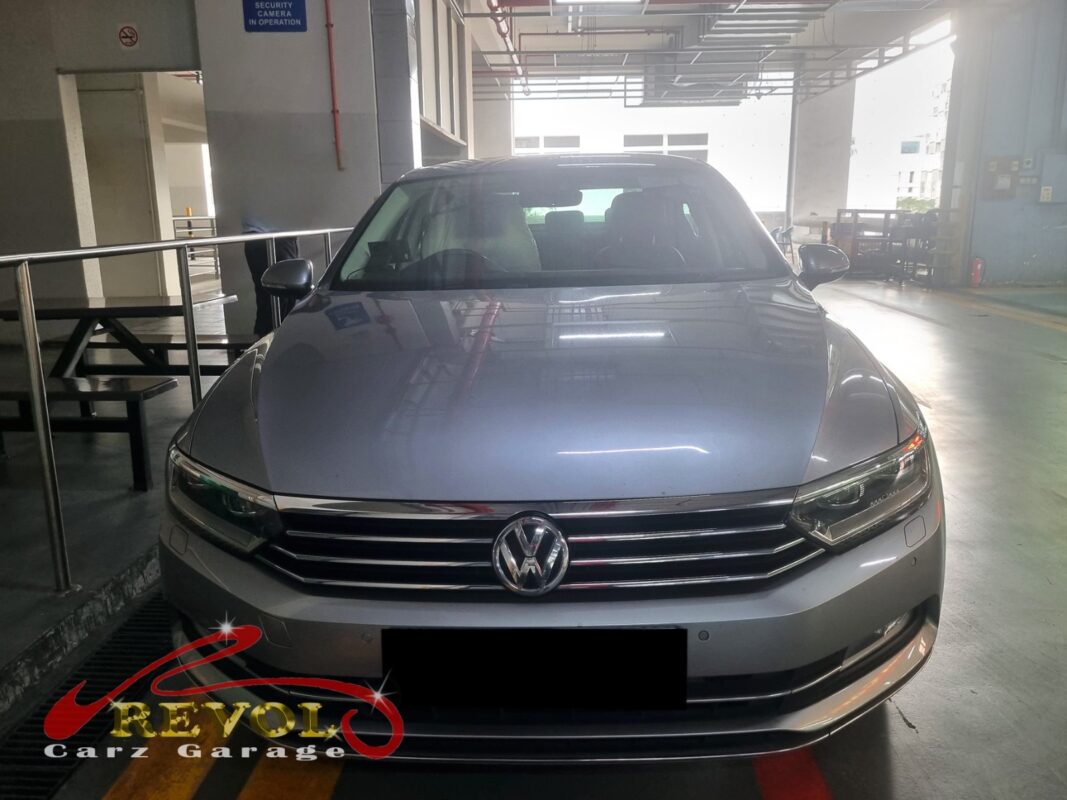
The Passat had been losing coolant slowly enough that the owner was topping up the expansion tank every couple of weeks, with no obvious puddle on the floor to point at. A slow, no-puddle loss like that usually means coolant escaping where it can evaporate off, or weeping from a connection rather than pouring from a split hose.
Coolant doesn't go anywhere on its own. When the level keeps creeping down, something in the system isn't holding pressure, and over years the plastic connectors and the expansion tank the hoses run to corrode and crack just enough to bleed coolant off slowly under heat. Catch it early and it's a tidy job; leave it and the slow loss turns into a fast one and an overheat.
The diagnosis
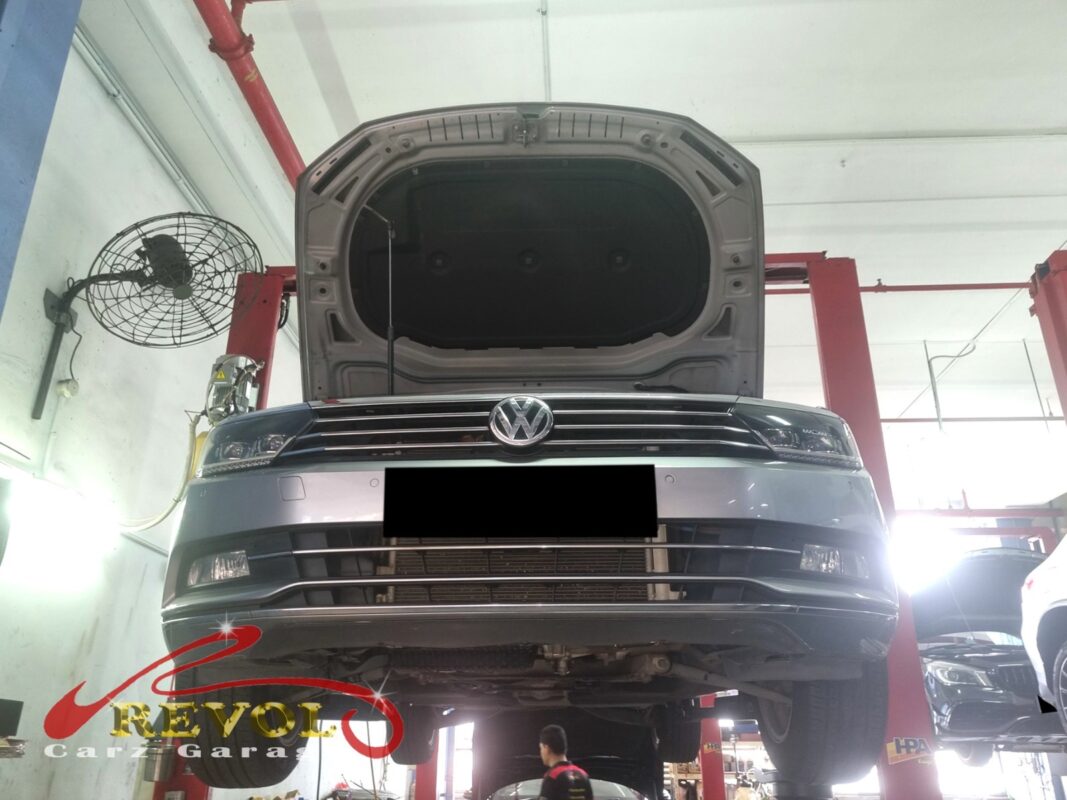
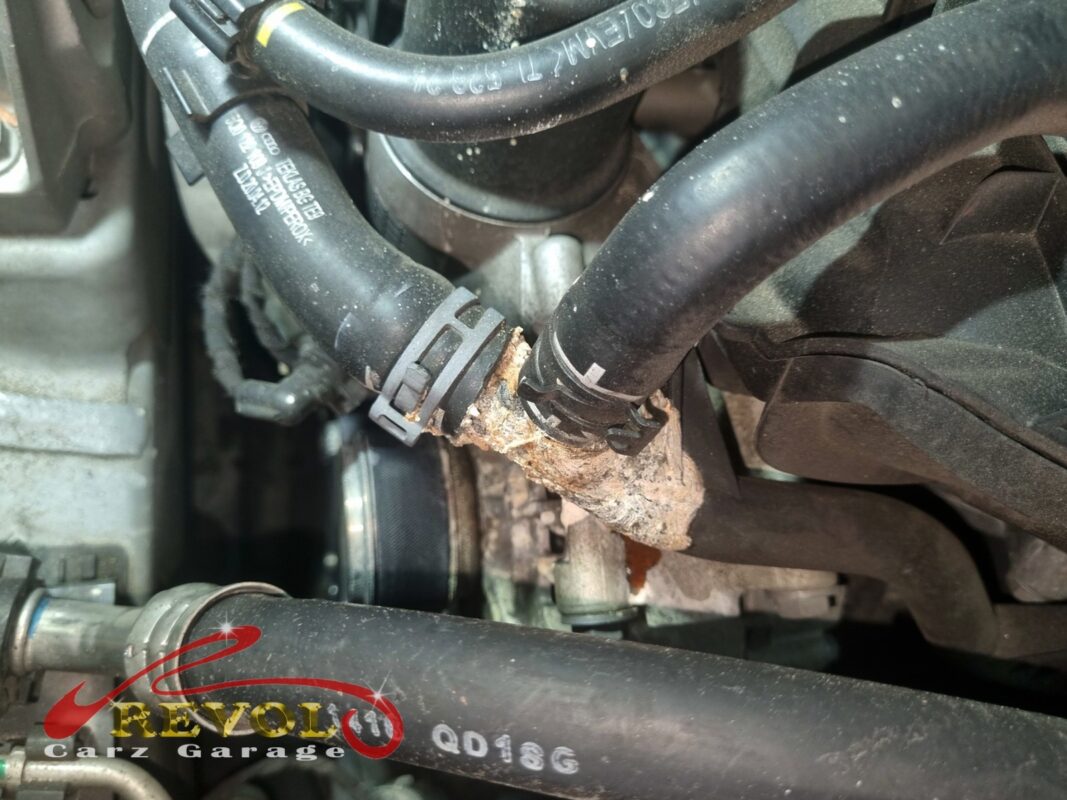
On the lift with the system pressurised, the leak was traced to a coolant hose connector that had corroded and started crumbling, bleeding pressure under heat, and the expansion tank was tired and seeping at its seams as well. The radiator, the water pump and the thermostat housing all checked out clean.
So the fix was the failed connector and the hoses running off it, plus a fresh expansion tank, rather than chasing a phantom leak around the engine.
The work
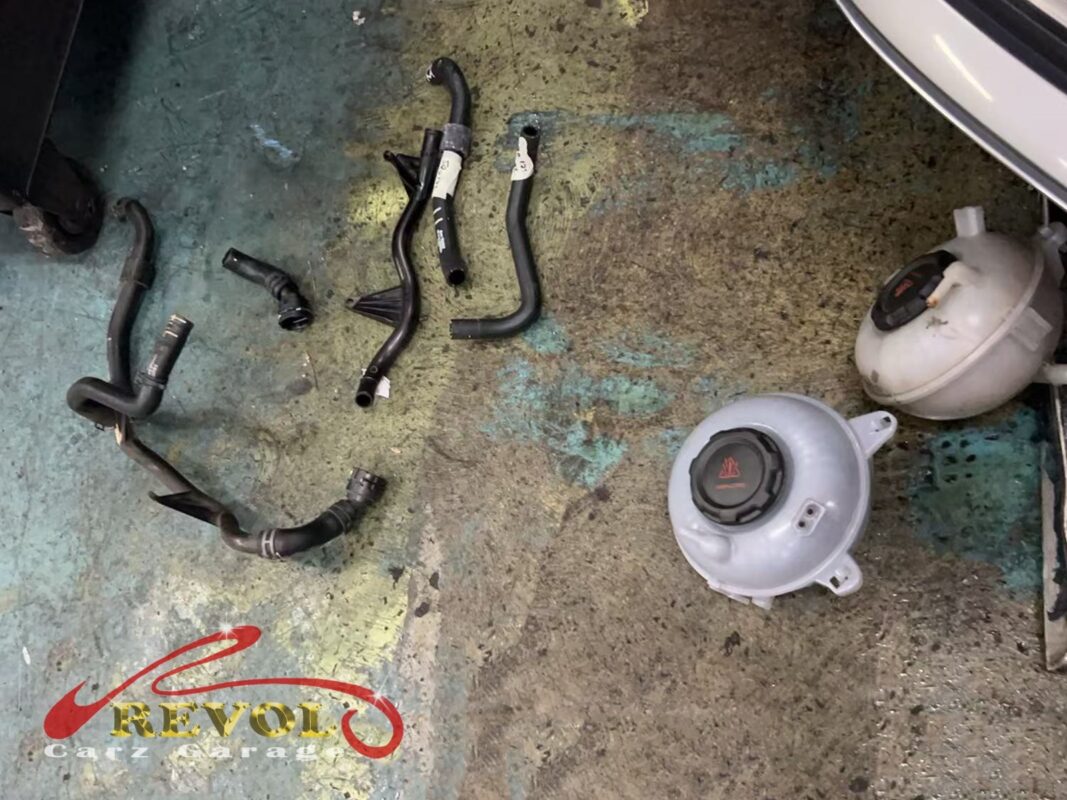
The cooling system was drained, the corroded connector and the degraded coolant hoses removed, and a new VAG-spec expansion tank fitted along with the affected hoses, everything clipped and clamped properly. Then the system was refilled with the correct coolant to the cold mark, the air bled out the proper way, and held under pressure to confirm it now held.
A full warm-up cycle followed to confirm the level stayed put and nothing weeped.
The outcome
No more level drop between top-ups, the gauge holding steady, and the leak source confirmed and dealt with.
The Passat went home with the cooling system sealed up. A slow coolant loss is the kind of thing that's easy to keep topping up and ignore, right up until it overheats on a long run, so tracing it down and renewing the failed parts closed it off for good.