The brief
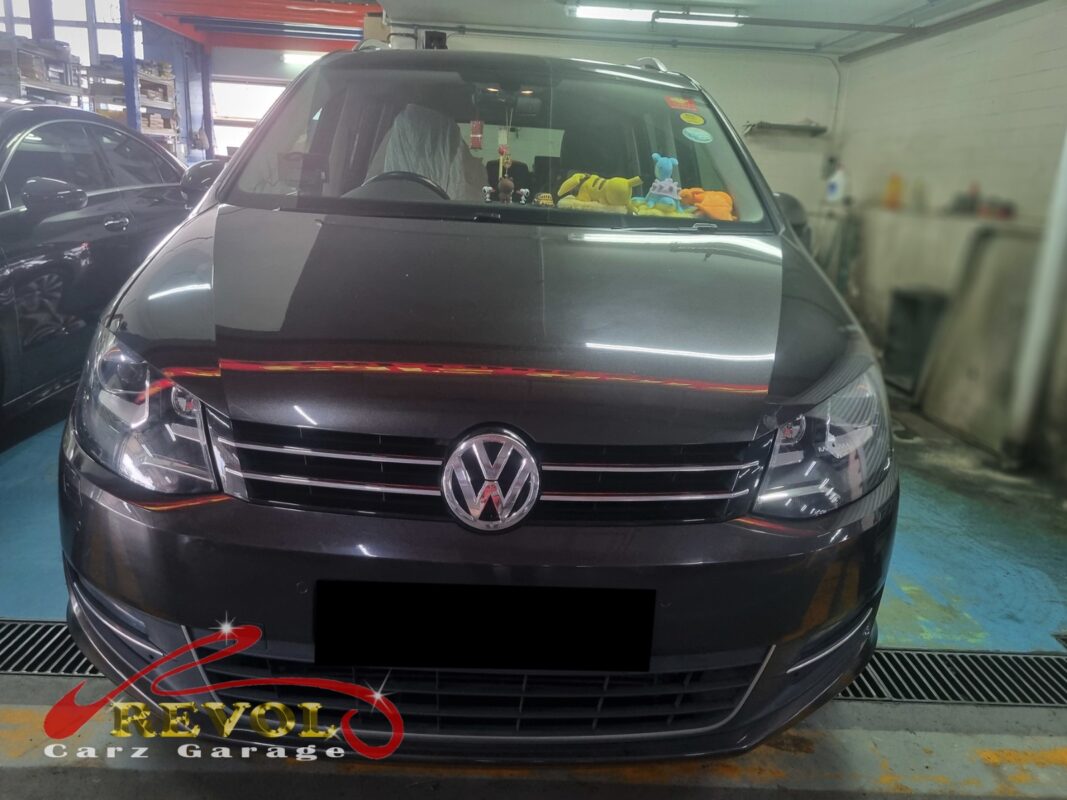
The Sharan does the daily school run plus weekend trips with the family loaded in, so the cooling system has no margin to misbehave. The owner had been topping up coolant every week or so, and the temperature gauge had started creeping up in slow Singapore traffic. Not the kind of car where you wait and see.
Coolant going down every week means it's leaking, and a gauge that climbs in traffic, when there's no airflow through the front, points at the radiator not shedding enough heat any more. On these the radiator's plastic end-tanks age and crack along the seam, which loses coolant and lets air into the system, and once the level's down the engine can't keep its temperature in traffic. Caught early it's a tidy job; left alone it overheats.
The diagnosis
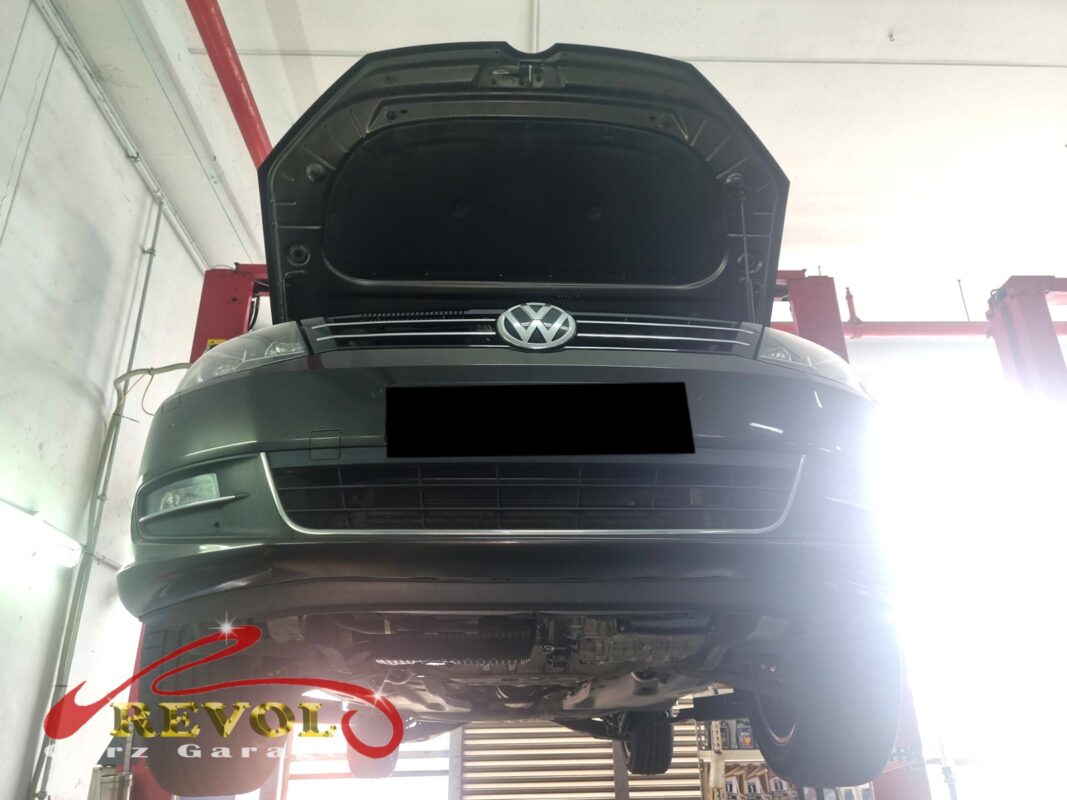
A pressurised cooling test traced the leak to the radiator's plastic end-tank, where a hairline crack had opened along the seam. The hoses, the water pump and the expansion tank all checked out clean.
That's a radiator replacement, not a hose job. You don't patch a cracked plastic tank, and a crack that's started only grows, so the radiator was getting changed.
The work
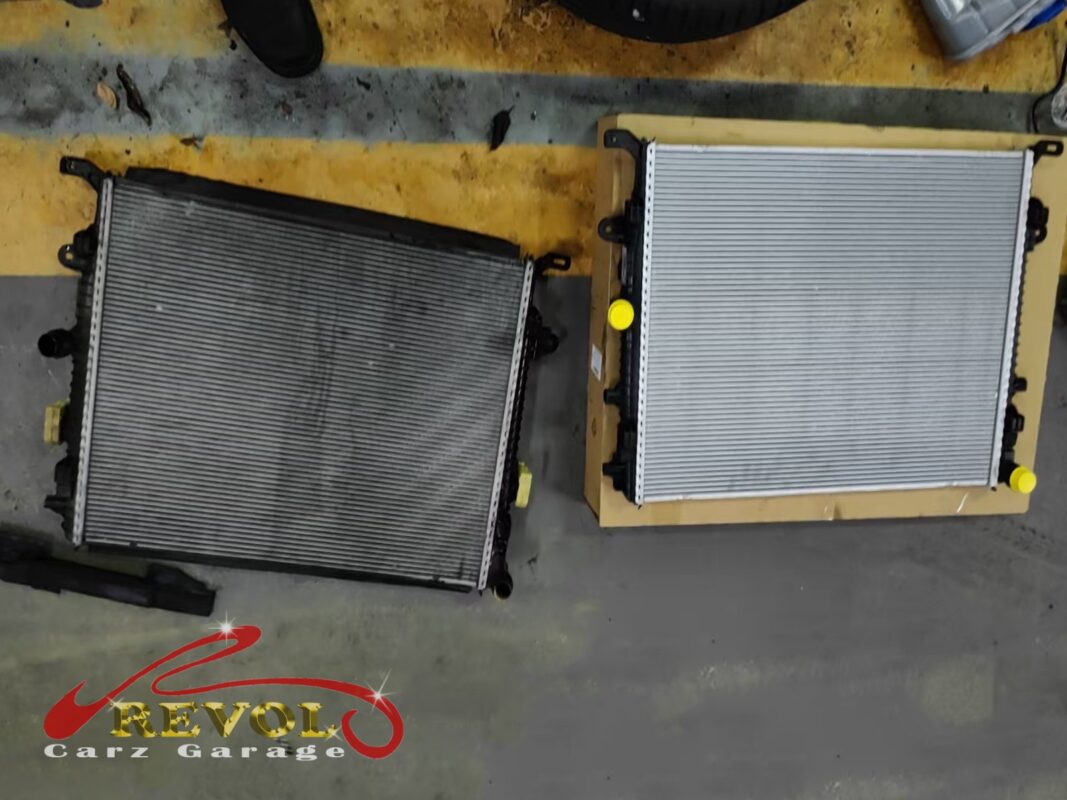
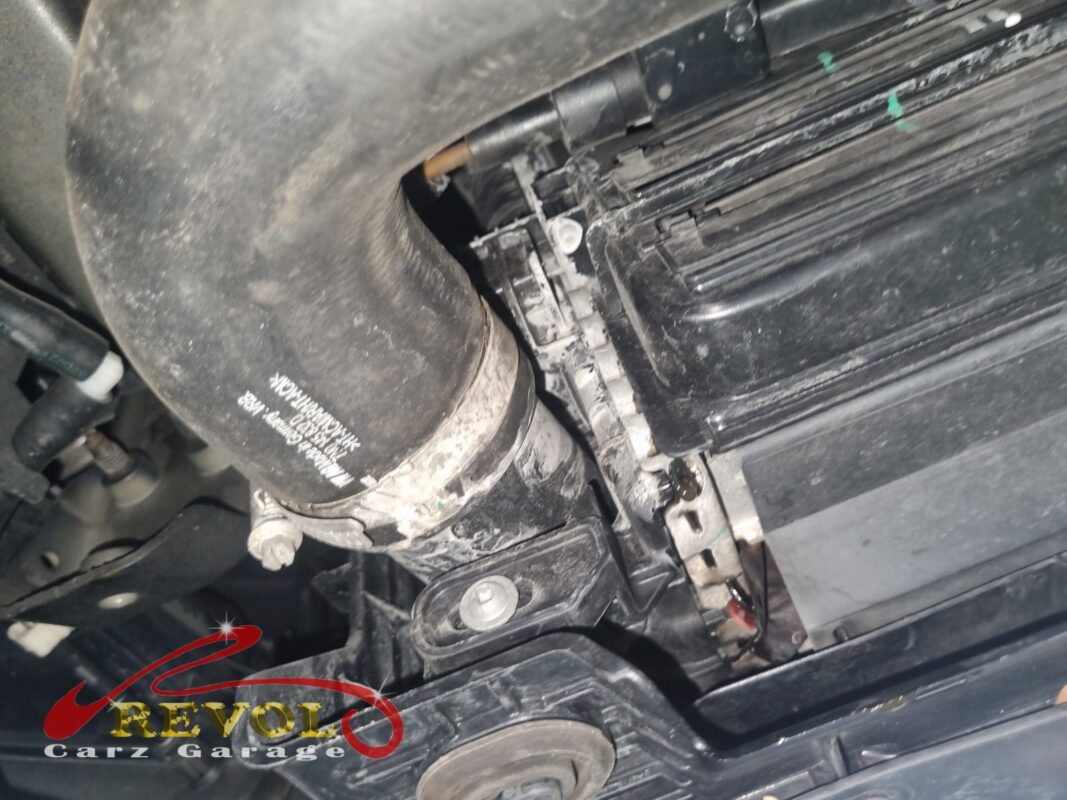
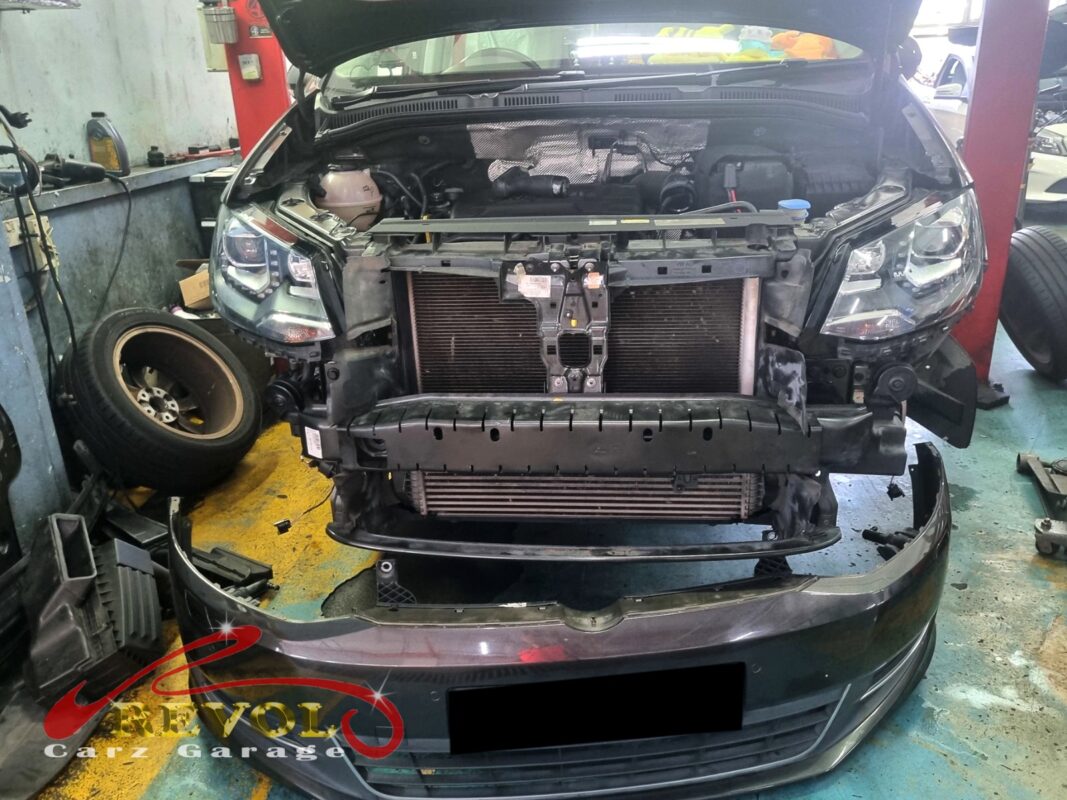
The cooling system was drained, the front end stripped back enough to reach the radiator, and the failed unit removed. A new VAG-spec radiator went in, all the hoses reseated with fresh clamps, and the system refilled with the correct coolant, the air bled out the proper way, and held under pressure to confirm it now held.
A road test, including a spell in traffic, confirmed the level stayed put and the gauge sat steady.
The outcome
No drips, the level holding, and the gauge steady even crawling through traffic.
The Sharan went back into family duty with the cooling system back to spec. A cracked radiator tank only gets worse, and the failure at the end is an overheat that can cost a head gasket, so changing it on the first signs kept it to a planned job rather than a roadside one.