The brief
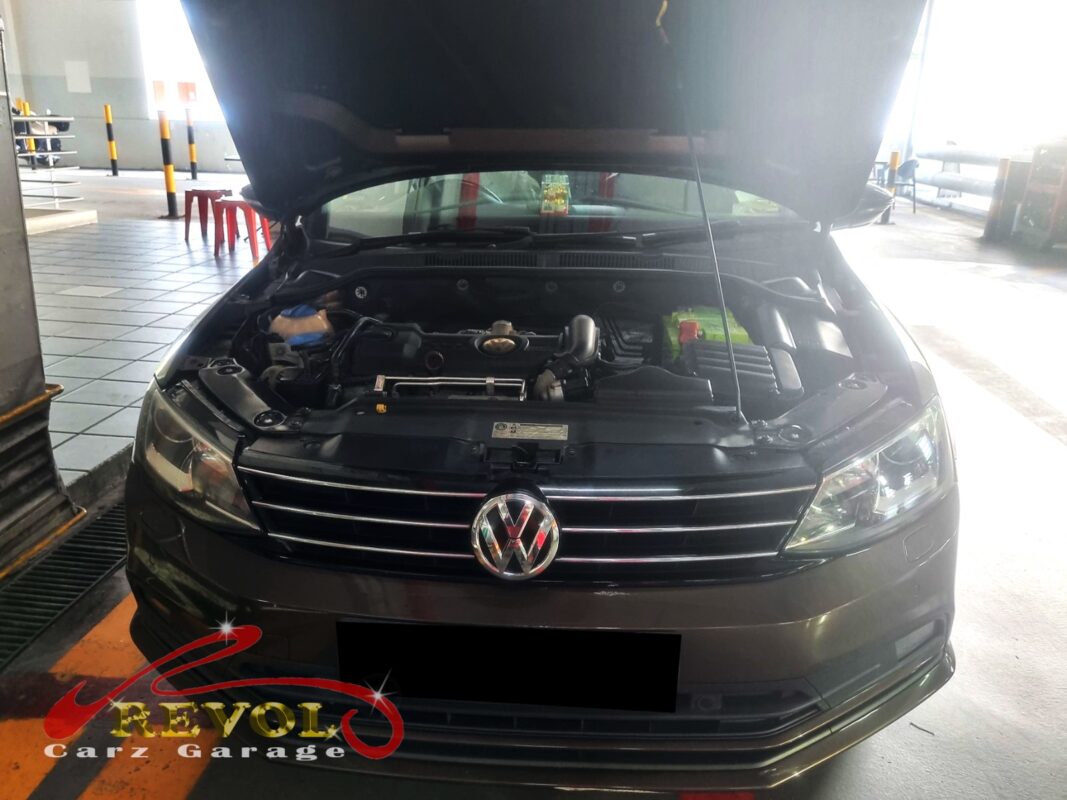
The Jetta had developed an unstable idle, the throttle felt lazy off the bottom, and a check engine light had appeared. The owner had also noticed a small oil weep around the cam-cover area near the front of the engine. He brought it in.
The variable valve timing solenoid is a small valve that controls oil pressure to the cam adjuster, which is how the engine shifts the valve timing for low-down and top-end running. When the solenoid sticks or stops responding cleanly, the timing doesn't move the way the engine computer wants, so the idle goes unstable and the response off the bottom goes lazy, and the computer flags it. On these, a tired solenoid often weeps oil past its seal too, which is the dampness around the front of the head.
The diagnosis
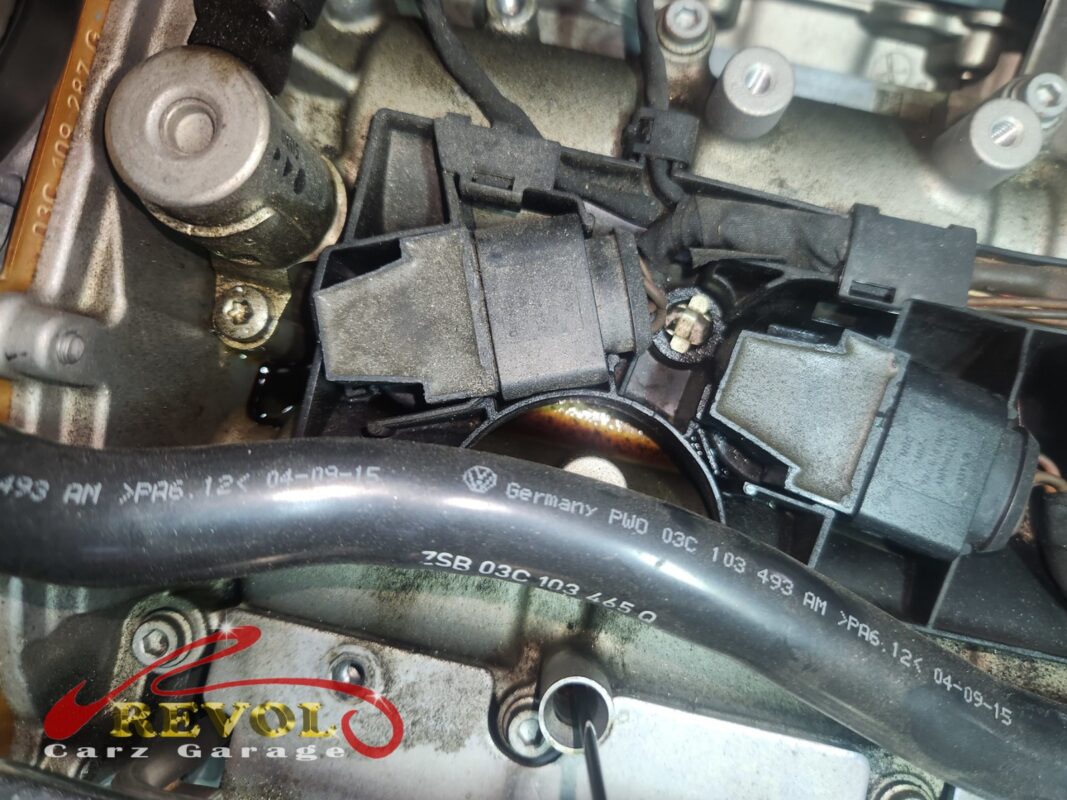
Codes on the scanner pointed at the variable valve timing solenoid, and live data showed it not responding cleanly to the commanded duty. A look at it confirmed the secondary issue: oil seeping past a degraded O-ring on the solenoid body.
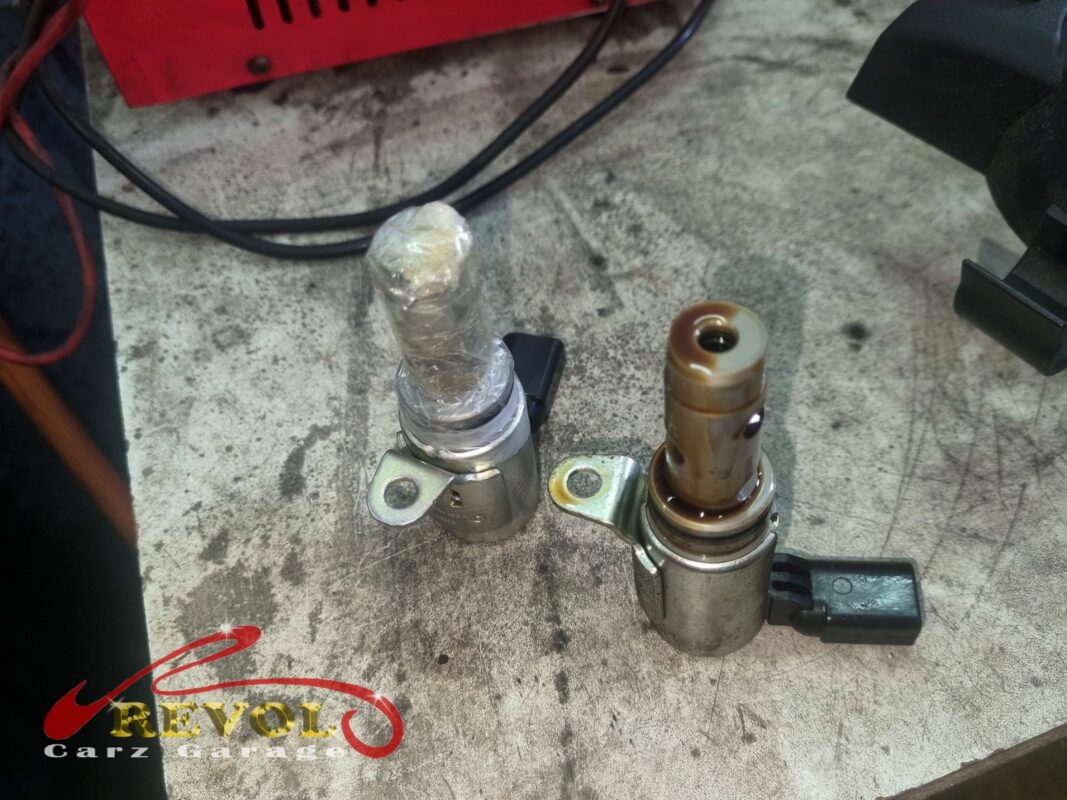
So the root cause was the solenoid itself, with the leak being a downstream symptom. That's a replacement, fresh O-rings included, not something you clean and reuse.
The work
The failed VVT solenoid came off, and a new VAG-spec unit went in with fresh O-rings, the harness re-routed properly. The oil that had tracked down the head was cleaned off, and the stored fault codes cleared.
Then the engine was run to confirm the idle had settled and the solenoid was responding cleanly.
A road test confirmed the throttle response was back and nothing was weeping.
The outcome
Steady idle, throttle response back, no oil weep around the solenoid, and the check engine light out after a drive cycle.
The Jetta went home running cleanly. A failing VVT solenoid messes with both the idle and the response, and the oil weep only spreads, so swapping the unit and resealing it put both right in one go.