The brief
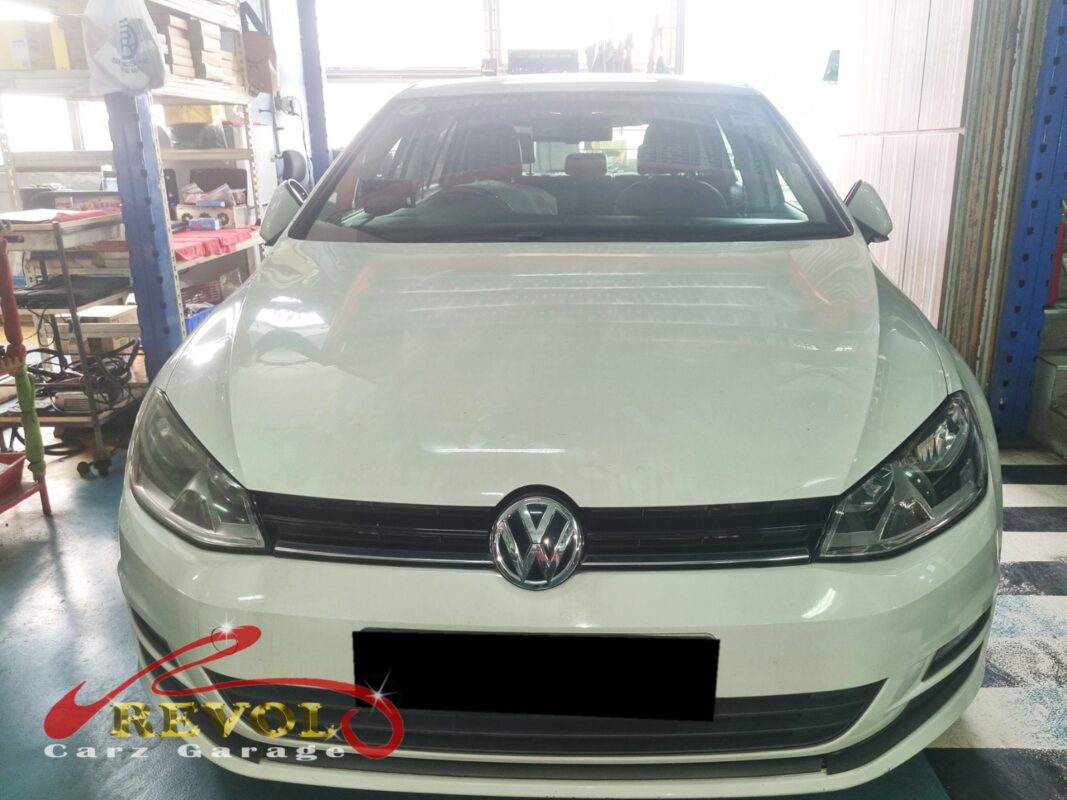
The Golf had been hunting at idle, the throttle felt lazy off the bottom, and the check engine light was on. The owner had cleaned the throttle body himself, which helped briefly, but the symptoms came back.
The throttle body is the valve that meters air into the engine, opened by a little electric motor that takes its orders from the pedal. When that motor and the position sensors inside it start to fail, the valve doesn't track its commands cleanly, so the engine gets the wrong amount of air at the wrong moment, which is the hunting idle and the lazy response, and the engine computer sees the mismatch and flags it. A clean removes carbon, but it can't fix a worn actuator.
The diagnosis
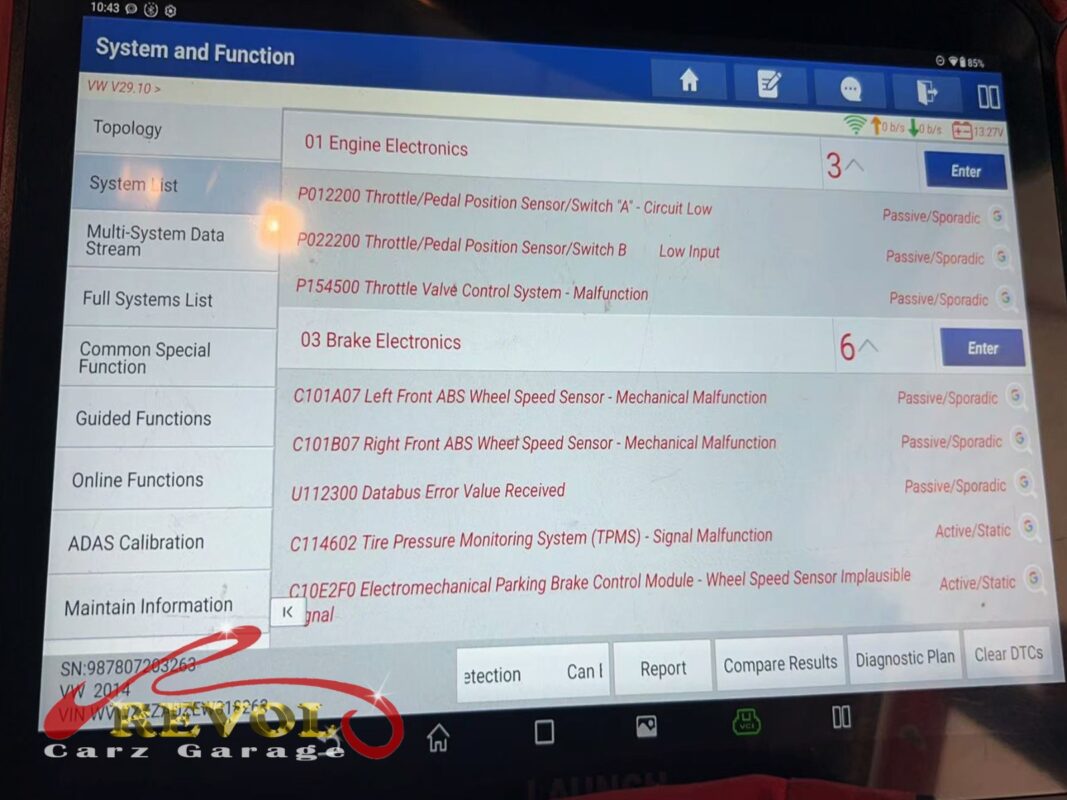
Live data on the scanner showed the throttle butterfly tracking jerkily through its range rather than following the command smoothly, and the codes pointed at the throttle position sensors and the throttle valve control. The clean the owner had done bought a little time, which fit: the actuator itself was failing, not just dirty.
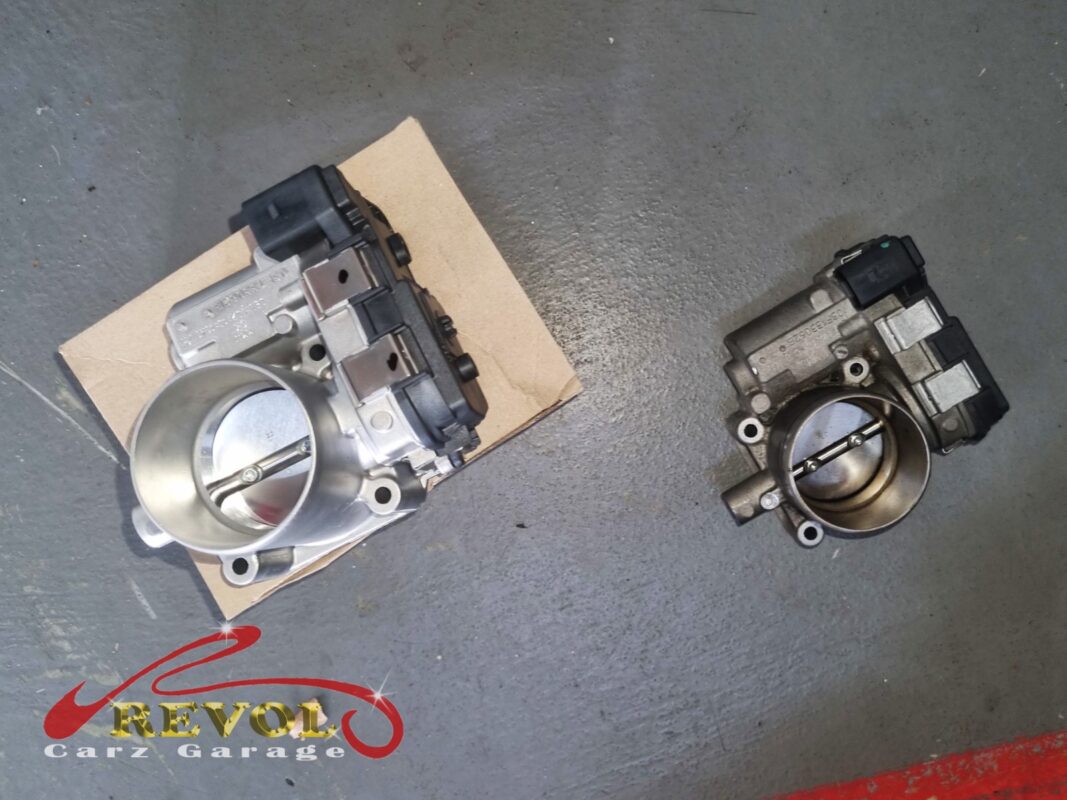
So it was a throttle body replacement. You don't rebuild the actuator, so the unit gets changed.
The work
The intake hose came off, the throttle body was unbolted, and a new VAG-spec unit fitted in its place, the harness reconnected. Then the throttle adaptation routine was run on the scanner so the ECU learned the new closed and full-open positions, and the stored codes cleared.
A road test confirmed the response was sharp again from a standing start.
The outcome
Steady idle, throttle response back, and the check engine light out.
The Golf went home running cleanly. A clean is worth a try, but once the actuator is worn it only gets jerkier, so swapping the unit and relearning the positions put the throttle response properly right.