The brief
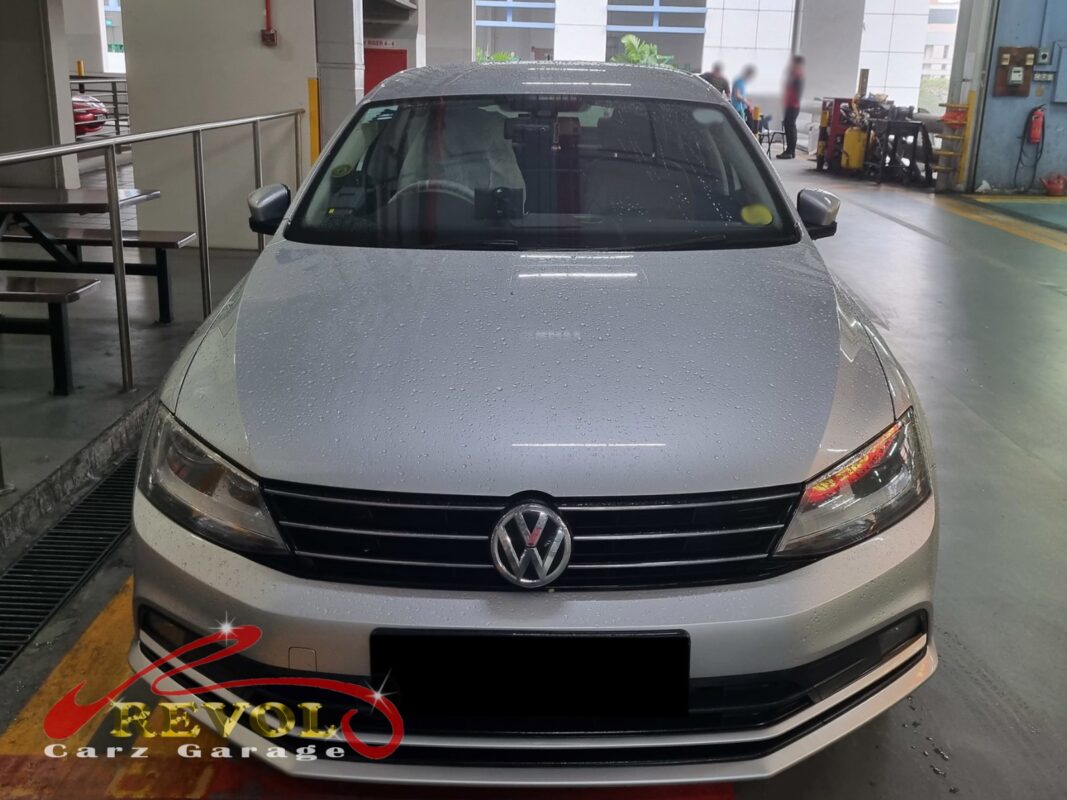
The owner had been seeing fresh oil spots on the floor every morning, smelling burnt oil after longer drives, and the dashboard had started flagging low engine oil. He brought the Jetta in before it turned into something worse.
Oil spots under the car, a burnt-oil smell and a level that keeps dropping means the engine is leaking oil, and the most common place is the sump, the pan that holds the oil supply. The sump bolts to the bottom of the block on a gasket, and over years of heat cycles that gasket hardens and stops sealing along the seam. Oil weeps out and drips, and some of it lands on hot exhaust parts, which is the smell. It's a slow loss, but an engine that runs low on oil is an engine you don't want to keep driving.
The diagnosis
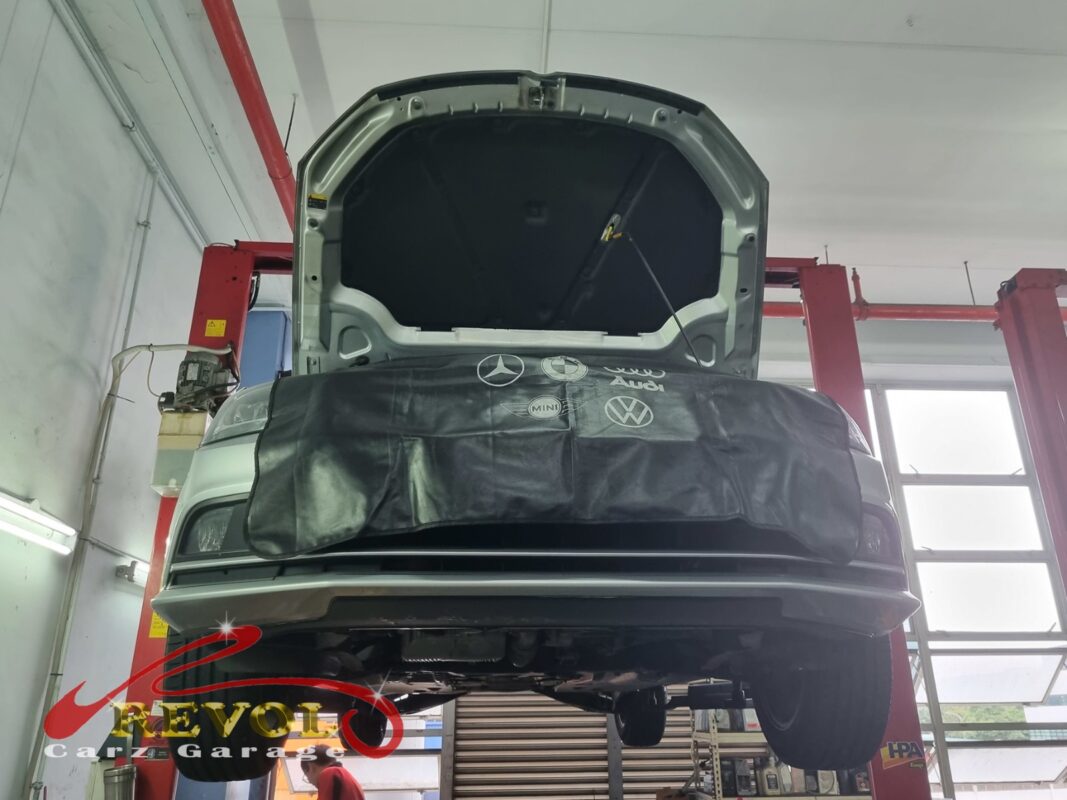
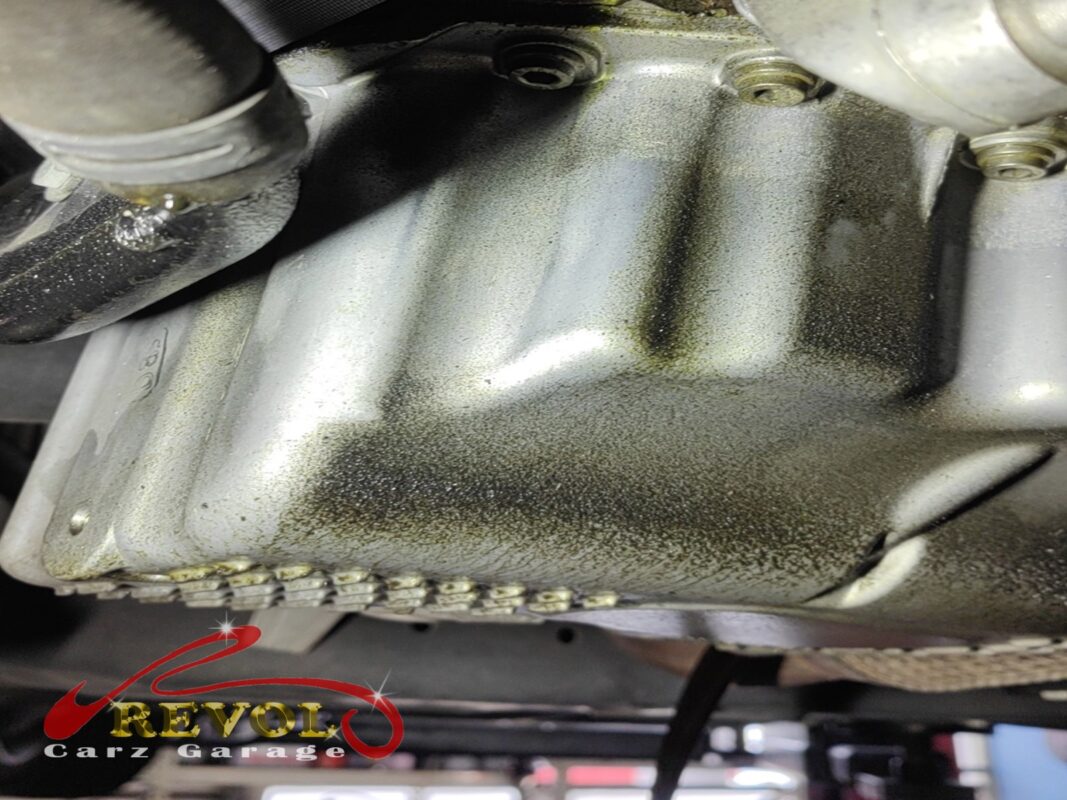
On the lift it was clear: oil was weeping along the entire sump-pan seam, with a slow drip building at the lowest corner. No leak from the cam cover, no leak from the front main seal. The sump gasket was the failed component, age and heat had finally hardened it past its sealing window.
That's a gasket replacement, drop the pan and reseal it. The bolt seats were fine, so the pan itself didn't need changing, just a fresh gasket.
The work
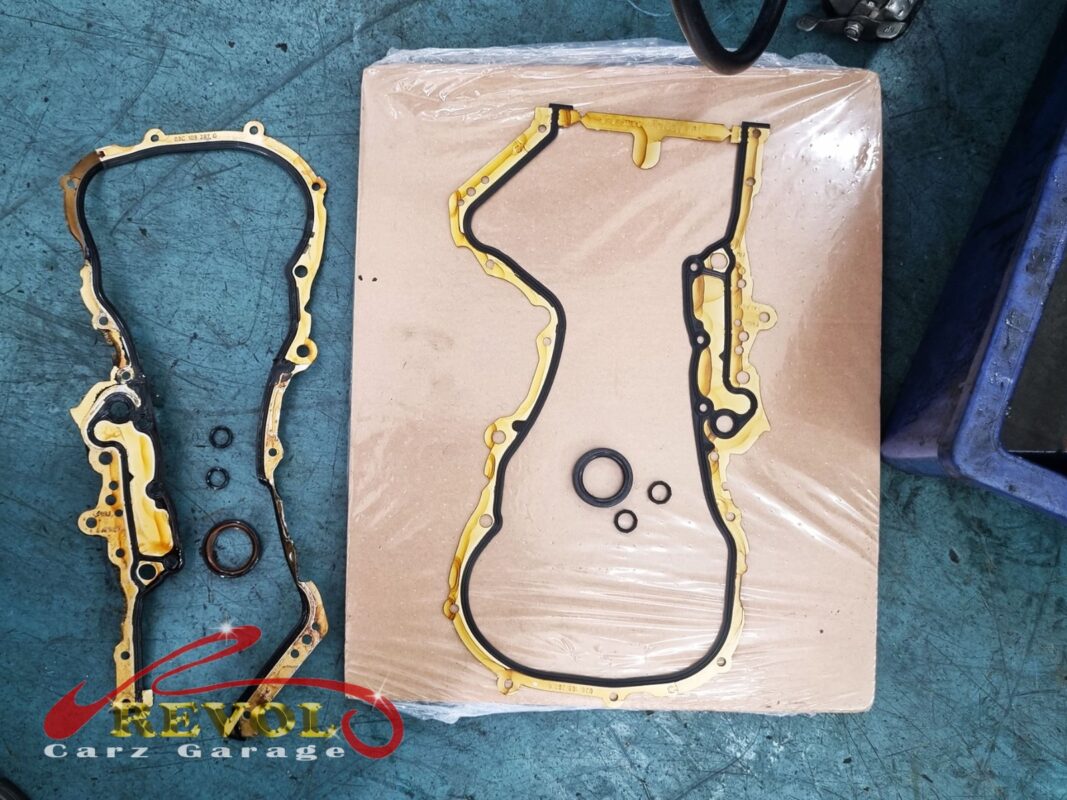
The engine oil was drained, the engine supported, and the sump dropped. Both mating surfaces were cleaned back to bare metal, a new VAG-spec sump gasket fitted, the bolts torqued in the right pattern, and the engine refilled with fresh oil to the correct VW spec.
Then it was held at idle and checked underneath to confirm the new seal was dry.
A road test followed to confirm it stayed dry.
The outcome
Dry sump, dry seam, and no warning lights.
The Jetta went home with a clean undertray, and the floor of the customer's garage stays oil-free. A sump leak is the kind of thing that's easy to keep topping up and ignore, right up until the level gets away from you, so resealing it on the first spots kept it to a straightforward gasket job.