The brief
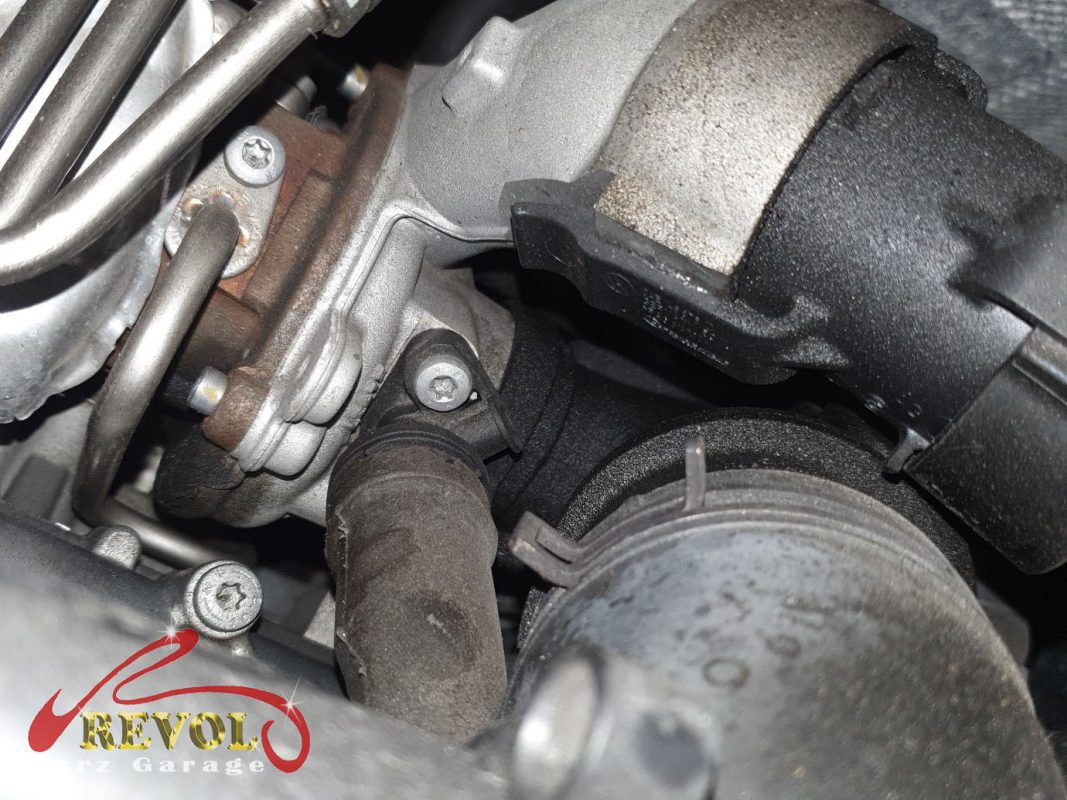
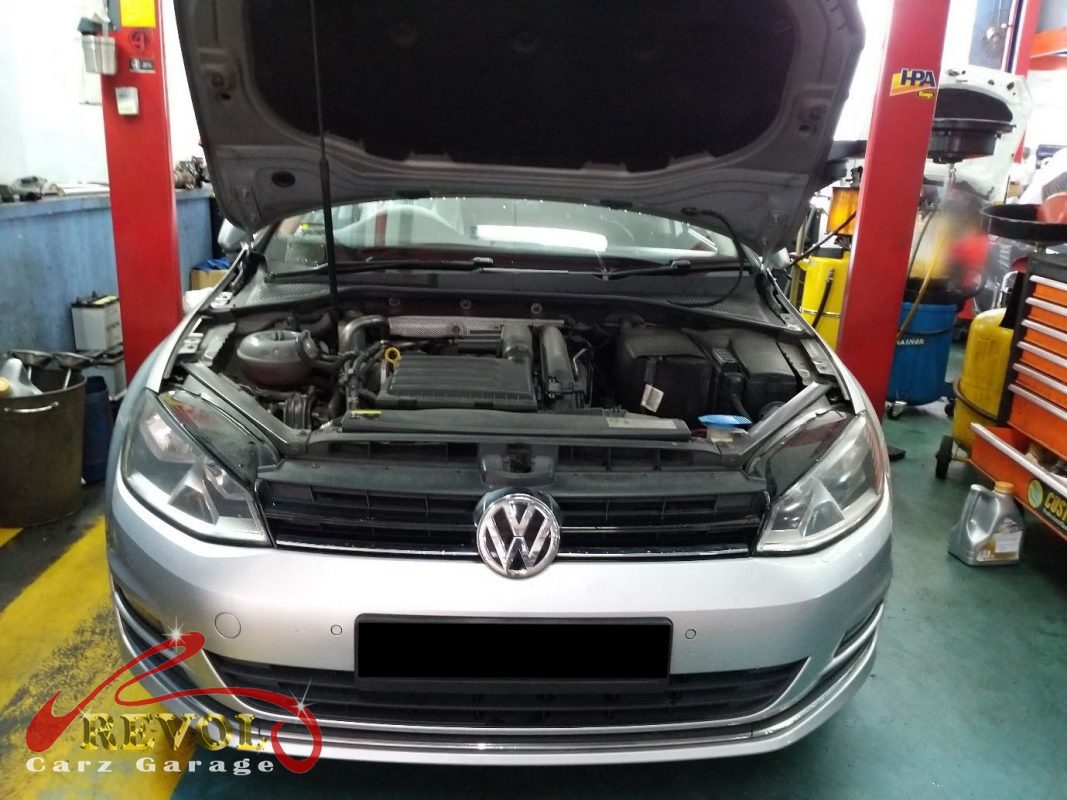
The Golf had gone flat: down on power, poor fuel economy, and black smoke from the exhaust under acceleration. Those are the classic signs of a turbo boost leak. He brought it in. On a turbocharged engine the turbo pumps pressurised air through a run of charge air hoses to the intake. Those hoses are rubber and they heat-cycle under pressure, so over the years one splits or perishes, and now boost is leaking out before it reaches the engine. The engine never builds the pressure it expects, so it feels flat and uses more fuel, and the management's fuelling against a leak it can't see can run rich and smoke black. A split charge air hose doesn't reseal, so it needs replacing.
The diagnosis
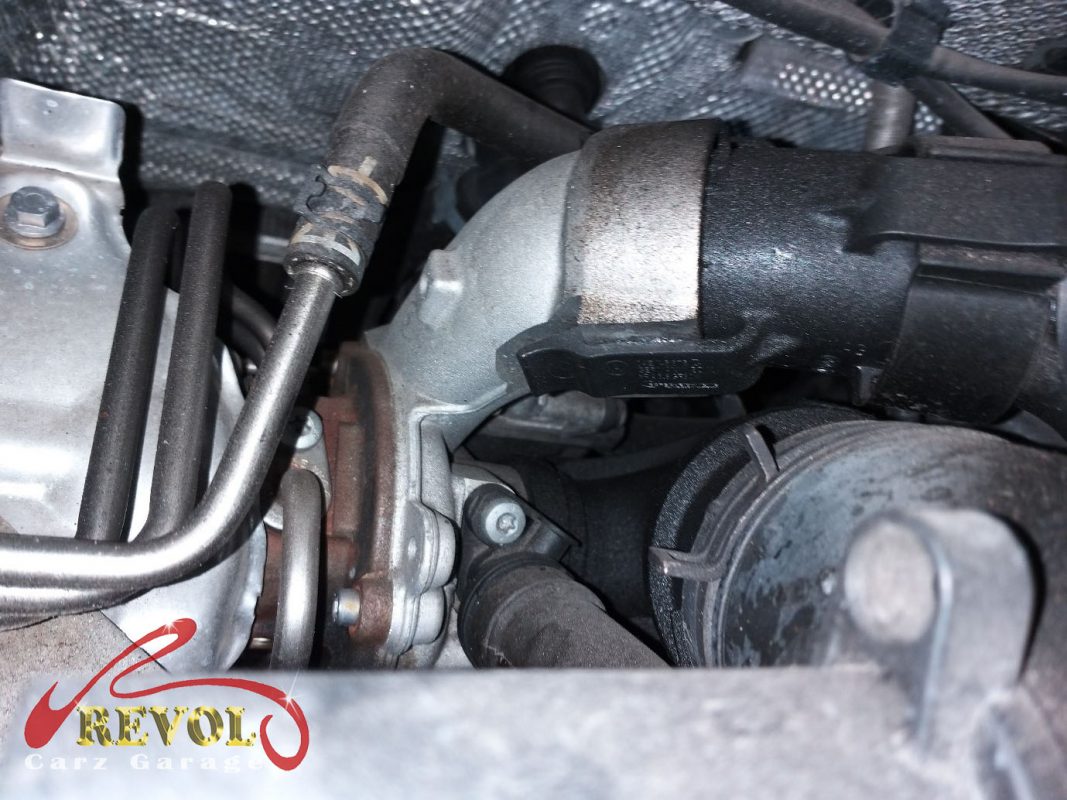
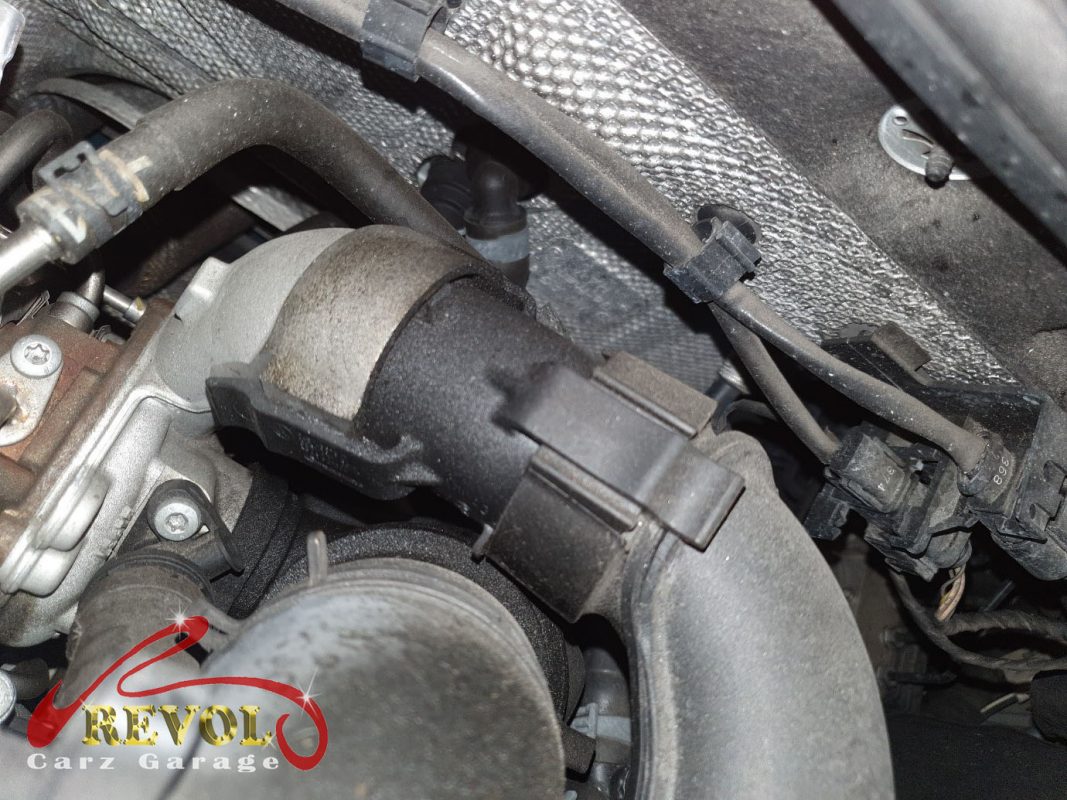
Diagnostics confirmed underboost and boost-deviation fault codes, and a check found a split in a turbo charge air hose, bleeding boost pressure, which is exactly the flat feel, the poor economy and the black smoke. The turbo itself, the intercooler and the rest of the pipework checked out. That's a hose replacement, fresh rubber and a new clamp where the old had split, then the codes cleared.
The work
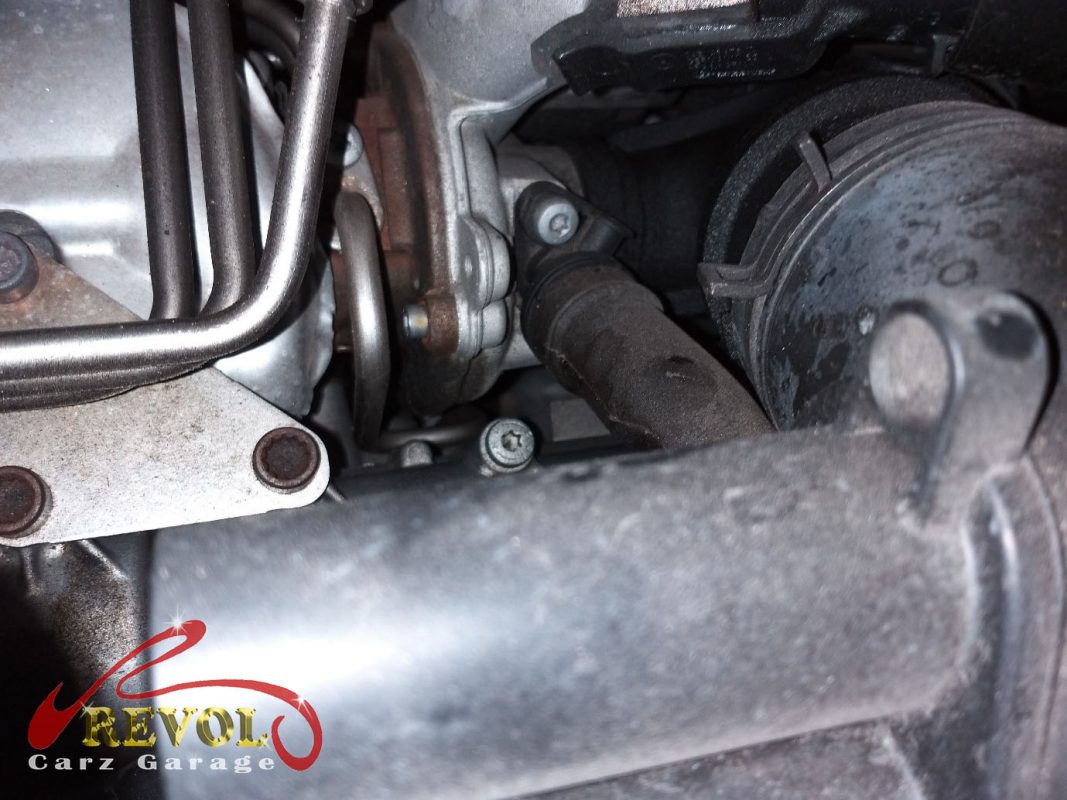
The split turbo charge air hose was removed along with the worn clamp, and a new genuine VW-spec hose fitted with a new clamp, the other joints in the charge pipework checked while everything was apart. The fault codes were cleared and the engine's boost adaptations reset so it could relearn against a sealed system. A road test confirmed strong, clean boost, the flat feel gone, no black smoke, and the light staying off.
The outcome
Strong boost, clean throttle response, the flat feel gone, no black smoke, and fuel economy back where it should be. The Golf went home with the turbo system sealed and pulling properly again. A split charge air hose robs the engine of its boost and only gets worse, so renewing the hose and letting the engine relearn put the power back.