The brief
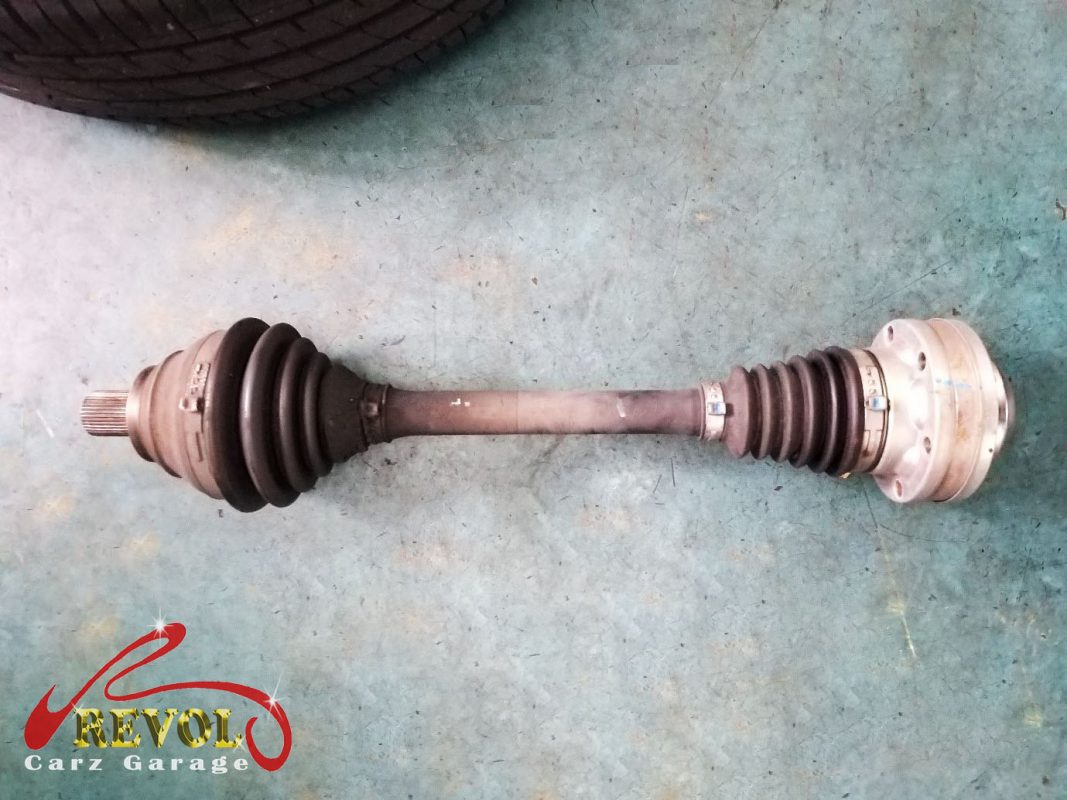
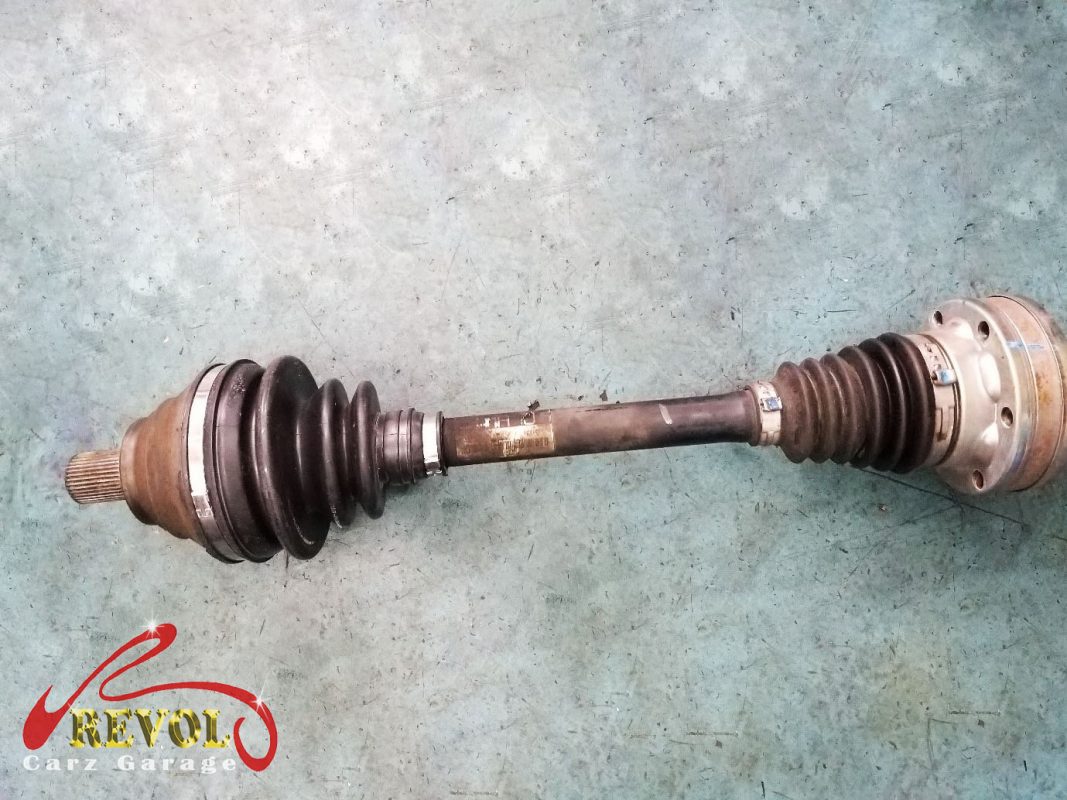
The Jetta had torn drive shaft boots, the rubber covers split and flinging grease around the inside of the wheel arch, with a click starting to come through on full lock. He brought it in, the right call, a torn boot only gets worse and the joint behind it doesn't last long once it's exposed. The drive shaft boots, or CV boots, are the concertina rubber covers over the constant-velocity joints at each end of the drive shafts. They hold the grease in and the dirt and water out. When a boot splits, the grease flings out and the grit gets in, so the joint runs dry and gritty and starts to click, and a CV joint that's been left exposed eventually fails entirely. Caught early it's a boot-and-repack job; left too long it becomes a whole drive shaft. So the torn boots needed renewing.
The diagnosis
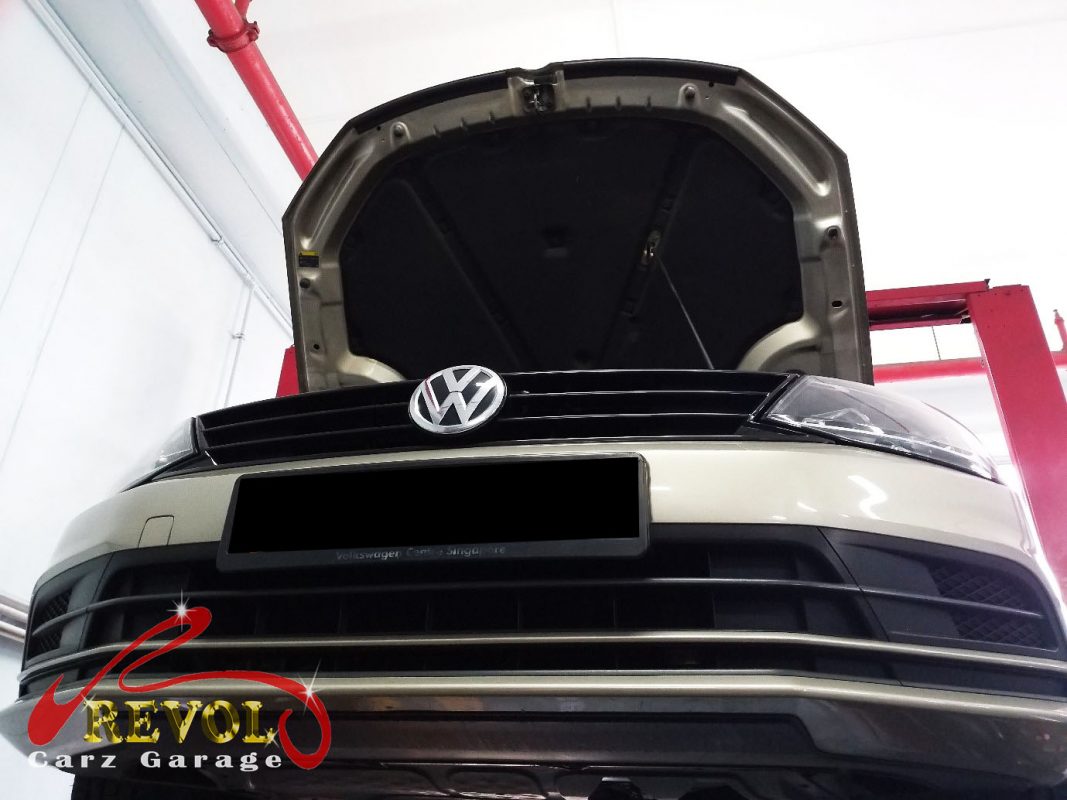
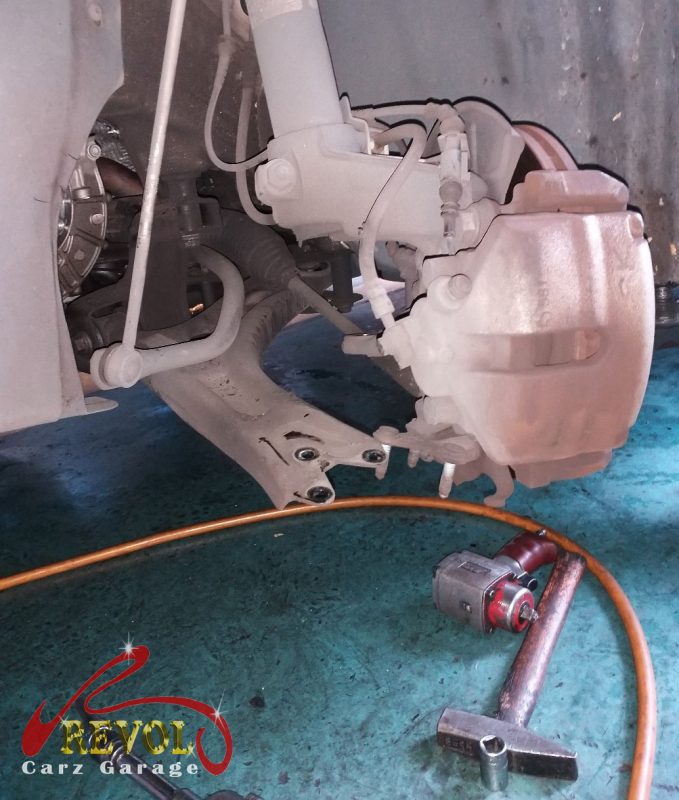
On the lift the drive shafts were checked. The boots were split and flinging grease, and a couple of the joints had started to feel a touch gritty but hadn't worn enough to need replacing yet, caught in time. The rest of the drivetrain checked out. That's a boot replacement: split the joint open, clean out the old contaminated grease, repack it with fresh CV grease, and fit a new boot clamped properly so it seals.
The work
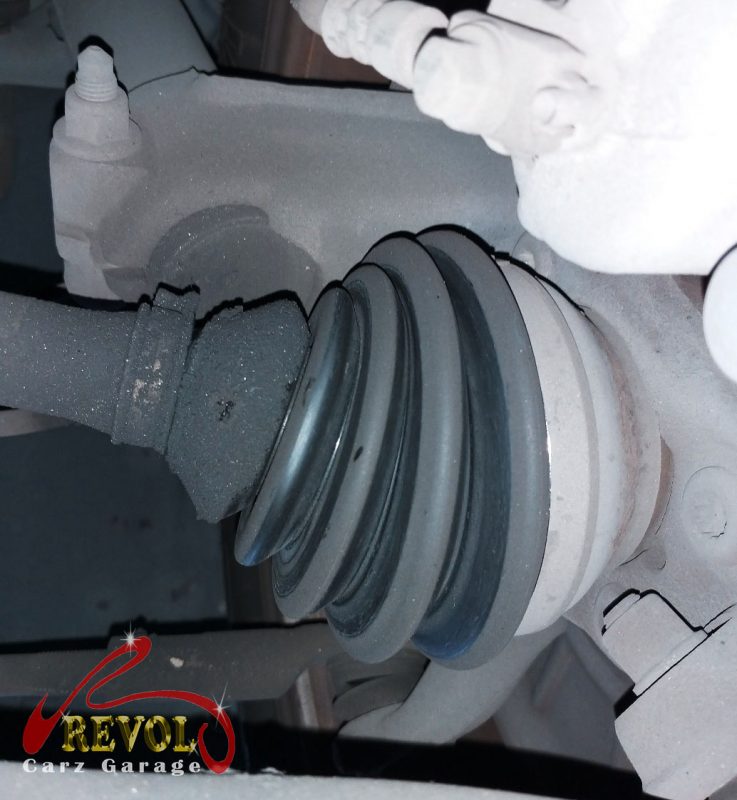
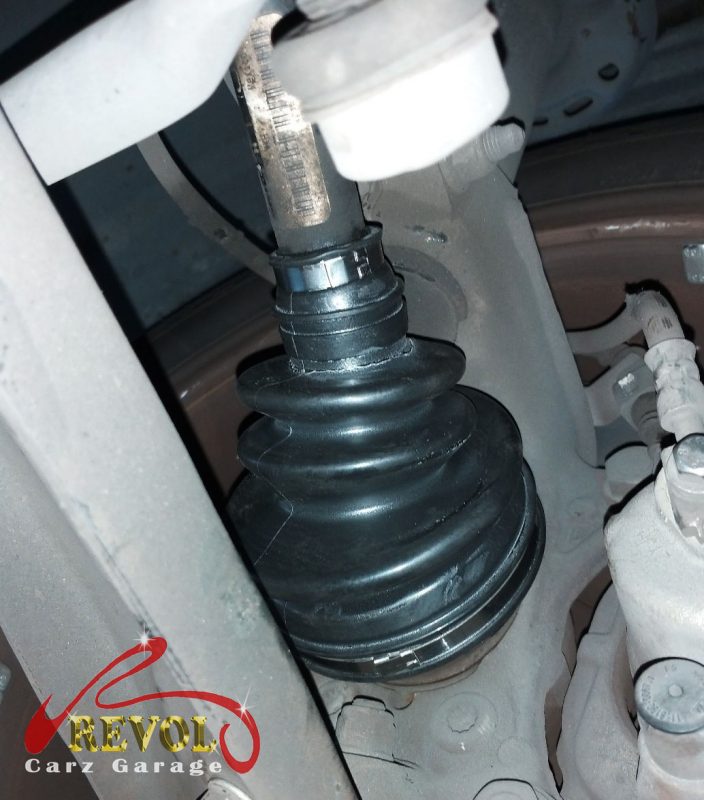
The drive shafts were taken off as needed, the torn boots removed, the CV joints cleaned out of the old grease and grit, inspected, and repacked with fresh genuine-spec CV grease, and new genuine VW-spec boots fitted, clamped properly so they seal. The shafts went back in, every fastener torqued to spec. A road test confirmed no click on full lock, no grease flinging, and the drivetrain quiet.
The outcome
Drive shaft boots intact and sealing, the CV joints repacked with fresh grease, no click on lock, and no grease around the arches. The Jetta went home with the boots sorted. A torn boot exposes the joint to grit and water, and a worn CV joint is a whole drive shaft, so catching it at the boot stage and repacking the joints kept it to the cheap end of the job.