Polishing
Polishing is the abrasive process of refining a car's clear coat with progressively finer compounds to remove defects and restore depth and gloss.

What it means
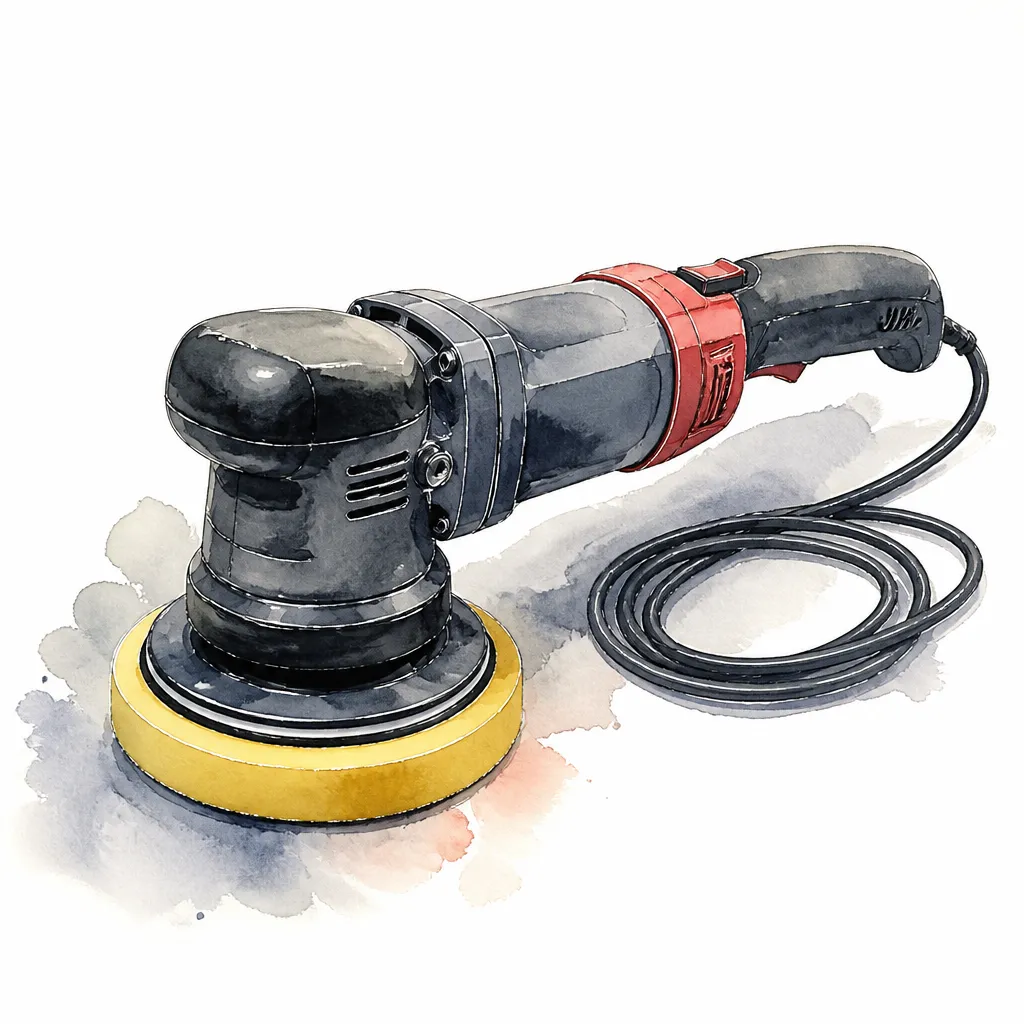
Polishing is sometimes confused with waxing, but they are different jobs. Waxing applies a sacrificial top layer that adds gloss and hydrophobicity for a few months. Polishing, by contrast, actually removes clear-coat material, levelling defects below the surface to restore optical clarity. The work uses progressively finer compounds: a cutting compound to level deeper defects, a medium polish to refine the surface further, and a finishing polish to bring up the final gloss. Each stage is matched to a specific pad type (cutting, polishing, or finishing pad). Polishing is the central technique inside paint correction. The two terms are often used interchangeably in casual conversation, but strictly speaking, paint correction is the outcome and polishing is the technique used to achieve it. Polishing without measuring clear-coat thickness first is the easiest way to cut through to base coat and trigger an unplanned respray.
Why it matters in Singapore
Most Singapore cars accumulate enough swirl marks and water-spot etching by year three or four to benefit from polishing, regardless of how carefully they are washed. A grooming session that includes polishing restores the paint to a state where regular washing actually keeps it looking sharp again. Without it, no amount of washing fixes the underlying haze.

How Revol Carz handles this
Revol Carz performs polishing as a standalone grooming service or as the prep stage for ceramic coating. We use long-throw DA polishers, panel-by-panel pad and compound matching, and paint-depth measurements to stay within safe clear-coat margins.