HVLP spray gun
An HVLP spray gun is a high-volume low-pressure spray gun that atomises paint efficiently with less overspray and higher transfer efficiency.

What it means
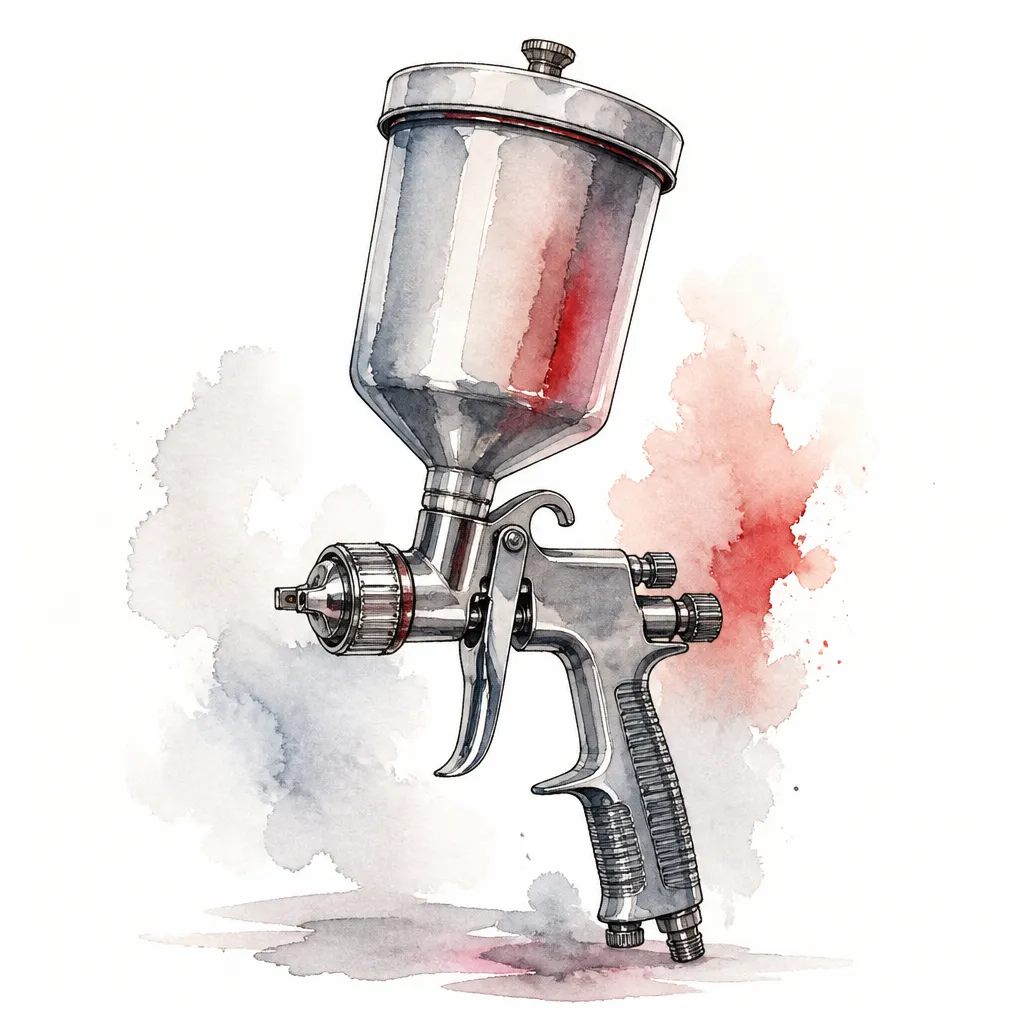
HVLP stands for high volume, low pressure, and it describes how the spray gun moves paint onto a panel. Instead of pushing paint through the air cap at high pressure, an HVLP gun uses a larger volume of air at low pressure, typically around 10 psi at the tip. That gentler delivery means a much larger share of the paint actually lands on the car instead of bouncing off as a cloud, a property called transfer efficiency. The painter feeds the gun from a gravity cup on top, sets the fan width, fluid flow, and air, then lays the paint in steady overlapping passes. HVLP is the mainstream choice for modern automotive refinishing because it pairs a fine, even atomisation with far less wasted material and far less overspray drifting around the booth.
Why it matters in Singapore
Higher transfer efficiency means less paint vapour and overspray released for the same finished result, which fits the lower-VOC, properly extracted way bodyshops in Singapore are expected to work. For the owner, the practical payoff is finish quality and consistency: a well set-up HVLP gun in skilled hands gives the even, controlled coats that look right under Singapore's harsh direct sunlight, with fewer dry-spray patches and less texture. The gun itself is only a tool, but it is the tool the modern paint systems used here are formulated to be sprayed through.

How Revol Carz handles this
At Revol Carz, panels are sprayed with professional gravity-fed guns, set up for the Spies Hecker product being applied, inside our Italian Saima dust-free booth at Toh Guan, with oven-baked curing to harden each coat. Matching gun setup to the paint system is part of getting an even, consistent finish. Owners get WhatsApp updates as the car moves through prep, paint, and finishing.