Rotary polisher
A rotary polisher is a single-direction, direct-drive machine polisher that spins the pad at high speed for the most aggressive paint correction.

What it means
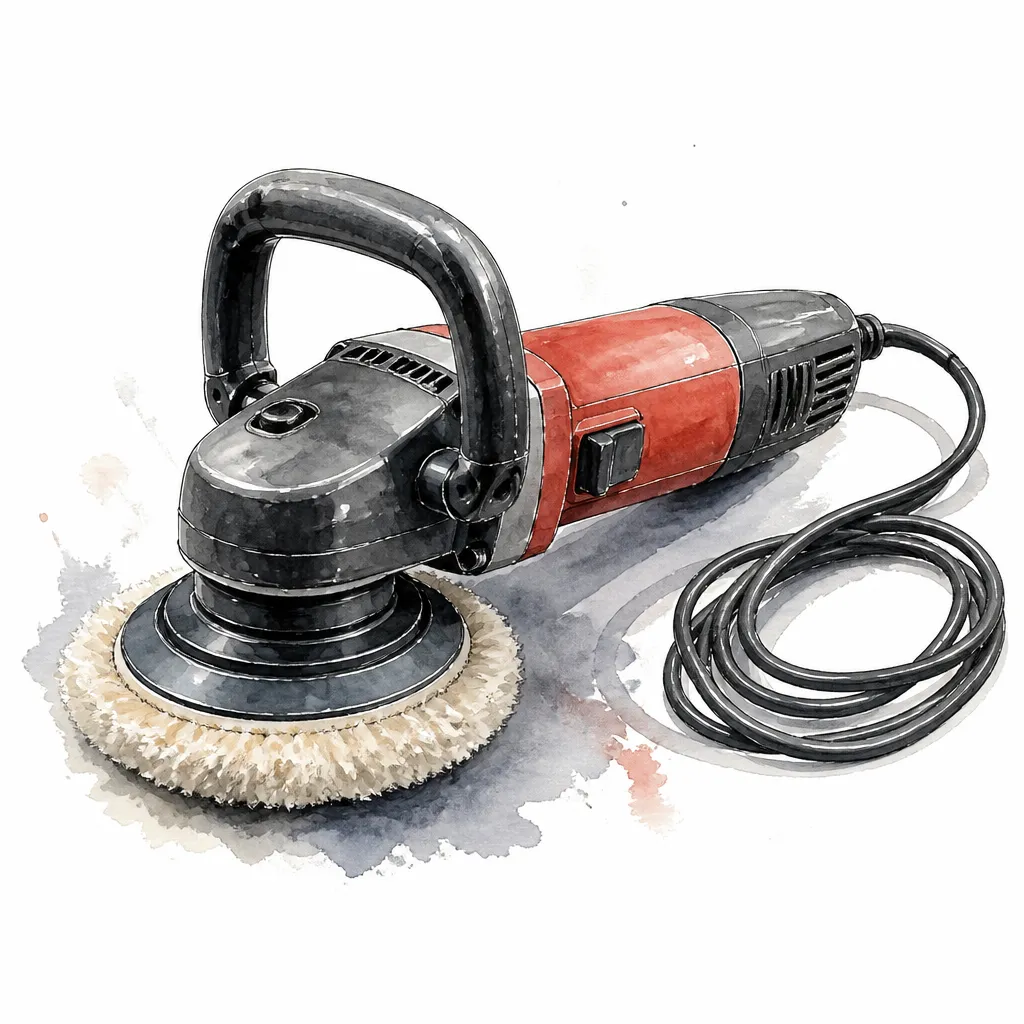
A rotary polisher drives the pad with a single rotation directly off the motor, with no orbital wobble. That makes it powerful: a rotary at the right speed with a cutting pad and compound removes paint defects faster than any other machine. It also makes it dangerous in untrained hands. The continuous high-speed contact builds heat fast, which on a thin clear coat can burn through to base coat in seconds. Holograms (visible circular polishing trails) are easy to leave behind because the rotation pattern is one-directional. For deep oxidation, severe swirl marks, and heavily neglected paint, a rotary in skilled hands is the right tool. For light to medium correction on modern thin-clear-coat paint, a long-throw DA polisher is the safer default. Many top-tier detailers use a rotary for the cutting stage and switch to a DA for refinement and finishing, getting the speed advantage without leaving rotary marks in the finished surface.
Why it matters in Singapore
Singapore's mostly modern car park has thin clear coats where a rotary's risk is real. The rotary is still the right call on heavily neglected older paint and on certain hard paint systems, but the default tool for everyday correction here is the DA polisher. Knowing which tool a workshop chooses, and why, is part of judging whether they actually understand modern paint.

How Revol Carz handles this
Revol Carz uses a rotary polisher when the defect severity and paint condition justify it, and a long-throw DA polisher for everything else. We measure paint depth and inspect under controlled light at every stage.