Thermostat
A thermostat is the temperature-controlled valve that regulates coolant flow so the engine warms up quickly and then holds its ideal operating temperature.

What it means
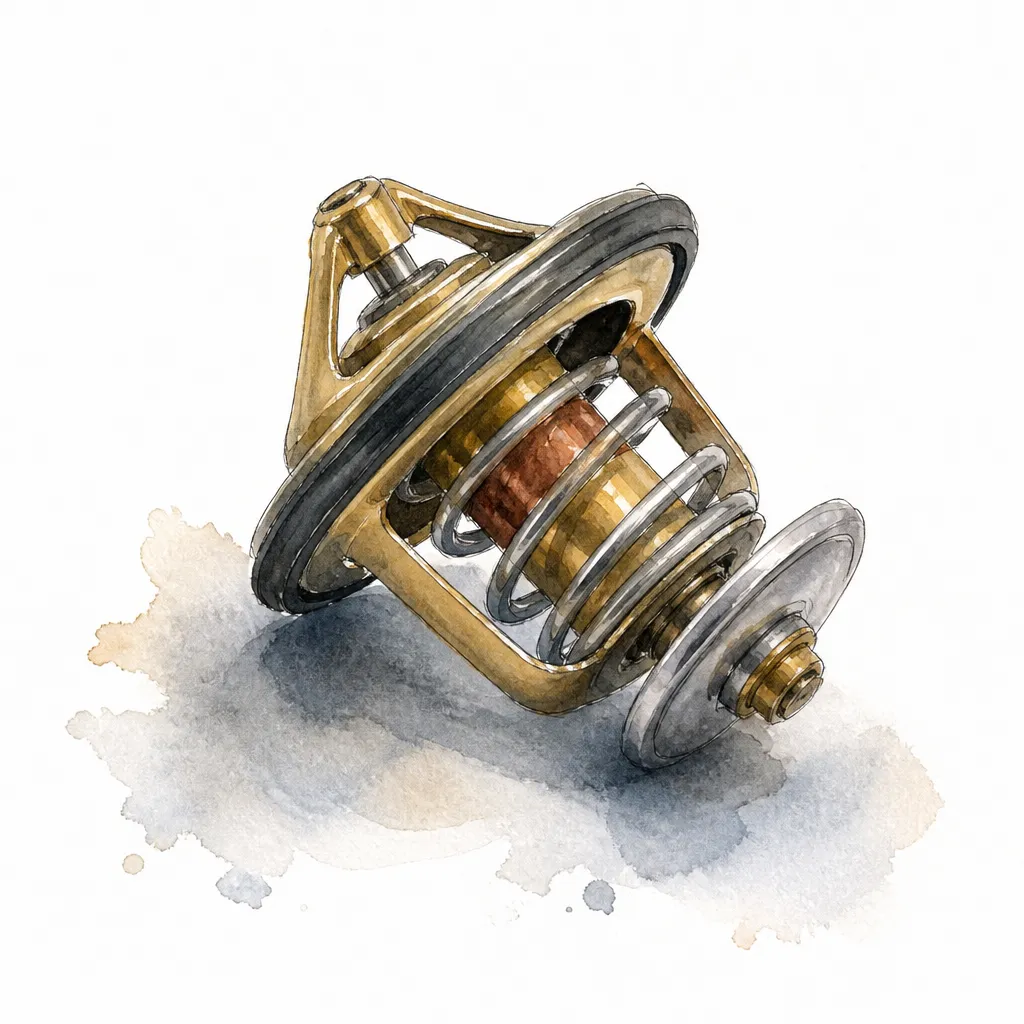
The thermostat is a small valve fitted in the coolant path between the engine and the radiator. When the engine is cold it stays closed, blocking flow to the radiator so the engine reaches its operating temperature quickly. As coolant warms past a set point, a wax element inside the thermostat expands and opens the valve, letting hot coolant pass to the radiator to be cooled. A modern engine is designed to run within a narrow temperature band, usually around 90 degrees, because that band gives the best fuel economy, the lowest emissions, and the least wear. A thermostat that sticks closed traps heat and overheats the engine. A thermostat that sticks open never lets the engine reach temperature, so it runs cold, burns more fuel, and wears faster. Many newer European engines use an electronically controlled thermostat that the engine computer can open or close on demand.
Why it matters in Singapore
A failed thermostat shows up differently here than in a cold climate. There is no winter to expose a stuck-open unit through a cabin heater that never warms, so the symptom most owners notice first is poor fuel economy or a temperature gauge that behaves oddly. In Singapore's heat, a thermostat that sticks closed is the dangerous failure, because the engine has no margin and can overheat within minutes in stationary traffic.

How Revol Carz handles this
Revol Carz Garage checks thermostat operation as part of cooling system diagnostics for BMW, Mercedes, Audi, and Volkswagen, watching how quickly the engine reaches temperature and how steadily it holds it. When a thermostat is sticking or an electronic unit is reporting a fault, we replace it with an OEM-grade part and refill the system with the correct coolant.