Radiator
A radiator is the heat exchanger that sheds engine heat from the coolant into the passing air, keeping the engine within its safe operating temperature.

What it means
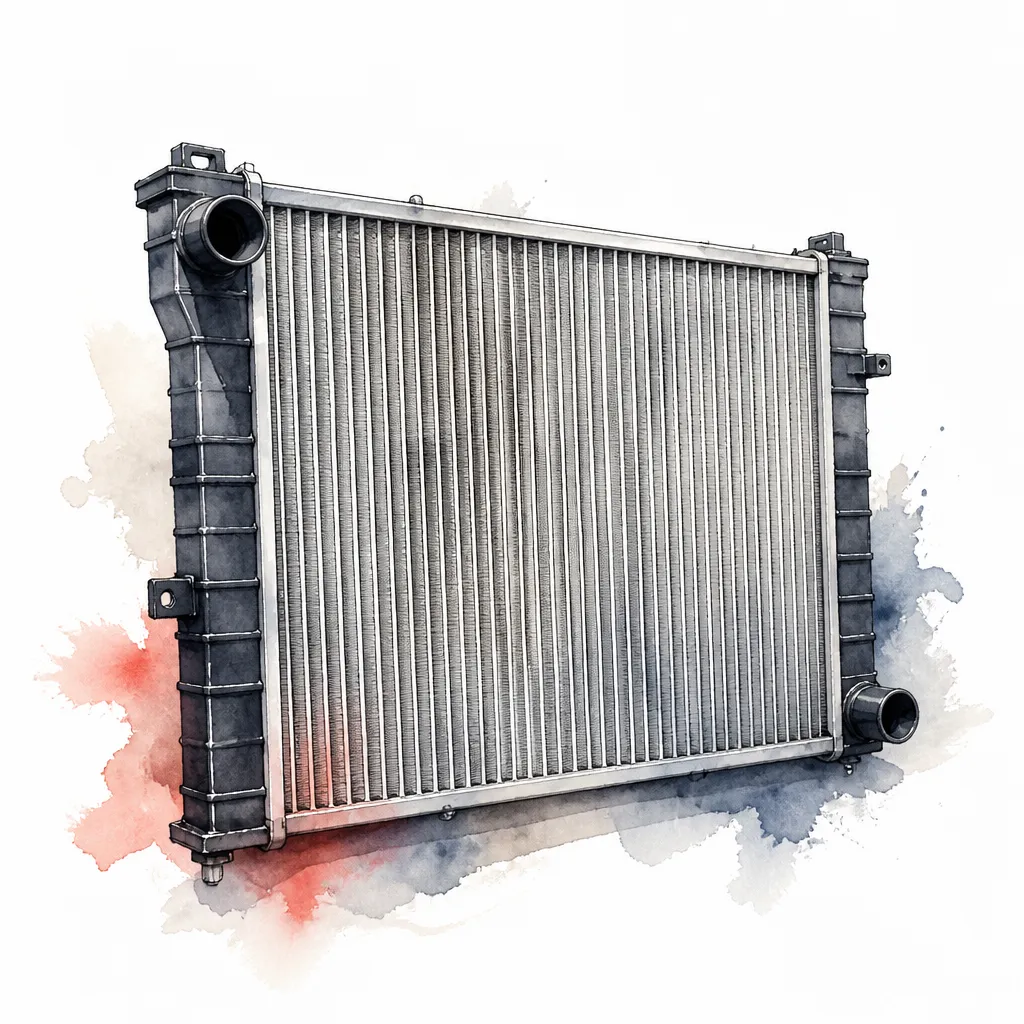
The radiator sits at the front of the car and is the final stage of the cooling system. Hot coolant leaves the engine, flows through a dense matrix of thin tubes and fins inside the radiator, and gives up its heat to air passing through the core. A cooling fan pulls air through when the car is stationary or moving slowly. The radiator is built from aluminium cores with plastic end tanks on most modern European cars, which keeps weight down but makes the plastic tanks a common failure point as they age and turn brittle. Cracks, weeping seams, blocked fins, and a clogged internal matrix all reduce how much heat the radiator can move. When that happens the engine runs hotter than designed, and sustained overheating can warp the cylinder head or damage the head gasket.
Why it matters in Singapore
Singapore gives the cooling system no relief. Ambient temperatures sit near 32 degrees most of the year, and stop-start traffic means the car often idles with little airflow through the core, so the radiator and fan work hardest exactly when the car is barely moving. Brittle plastic end tanks and aged coolant fail faster in this climate than they would in a temperate country, which is why a healthy radiator is not optional here.

How Revol Carz handles this
Revol Carz Garage inspects the radiator, end tanks, and cooling fan during scheduled servicing for BMW, Mercedes, Audi, and Volkswagen, and pressure-tests the system to catch weeping seams before they become a roadside breakdown. Where a radiator is cracked or its matrix is blocked, we replace it with an OEM-grade unit and refill with the correct coolant specification.