Waterborne paint
Waterborne paint is a basecoat that uses water as its main carrier instead of solvent, giving lower VOC emissions and an increasingly standard industry finish.

What it means
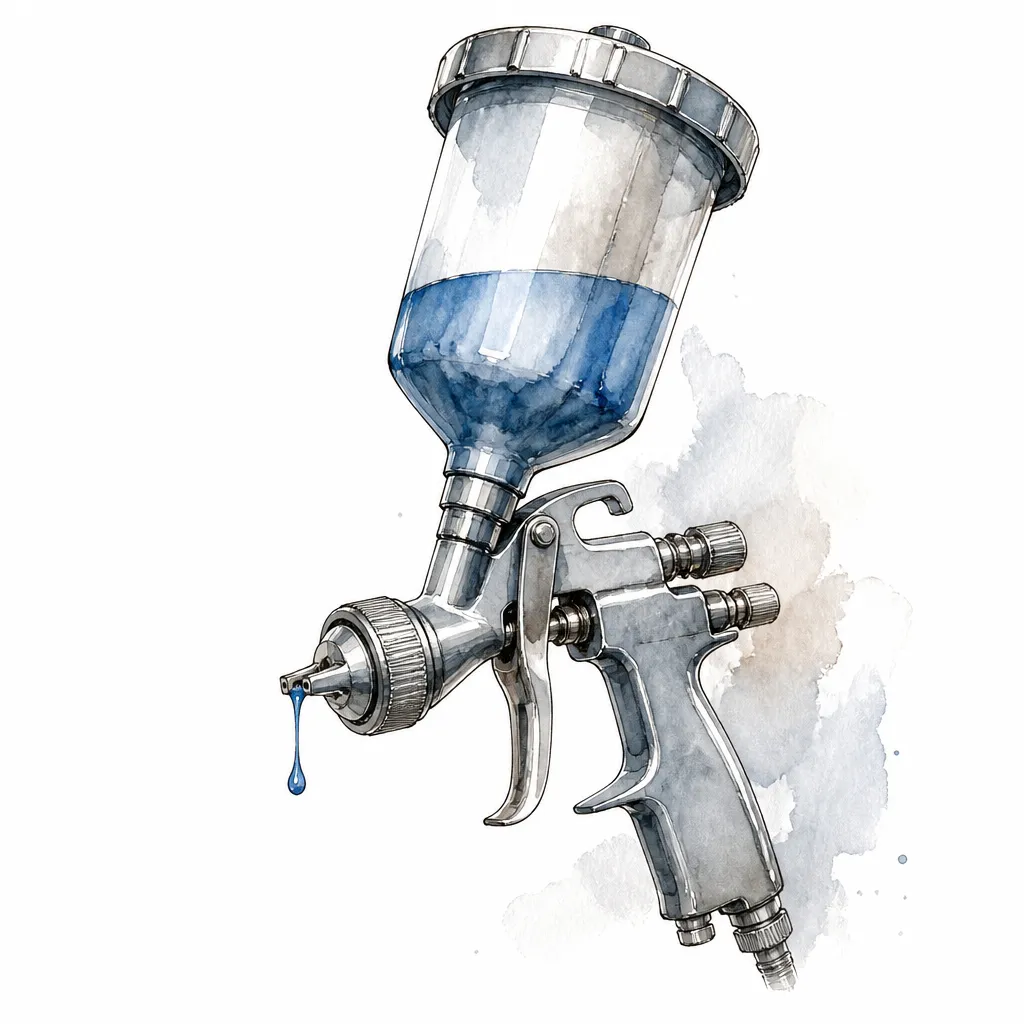
Every basecoat needs a carrier, the liquid that keeps the pigment and resin sprayable and lets the film flow out smoothly before it dries. In a traditional solvent-borne basecoat, that carrier is organic solvent that evaporates into the air. In a waterborne basecoat, most of that carrier is water, with only a small fraction of solvent left in the mix. The result is far lower release of volatile organic compounds, the VOCs that cause solvent fumes and air pollution. Waterborne basecoats also tend to give excellent colour accuracy and metallic flake control. They do behave differently in the booth: water evaporates more slowly than solvent and is sensitive to humidity, so airflow and warm air movement matter more during the flash-off stage. Once the basecoat has dried, it is sealed with a normal 2K clear coat, which is still solvent-based.
Why it matters in Singapore
Singapore is a dense, built-up island where the National Environment Agency regulates air quality and industrial emissions closely, so lower-VOC materials matter for workshops and the neighbourhoods around them. The catch is the climate: Singapore's high humidity slows the water evaporation that waterborne basecoat depends on, which is exactly why a controlled booth with proper airflow and warm air movement is not optional here. Done in the right environment, waterborne paint gives a clean, accurate finish with less solvent in the air for everyone nearby.

How Revol Carz handles this
Revol Carz works with modern Spies Hecker paint systems and sets the booth conditions to suit the basecoat being sprayed, which is the part that matters most in Singapore's humidity. Colour is set by computerised matching, flash-off is controlled in our Italian Saima dust-free booth, and the clear coat is oven-baked to a full cure. Owners get WhatsApp updates as the job moves through each stage.