Catalytic converter
A catalytic converter is an emissions device in the exhaust that chemically converts harmful gases such as carbon monoxide, unburnt fuel, and nitrogen oxides into less harmful ones.

What it means
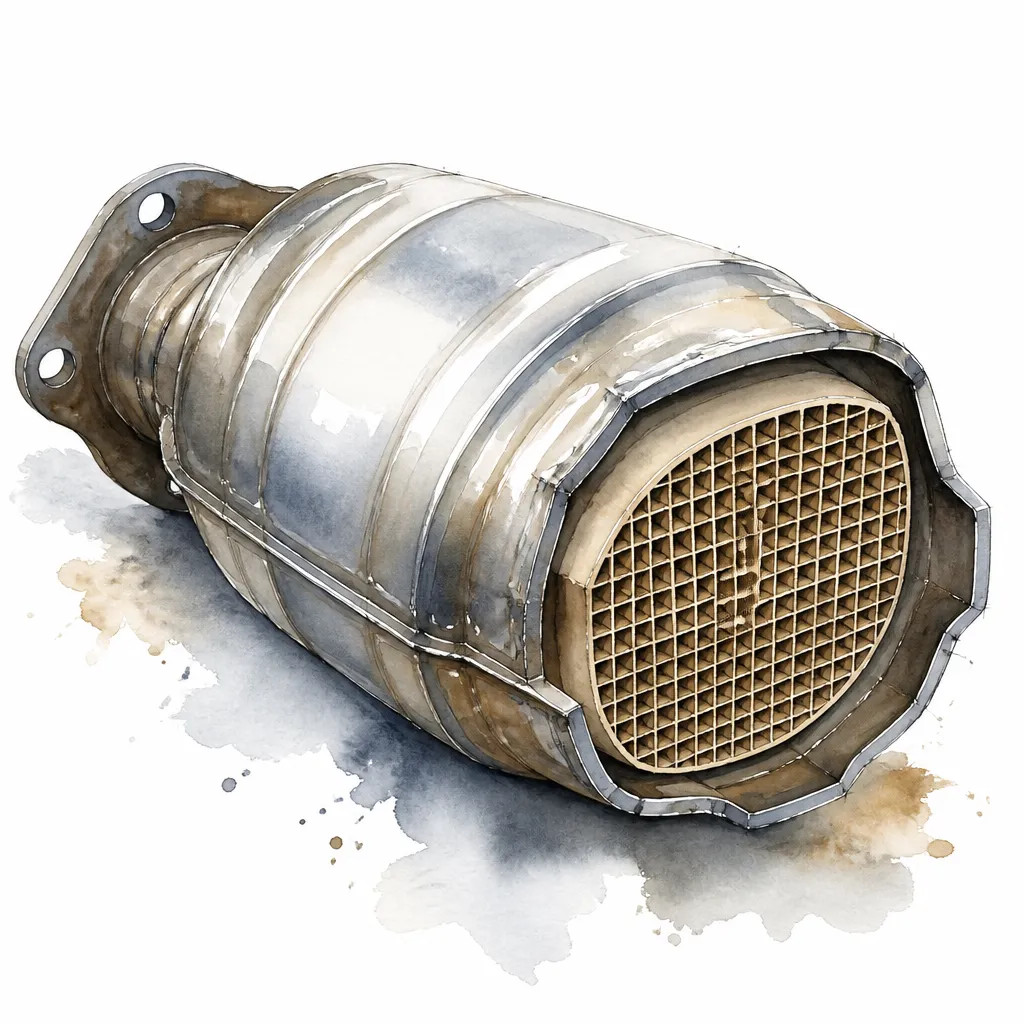
The catalytic converter sits in the exhaust system, downstream of the engine. Inside is a ceramic honeycomb coated with precious metals, usually platinum, palladium, and rhodium. As hot exhaust gas flows through the honeycomb, these metals trigger chemical reactions without being consumed: carbon monoxide and unburnt fuel are oxidised into carbon dioxide and water, while nitrogen oxides are broken back down into nitrogen and oxygen. The unit only works properly once it reaches operating temperature, which is why cold-start emissions are higher. A converter is durable but not indestructible. It can clog if the engine burns oil or runs too rich, and it can overheat and melt internally if unburnt fuel reaches it because of misfires. Symptoms of a failing converter include a rotten-egg smell, lost power, a rattling honeycomb, and emissions-related fault codes.
Why it matters in Singapore
Every car on Singapore roads must pass a periodic LTA inspection, and tailpipe emissions are part of that check, so a healthy catalytic converter is tied directly to keeping a car road-legal. Short trips and heavy traffic mean the converter often does not reach full operating temperature, which is hard on it over a 10-year COE life. Treating the root cause, a misfire or an oil-burning engine, protects the converter rather than just replacing an expensive part.

How Revol Carz handles this
When a car shows emissions fault codes, Revol Carz Garage uses a diagnostic scan to read the oxygen sensor data and decide whether the converter has genuinely failed or is simply reacting to an upstream problem like a misfire. Fixing the cause first, then verifying with a fresh scan, avoids fitting a costly converter that would only fail again under the same conditions.