Spark plug
A spark plug is the small electrode that sits at the top of each cylinder and produces the spark that ignites the air-fuel mixture in a petrol engine.

What it means
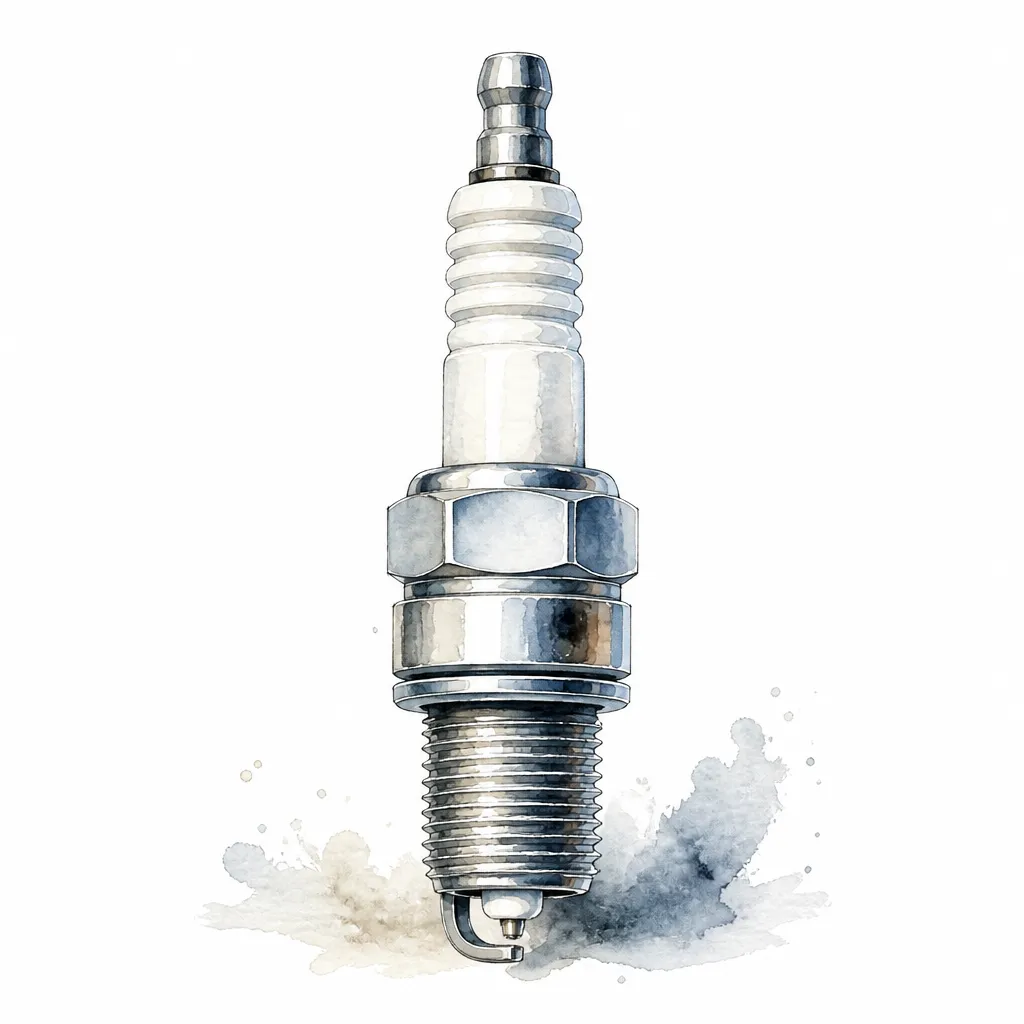
Each cylinder has one spark plug (some performance engines have two). When the piston nears the top of its compression stroke, the ignition coil sends a high-voltage pulse to the plug, which jumps the gap between the centre and ground electrodes as a spark and ignites the charge. Modern European spark plugs use iridium or platinum tips for long life and consistent firing under high cylinder pressures. Service intervals vary widely by engine: some run plugs to 60,000 km, others to 100,000 km, a few longer. As plugs age the gap widens (electrode wear), the spark weakens, and the engine misfires more easily, particularly under load. Symptoms of worn plugs include rough idle, hesitation under acceleration, slightly higher fuel use, and occasional check-engine warnings for misfires. On modern direct-injection engines, plugs are also more sensitive to fuel quality and carbon buildup, which makes the replacement interval more important than older indirect-injection engines.
Why it matters in Singapore
Singapore stop-and-go traffic keeps engines in the part-load operating zone where direct-injection plugs foul faster. Following a tighter spark-plug interval here than the manufacturer's headline number reduces misfires and keeps fuel economy steady. For BMW, Mercedes, Audi, and Volkswagen models with the EA888-class direct-injection turbo engines, this matters more than on naturally aspirated engines.

How Revol Carz handles this
Revol Carz Garage replaces spark plugs with OEM-spec iridium or platinum plugs as appropriate for the engine, gapped to spec, and runs a post-replacement scan to confirm no residual misfire codes.