Oxygen sensor
An oxygen sensor, also called a lambda sensor, measures oxygen in the exhaust so the ECU can keep the air-fuel mixture correct for power, economy, and clean emissions.

What it means
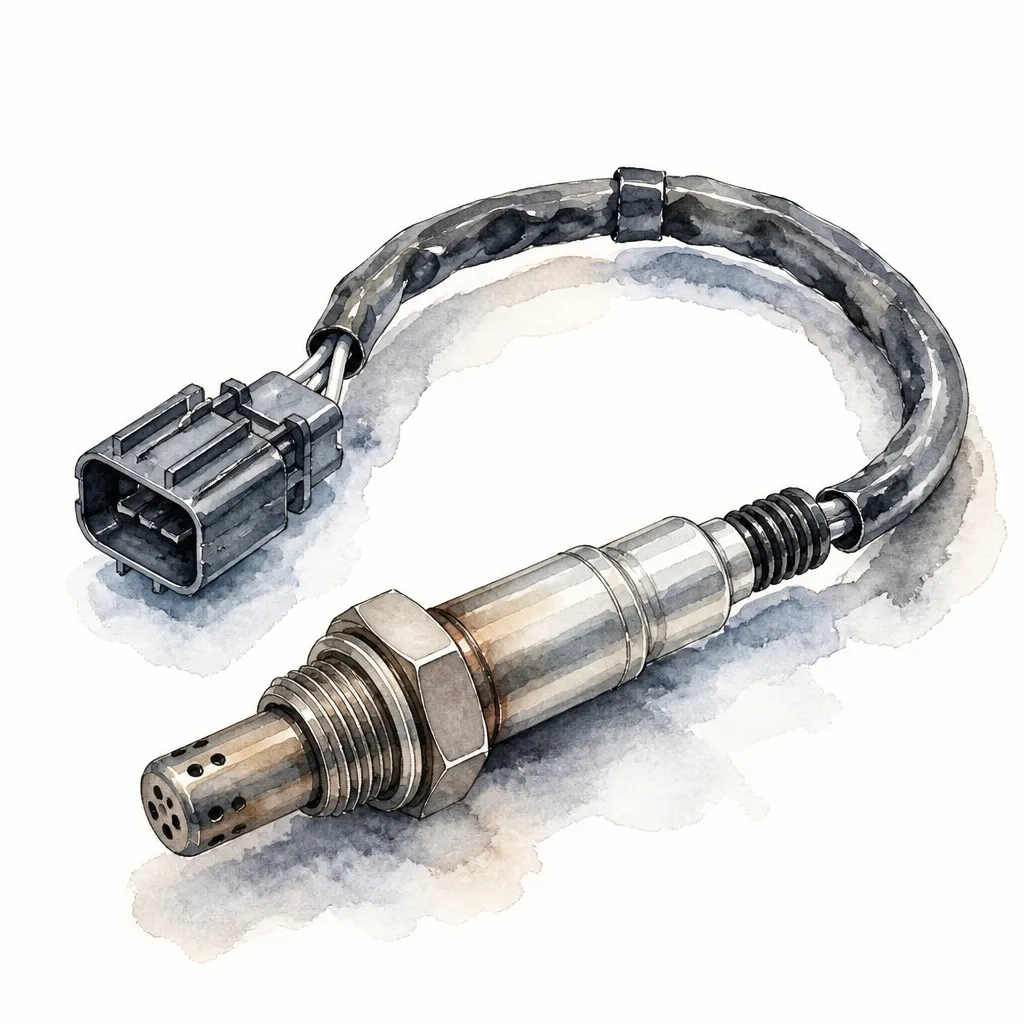
The oxygen sensor screws into the exhaust and reports how much oxygen is left in the gas after combustion. That reading tells the ECU whether the engine is running rich, with too much fuel, or lean, with too little. The ECU uses this feedback constantly to trim fuel delivery and hold the mixture close to the ideal ratio, the point where the engine is efficient and the catalytic converter works best. Most cars have at least two sensors: an upstream one before the catalytic converter that does the fuel trimming, and a downstream one after it that checks the converter is still doing its job. Sensors age, get coated in soot, or simply slow down over many years and tens of thousands of kilometres. A tired sensor leads to worse fuel economy, rough running, and a check-engine light, and because the converter depends on a correct mixture, a failing sensor can shorten the converter's life too.
Why it matters in Singapore
Fuel economy is a real cost in Singapore, where petrol is expensive, so a lazy oxygen sensor quietly raises running costs trip after trip. Emissions are also checked at the periodic LTA inspection, and a worn sensor that lets the engine run rich can push a car towards a failed test. Catching a sensor before it drifts far out of range keeps both fuel bills and inspection results in good shape.

How Revol Carz handles this
Revol Carz Garage reads live oxygen sensor data on a diagnostic scan, watching how quickly each sensor responds and whether the upstream and downstream readings make sense together. This tells us whether a sensor has genuinely failed or whether the real problem is elsewhere, such as an air leak, so the right part is replaced with an OEM-grade unit.