Etching
Etching is when an acidic substance eats into the clear coat and leaves a dull, sunken, or ring-shaped mark, often caused by bird droppings, sap, or acid rain.

What it means
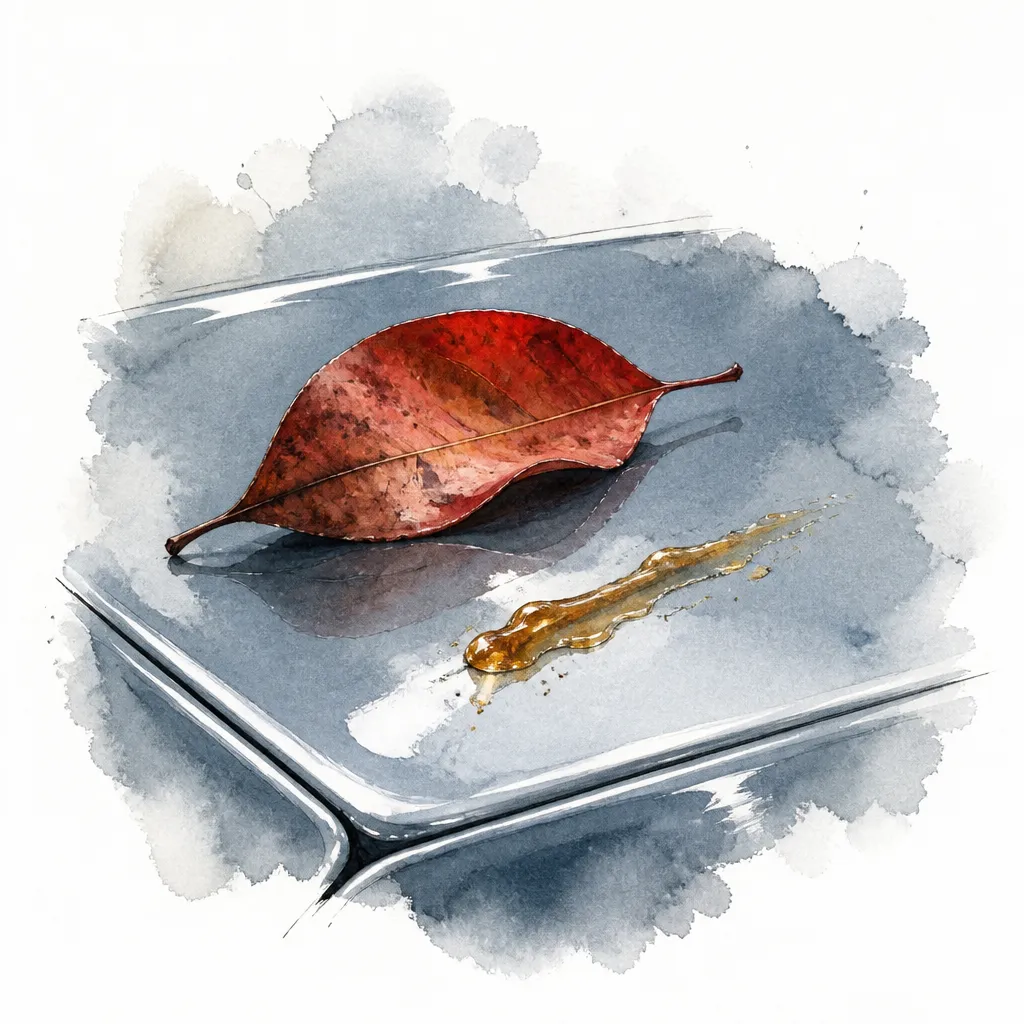
Etching is chemical damage to the clear coat. When an acidic substance sits on the paint, it slowly eats into the top layer and leaves a mark that is sunken, dull, or ringed, often tracing the exact shape of whatever was sitting there. The usual culprits are bird droppings, tree sap, dead insects, acid rain, and industrial fallout, all of which are acidic enough to attack the clear coat if left in place. Heat speeds up the reaction, so a mark that might take days to form in the shade can set in within hours under the sun. The depth of the damage decides the fix. Light etching that has only just begun can be polished out with a machine. Deeper etching that has cut well into the clear coat needs wet-sanding to level the surface, or a respray if it has reached the colour coat. The single best defence is removing the source quickly, before it has time to bite in.
Why it matters in Singapore
Singapore's heat turns minor contamination into lasting damage fast. A bird dropping or a smear of tree sap on a sun-baked panel can etch within a few hours, far quicker than in a cooler climate. Cars parked under trees collect sap and droppings daily, and outdoor parking is common. Acting quickly, rather than waiting for the next wash, is what keeps a small mess from becoming a polishing or respray job.

How Revol Carz handles this
Revol Carz inspects the etched area to judge how deep the damage runs. Light etching is corrected by machine polishing until the mark is gone. Deeper etching is addressed with careful wet-sanding to level the clear coat, then refined back to a clean gloss. A ceramic coating can be applied afterwards to give the paint a tougher buffer against the next acidic contaminant.