Head gasket
A head gasket is the seal between the engine block and cylinder head that keeps combustion, coolant, and oil in their separate passages.

What it means
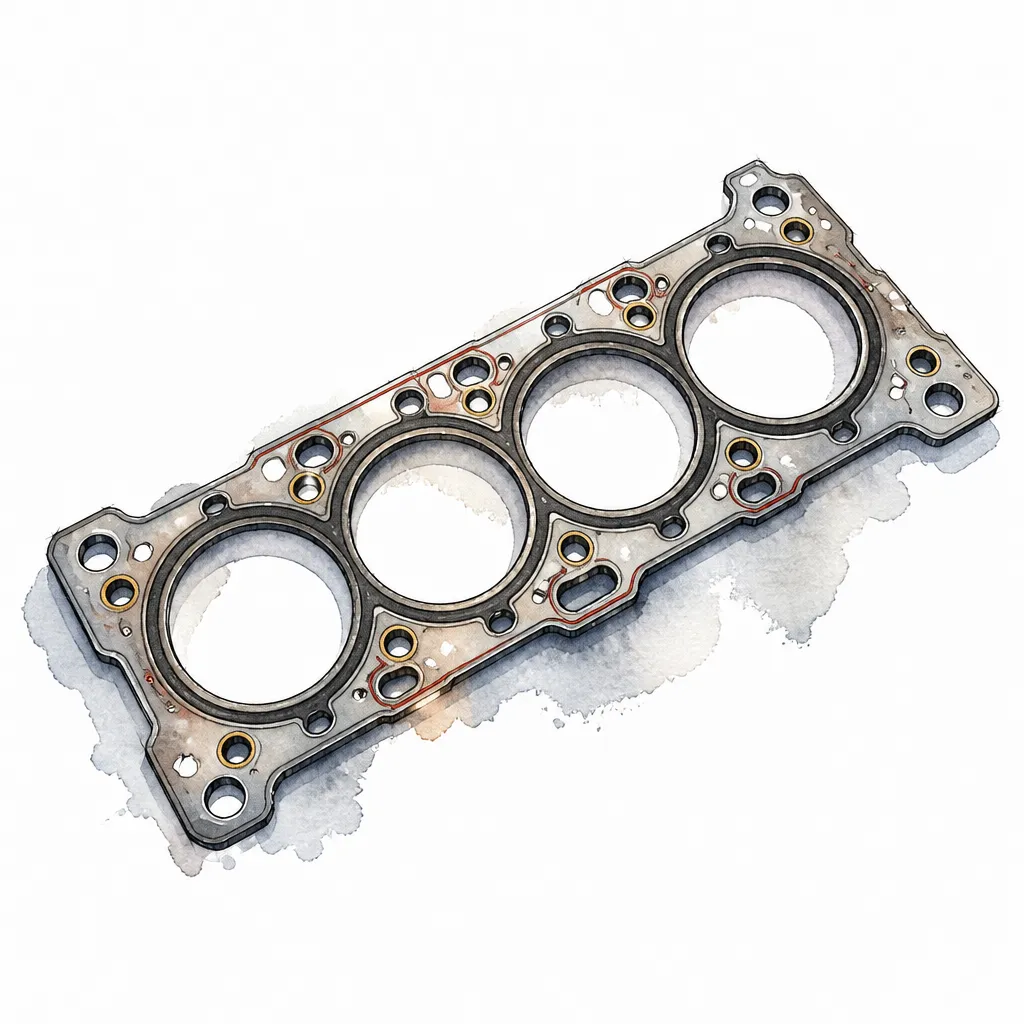
The head gasket sits clamped between the engine block and the cylinder head. It has to do three sealing jobs at once: contain the high pressure and heat of combustion in each cylinder, keep coolant inside its passages, and keep oil inside its galleries, all without letting any of the three mix. Modern engines use a multi-layer steel gasket that handles this under enormous clamping force from the head bolts. A head gasket fails when it can no longer hold those seals, usually after the engine has been overheated. Symptoms point to which seal gave way: white sweet-smelling exhaust smoke and disappearing coolant suggest combustion gas pushing into the cooling system, a milky film under the oil cap suggests coolant getting into the oil, and bubbles in the coolant reservoir suggest combustion pressure leaking across. A blown head gasket is a serious repair because the cylinder head must come off, and a head that has warped from heat needs machining or replacement.
Why it matters in Singapore
Most head gasket failures trace back to an overheating event, and Singapore's climate makes overheating easier to trigger. A car stuck in stationary traffic on a hot afternoon with a weak radiator, a stuck thermostat, or a failing water pump can climb into the danger zone within minutes. Catching a cooling fault early is what keeps a minor part replacement from becoming a head gasket job.

How Revol Carz handles this
Revol Carz Garage tests for head gasket failure using combustion-gas leak detection in the coolant and by checking for cross-contamination between oil and coolant on BMW, Mercedes, Audi, and Volkswagen. Where a head gasket has failed, we remove the cylinder head, inspect it for warping, and rebuild with OEM-grade gaskets and the correct head bolt torque procedure.