Timing belt
A timing belt is a reinforced rubber belt that synchronises the rotation of the engine's camshaft and crankshaft, ensuring valves open and close in time with each piston stroke.

What it means
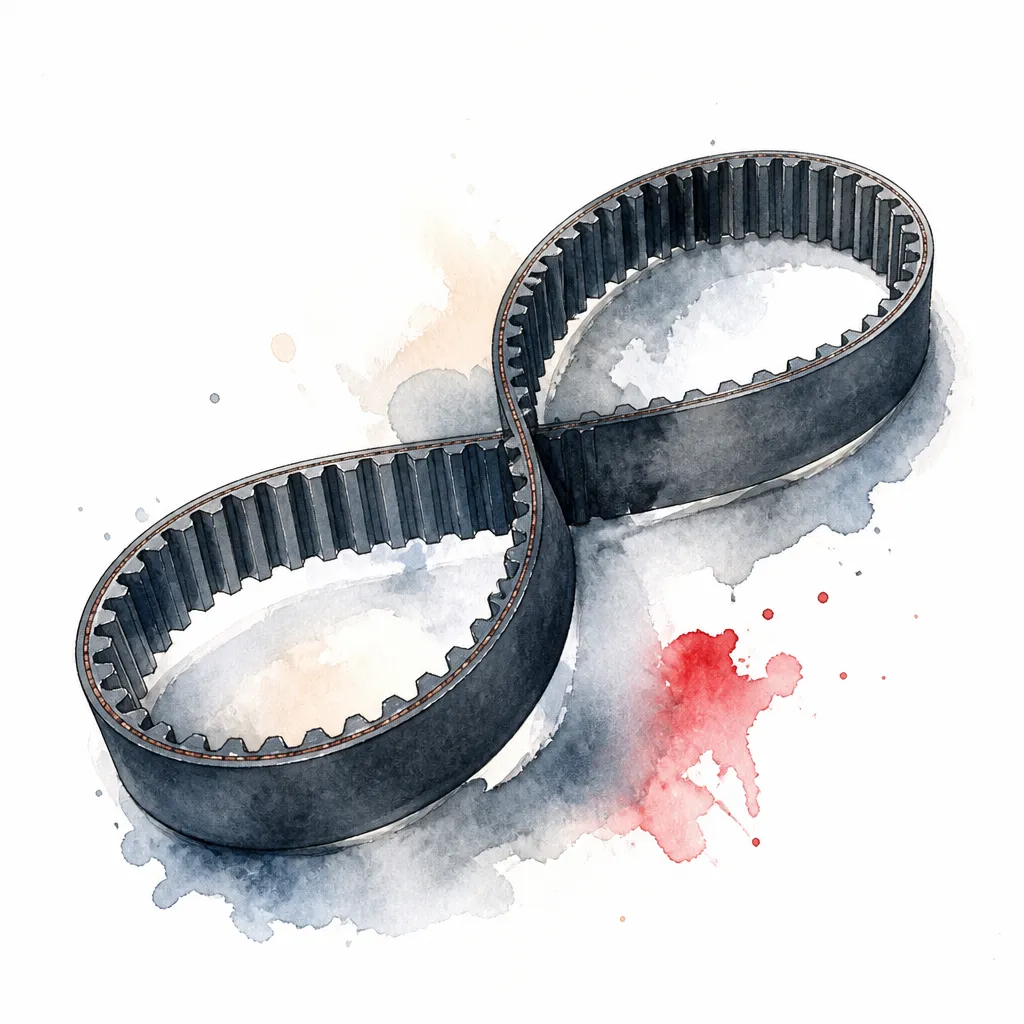
Some engines use a timing chain, which is designed to last the life of the engine. Others use a timing belt, which is a service item with a defined replacement interval. When the belt is in good condition, the engine runs precisely. When the belt fails, on most modern engines the pistons collide with open valves and severe internal damage follows, often a write-off. Replacement intervals vary by engine: 60,000 km on some, 100,000 km or longer on others. Replacement is a multi-hour job that involves removing accessory belts, the front cover, and several engine ancillaries to access the belt. Because the water pump and tensioner sit in the same area and have a similar lifespan, they are usually replaced together with the belt as a labour-saving combination.
Why it matters in Singapore
In Singapore, timing belts are often replaced late because the symptoms are silent until the belt actually breaks. Once it breaks, the engine bill can run into five figures. Following the manufacturer interval, or the more conservative interval recommended by an experienced workshop, is one of the highest-stakes maintenance decisions a European-car owner makes.

How Revol Carz handles this
Revol Carz Garage replaces timing belts using OEM kits, including the belt, tensioner, and idlers, and recommends replacing the water pump in the same job. We confirm the correct interval against the owner's specific engine code before quoting.